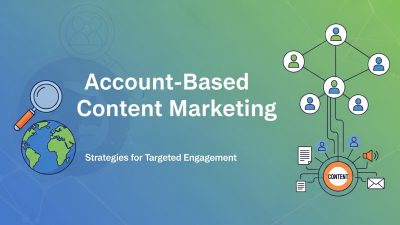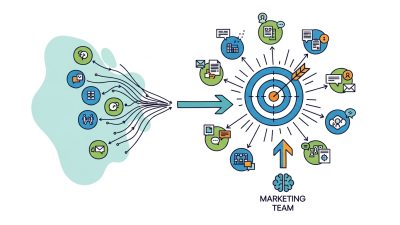

ABM success depends on precise measurement, strong sales-marketing alignment, and continuous optimization. Emerging technologies like AI are making ABM more scalable and intelligent. Companies that invest in structured ABM today will build stronger relationships and achieve sustainable long-term growth.
Account-Based Marketing (ABM) has emerged as one of the most effective strategies for B2B organizations aiming to drive higher-value deals, stronger client relationships, and more efficient use of marketing resources. Unlike traditional marketing approaches that prioritize volume, ABM focuses on precision, personalization, and alignment between sales and marketing teams. However, to truly benefit from ABM, businesses must not only implement it effectively but also continuously evaluate its performance and adapt to evolving technologies and market trends. This makes measurement, optimization, and future readiness essential components of a successful ABM strategy.
What Is Account-Based Marketing?
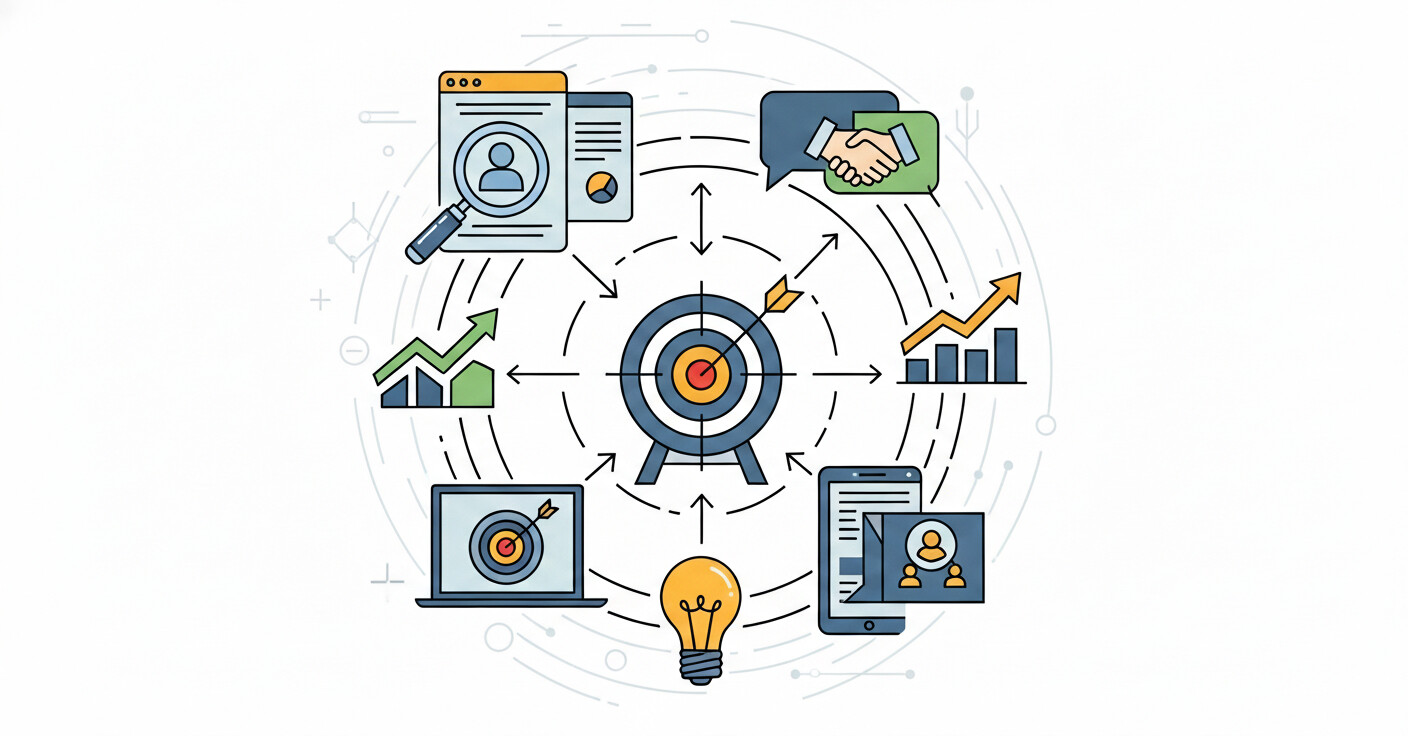
Account-Based Marketing (ABM) is a highly strategic growth approach in which marketing and sales teams work together to identify, target, and engage high-value target accounts rather than casting a wide net across a broad audience. Unlike traditional demand generation strategies that focus on attracting as many leads as possible, ABM treats each target company as a “market of one.” This means that messaging, content, and outreach efforts are tailored specifically to the needs, challenges, and goals of individual organizations. By focusing resources on high-value target accounts, businesses can build stronger relationships, increase deal sizes, and drive long-term revenue growth through a well-structured ABM strategy.
Where traditional marketing often relies on broad campaigns to capture leads, ABM takes a more precise and personalized approach. Instead of trying to reach thousands of prospects, ABM allows companies to engage directly with a select group of decision-makers within key organizations. This targeted focus ensures that marketing budgets are spent efficiently while maximizing impact. By aligning closely with sales teams, marketers can create highly relevant experiences that resonate with stakeholders and move them further along the buying journey. To understand how ABM strategy works, businesses must focus on alignment, personalization, and data-driven targeting.
Key Features of ABM
Account-Based Marketing (ABM) is built on a set of strategic features that make it a highly targeted and effective approach for B2B marketing. At its core, ABM focuses on identifying and prioritizing high-value target accounts rather than casting a wide net. It emphasizes deep personalization, delivering tailored messaging and content that aligns with each account’s specific needs, challenges, and goals. ABM also requires strong alignment between sales and marketing teams to ensure coordinated outreach and consistent engagement across channels. Additionally, it leverages data, analytics, and technology to track account engagement, measure impact, and refine strategies over time. Together, these features enable businesses to build stronger relationships, improve conversion rates, and drive higher revenue from key accounts.
Quality-Focused Methodology
ABM prioritizes quality over quantity by concentrating efforts on accounts with the highest revenue potential and strategic importance. Rather than generating a large volume of low-quality leads, ABM focuses on nurturing relationships with key companies that are most likely to convert into long-term customers. This approach helps organizations optimize their marketing spend while improving overall efficiency and effectiveness by following proven ABM best practices.
Marketing and Sales Alignment
One of the core strengths of ABM is the close collaboration between marketing and sales teams. Marketing is responsible for developing personalized content, campaigns, and messaging that support sales outreach. Meanwhile, sales teams provide insights into account needs, pain points, and decision-making processes. This alignment ensures consistency across all touchpoints and increases the likelihood of closing deals, which is why sales and marketing alignment in ABM is critical for success.
Tailored Campaigns and Personalization
In an ABM model, campaigns are not generic—they are customized for each target account. This includes personalized emails, industry-specific case studies, tailored landing pages, and targeted ads designed to address unique business challenges. By delivering relevant content at the right time, companies can create meaningful interactions that build trust and credibility, as seen in many account-based marketing examples from leading B2B brands.
Why ABM is Important
Account-Based Marketing (ABM) is important because it enables businesses to focus their efforts on high-value accounts rather than trying to reach a broad and untargeted audience. By aligning sales and marketing around a clearly defined set of target accounts, ABM allows companies to deliver more personalized, relevant, and meaningful messaging that resonates with key decision-makers. This targeted approach not only improves engagement and relationship-building but also leads to higher conversion rates, larger deal sizes, and better return on investment. Ultimately, ABM helps organizations work more efficiently, build stronger customer relationships, and drive sustainable revenue growth.
Improves ROI
ABM is widely recognized as one of the most effective marketing strategies in terms of return on investment. According to ITSMA, 87% of marketers report that ABM delivers better ROI than other marketing approaches. By focusing on high-value accounts and reducing wasted efforts, companies can achieve higher conversion rates, larger deal sizes, and stronger customer retention—demonstrating clear ABM ROI benefits.
Enhances the Customer Journey
Personalization lies at the heart of ABM, making the customer journey more engaging and relevant. Instead of receiving generic marketing messages, target accounts experience tailored interactions that address their specific needs. This helps build trust, strengthen relationships, and position your brand as a strategic partner rather than just a vendor. This is a key reason how ABM improves customer experience across the entire buyer journey.
Unifies Sales and Marketing Efforts
Perhaps one of the biggest advantages of ABM is the seamless alignment it creates between sales and marketing teams. Both departments work toward the same objectives, using shared data, insights, and strategies. This unified approach leads to clearer communication, better decision-making, and more successful outcomes, highlighting the overall ABM alignment benefits for organizations.
ABM vs. Inbound Marketing
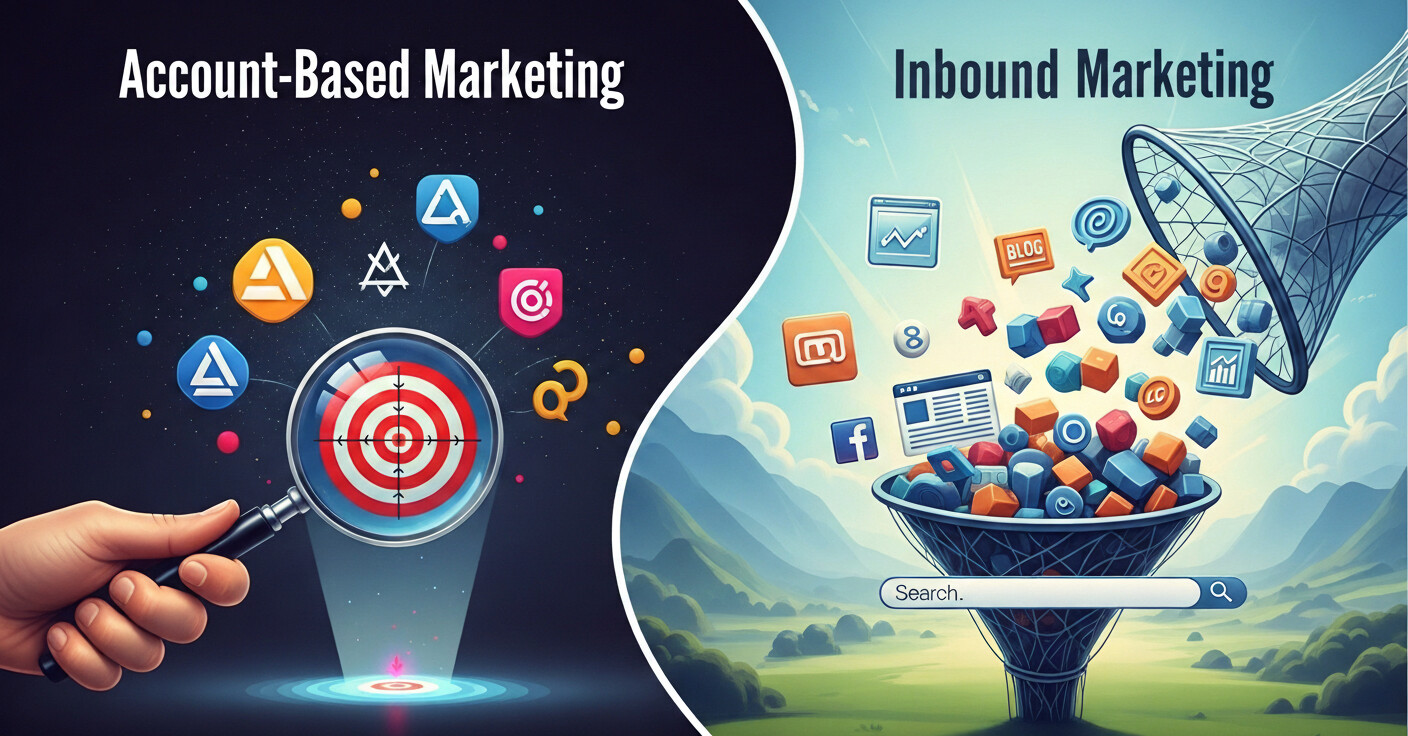
Both Account-Based Marketing (ABM) and inbound marketing are widely used B2B marketing strategies, but they differ significantly in their approach, focus, and the type of audience they serve. While both aim to drive growth and revenue, they operate in different ways and are often most effective when used together rather than in isolation.
Account-Based Marketing (ABM)
ABM takes a highly focused and strategic approach by targeting high-value accounts specifically. Instead of trying to reach a broad audience, ABM concentrates on a carefully selected group of companies that have the highest potential to generate significant revenue.
It emphasizes depth rather than breadth, meaning that marketing efforts are highly personalized for a smaller number of accounts. Every piece of content, messaging, and outreach is designed to address the unique needs and pain points of each target company.
Another defining feature of ABM is the strong integration between marketing and sales teams. Both departments work closely together to coordinate outreach, align messaging, and engage directly with key decision-makers within target accounts. This collaboration ensures that marketing efforts support sales objectives and help move deals forward more effectively.
Inbound Marketing
Inbound marketing, on the other hand, takes a broader approach by creating valuable content that attracts a wider audience. Instead of targeting specific companies, it focuses on drawing in potential customers organically through educational and engaging materials.
The primary goal of inbound marketing is lead generation at scale. It prioritizes volume, aiming to capture as many leads as possible and then nurture them through the buyer’s journey over time.
To achieve this, inbound marketing relies heavily on tactics such as blog content, search engine optimization (SEO), social media, email marketing, and downloadable resources like eBooks, whitepapers, and guides. These assets help build brand awareness, establish authority, and attract prospects who are actively searching for solutions.
The Essentials of an ABM Strategy
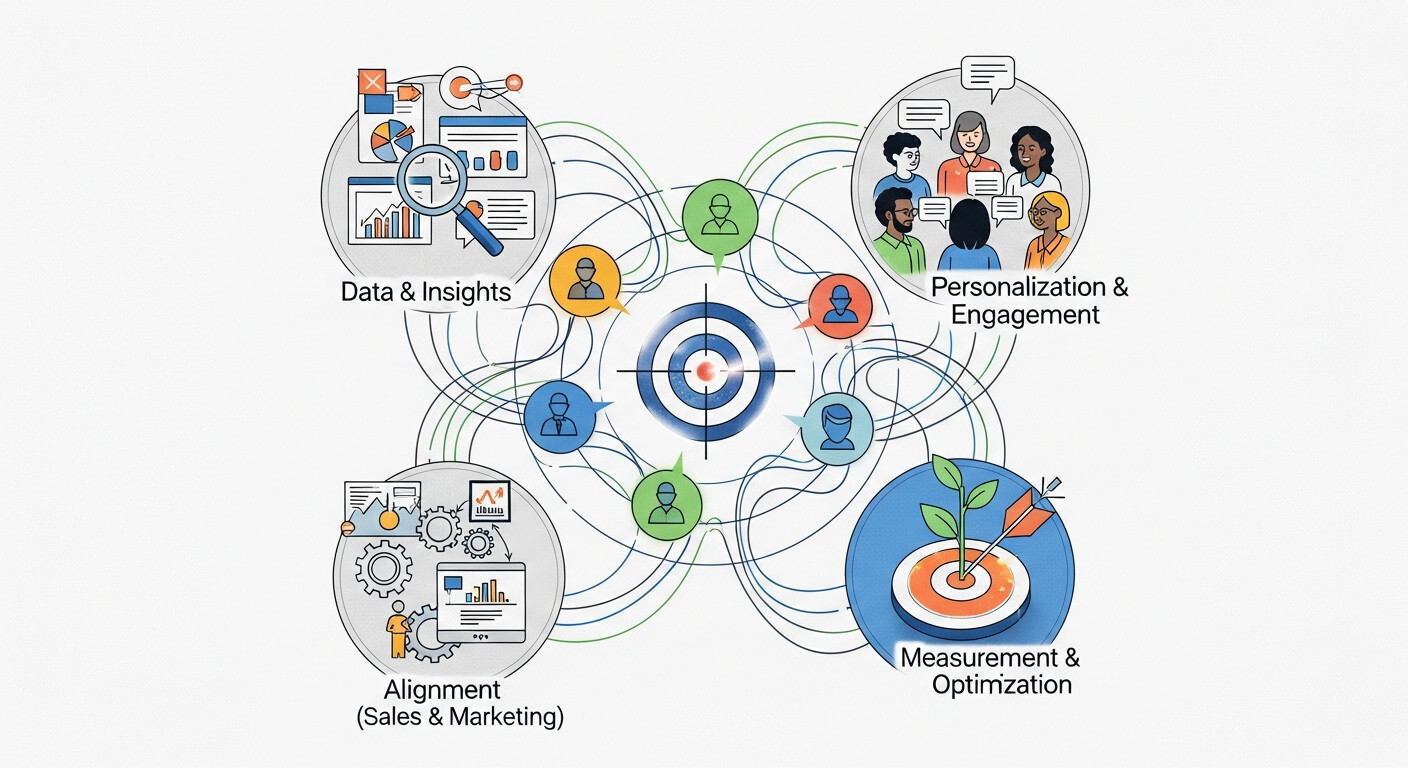
A successful ABM strategy requires careful planning, clear objectives, and strong collaboration between marketing and sales teams. Below are the key components that form the foundation of an effective ABM strategy.
Account Selection
The first and most important step in ABM is identifying the right target accounts. Businesses must analyze and segment potential accounts based on factors such as company size, industry, revenue potential, market influence, and existing relationships.
Rather than choosing randomly, companies should prioritize accounts that closely align with their ideal customer profile and have the highest likelihood of becoming long-term partners.
Account Insights and Research
Once target accounts are selected, it is essential to conduct in-depth research to understand their business needs, challenges, goals, and decision-making structure.
This includes identifying key stakeholders, understanding their priorities, and analyzing past interactions with your brand. Tools such as LinkedIn Sales Navigator, CRM platforms, and account-based analytics software can provide valuable insights that help shape personalized campaigns.
Targeted Messaging and Content
ABM relies heavily on customized content that speaks directly to each target account. Instead of generic marketing materials, businesses should develop tailored case studies, product demonstrations, industry-specific insights, and personalized proposals.
This level of customization helps build credibility and demonstrates that your company truly understands the unique needs of each account.
Channel Optimization
To effectively reach target accounts, ABM campaigns should leverage multiple marketing channels. This may include personalized email outreach, targeted display and LinkedIn advertising, direct mail, and invitation-only webinars or events tailored to specific companies.
Using a multi-channel approach increases visibility and ensures that key stakeholders encounter your messaging across different touchpoints.
Sales and Marketing Alignment
For ABM to be successful, sales and marketing teams must work as a unified unit. This involves clear communication, shared goals, regular collaboration, and consistent messaging.
Both teams should agree on target accounts, campaign strategies, and performance metrics to ensure that all efforts are aligned and working toward the same business objectives.
Evaluating ABM Campaign Success
One of the most critical aspects of any Account-Based Marketing (ABM) program is measurement. Because ABM focuses on a smaller number of high-value accounts rather than a large pool of leads, success cannot be measured using traditional marketing metrics alone. Instead, businesses need a more account-centric approach to evaluation. To truly understand whether your ABM strategy is working, you must track performance across engagement, pipeline impact, account movement, and overall return on investment.
Engagement Metrics
A key indicator of ABM success is how actively your target accounts are interacting with your campaigns. This includes tracking email open rates, click-through rates, content downloads, website visits, and event participation. High engagement levels suggest that your messaging is relevant and resonating with decision-makers within your target accounts. Conversely, low engagement may signal that your content or outreach strategy needs refinement.
Pipeline Contribution
Another essential measure of success is the impact of ABM on your sales pipeline. This involves analyzing how many new opportunities are being created within your target accounts and how much revenue potential they represent. Businesses should compare the pipeline generated from ABM accounts with that from non-ABM accounts to determine whether ABM is delivering stronger and more valuable sales opportunities.
Account Progression
ABM is not just about generating leads—it is about moving accounts through the sales funnel in a structured and meaningful way. Companies should track whether their outreach efforts are helping target accounts progress from awareness to consideration and ultimately to conversion. This includes monitoring key buying signals, meeting requests, proposal stages, and deal progression over time.
Overall ROI
Ultimately, the success of any ABM program comes down to return on investment. This means comparing the revenue generated from ABM-targeted accounts against the total cost of running ABM campaigns, including marketing tools, content production, and personnel resources. Because ABM is highly targeted and personalized, well-executed campaigns typically deliver stronger ROI than traditional broad-based marketing strategies.
The Evolution of Account-Based Marketing

Account-Based Marketing has come a long way in recent years, and its future looks even more promising. As technology continues to advance, ABM is becoming more sophisticated, scalable, and data-driven than ever before.
One of the biggest drivers of this evolution is artificial intelligence (AI) and machine learning (ML). These technologies are helping businesses analyze vast amounts of data to identify high-value accounts more accurately, predict customer behavior, and automate personalized outreach. AI-powered tools can recommend the best content, channels, and timing for engagement, making ABM more efficient and effective.
Additionally, as competition in the B2B market intensifies, companies are placing greater emphasis on retaining key clients and maximizing lifetime customer value. Instead of constantly chasing new leads, many organizations are shifting their focus toward building deeper relationships with existing and high-priority accounts—an approach that aligns perfectly with ABM principles.
For businesses considering or already implementing ABM, success depends on three core elements: strong collaboration between sales and marketing teams, highly personalized targeting, and continuous measurement and optimization. ABM is not a “set it and forget it” strategy—it requires ongoing refinement based on performance data and market changes.
By developing a well-structured and strategically focused ABM program today, companies can position themselves for sustainable growth, stronger client relationships, and long-term competitive advantage in the future.
Frequently Asked Questions
1. How long does it take to see results from ABM?
Typically, ABM results start becoming visible within 3–6 months, but full impact may take 6–12 months depending on deal cycles and industry.
2. What is the most important ABM metric?
There is no single metric—success should be measured across engagement, pipeline contribution, account progression, and ROI.
3. Can small businesses use ABM?
Yes. ABM can work for businesses of any size as long as they focus on a smaller number of high-value target accounts.
4. How does AI help in ABM?
AI helps with account selection, personalization, predictive analytics, and automating outreach, making ABM more scalable and efficient.
5. Should ABM replace inbound marketing?
No. The best strategy often combines inbound for top-of-funnel lead generation and ABM for closing high-value deals.