
Account-based marketing (ABM) has emerged as a formidable strategy for businesses that market to other businesses, with ABM, you can drive growth, build relationships, and maximize your marketing investment. What is ABM, anyway, and how do you make it work for your business?
Account-Based Marketing (ABM) is a strategic B2B marketing approach that focuses on targeting and engaging a defined set of high-value accounts rather than casting a wide net across a broad audience. Instead of treating every lead the same, ABM aligns marketing and sales teams to create highly personalized campaigns designed for specific companies that are most likely to generate significant revenue.
At its core, ABM starts by identifying ideal customer accounts based on factors such as company size, industry, revenue potential, and buying intent. Once these target accounts are selected, marketing efforts are tailored to address the unique challenges, goals, This may include customized content, personalized email campaigns, targeted advertising, and one-to-one sales outreach.
One of the key strengths of ABM is its focus on quality over quantity. Traditional marketing often prioritizes lead volume, which can result in unqualified or low-intent prospects. Account-Based Maketing on the other hand, concentrates resources on accounts that have the highest likelihood of conversion, making it especially effective for businesses with long sales cycles or high-ticket products and services.
ABM also improves alignment between sales and marketing teams. Both departments work from the same account list, share insights, and measure success using shared metrics such as account engagement, pipeline growth, and revenue impact. This collaboration reduces wasted effort and creates a more cohesive buying experience for prospects.
The key components of an ABM program
This guide gets into the nitty gritty of ABM steps and includes:
- Targeting and selection: Identifying the right audience and choosing the best approach for engagement.
- Aligning sales and marketing: Ensuring coordination between sales and marketing. Aligning on target account lists unifies efforts for a robust strategy.
- Multi-channel engagement: Interacting with customers through various platforms for a seamless experience.
- Content creation: Developing compelling and relevant content to attract and retain customers.
- Data and insights: Using information to make informed decisions and enhance strategies.
- Measurement and analytics: Tracking performance metrics to evaluate effectiveness and optimize results.
- Long-term relationship building: Creating lasting connections with customers to promote loyalty and retention.
By the time you’re finished, you’ll have a clear understanding of what ABM is and what it can do for your business.
A Snapshot of the ABM Process
The process of ABM usually includes the following:
-
Differentiating valuable accounts/action mapping
-
Developing customized plans and campaigns
-
Implementing strategies between marketing and sales
-
Track and analyze results for performance improvement
Now that we have the overview, let’s jump into each step so you can become a real expert in the account-based marketing process.
Finding Key Accounts
At the heart of ABM is the act of identifying the right accounts to go after. Not all prospects are a good fit for this personalized approach. To be successful, you should concentrate your efforts on accounts with the most revenue potential — or the ones closest to your ideal customer profile (ICP).
The Process for Identifying the Right Accounts
Create Your Ideal Customer Profile (ICP):
An ICP describes the characteristics of companies that would get the most value from your product or service. Narrow it down by company size, industry, budget, location, or annual revenue.
Partner With Sales:
Your sales team may have insights into the profile of previous higher-value clients. Exploit their knowledge to enhance how you pick accounts.
Leverage Data and Technology:
There are tools, such as CRM, LinkedIn Sales Navigator, and intent-data providers, that can help you spot which accounts are signaling they’re ready to buy, demonstrating interest.
When you’re prioritizing your Account-Based Marketing on those accounts with the most potential, you’re already building a great stage for your campaign success.
Developing Campaigns And Custom Content

ABM is all about personalization, so personalized content is definitely a good place to start, right from the designing of highly relevant messaging for individual accounts. This process helps ensure your message and value proposition resonate with decision-makers in a compelling way.
Kinds of Focused Content for Account-Based
-
Industry-Focused Content: Write up blog posts, whitepapers or case studies focused on the industries your target accounts are in.
-
Personalized Email Campaigns: Leverage what you know about an account’s needs and interests to create emails that really resonate with their pain points.
-
Tailored Value Propositions: Emphasize how your product or service speaks to the specific pain of each account.
-
Tailored Ads: Leverage geofencing or account-based ad platforms to serve up ads to decision makers in your target accounts.
Executing Account-Based Marketing Strategies
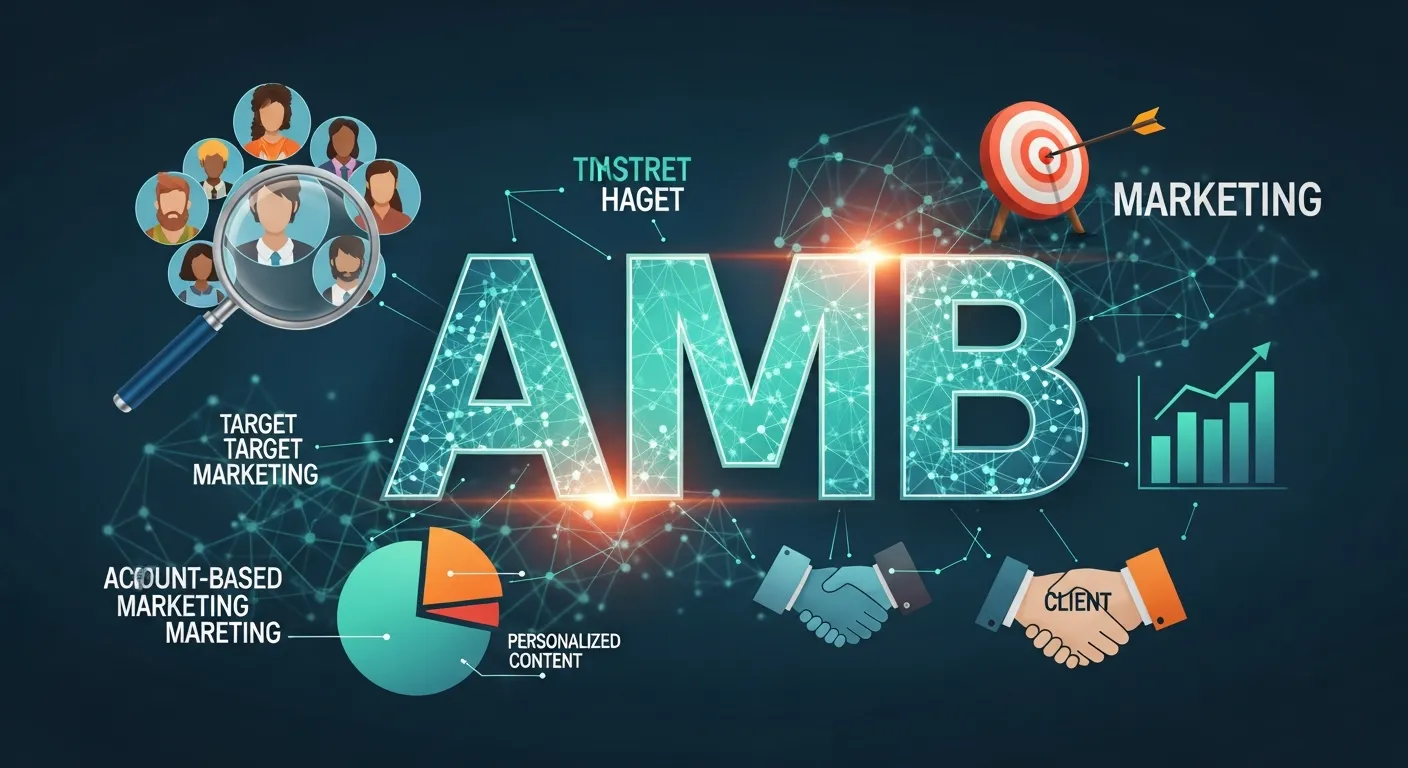
You’ve personalized your content, and you know who your target accounts are… Now it’s time to apply your Account Based tactics.
Sales and Marketing Collaboration
ABM needs to have both sales and marketing teams in sync. Both departments will have to cooperate to provide a harmonious experience for the accounts the campaign is aimed at.
-
Marketing: Attracts and engages customers with personalized campaigns.
-
Sales: Speak to decision-makers front and center with the insight driven through marketing activity – close the deal!
Channels and Tools to Use
-
Email Marketing: Nothing beats a specific email that is personal and relates directly to the account.
-
Social Media: Platforms such as LinkedIn might provide opportunities for you to interact directly with decision makers and stake holders.
-
Engagement Based on Events: Holding webinars, events focused on your industry, or one-to-one meetings specific to target accounts can help position your brand as more valuable.
-
ABM Solutions: Use a software tool like HubSpot ABM, Terminus, Demandbase to direct campaigns and monitor progress.
Adapt channel usage to the needs and habits of decision-makers in each account.
Account based marketing vs inbound marketing: Can both strategies be used together?
Account based marketing and inbound marketing are two dynamic duos used together. Also, these marketing tactics can accelerate your business’s growth.
Though they can work together but have some distinctions, account based marketing is a high-end strategy. Whereas inbound marketing is more functional. Inbound growth strategy allows you to grow with content, SEO, and a delightful prospect experience.
Even though both ABM & inbound marketing are different, they can be aligned:
- Inbound marketing helps attract target accounts, and ABM can accelerate its speed and gear up for better sales.
- The inbound marketing efforts are a foundation for the ABM strategy as they make up the base for choosing high-value accounts.
- Content can be two-for-one. You can create and use content that serves ABM and inbound strategies.
Results Measurement and Analysis
Every marketing process will always have some success measurement, and account-based marketing process is not an exception. When you can measure the impact of your outreach, it allows you to continue to optimize your tactics and ultimately prove the value you provide.
Metrics to Track in ABM
-
Engagement Metrics: Monitor how targeted accounts are engaging with your content, emails, and ads.
-
Influence: Calculate the contribution of your ABM efforts to the wider pipeline.
-
Multiplicity Rates: Investigate conversion levels from lead qualification to deal closed.
-
Total ROI: Measure the amount a company received from ABM campaigns and spent on ABM efforts.
Tools for ABM Analytics
If you’re using Salesforce, Market, or Google Analytics, these platforms can provide deeper insights on performance indicators and behaviors.
Iterative Improvement:
Keep optimizing your tactics according to performance statistics. And if something works particularly well on one account, consider if you can bring your audience the same joy with your other handles. And, conversely, don’t be afraid to pivot if something isn’t working.
Looking Ahead to ABM’s Future
The ABM model provides companies the deepest level of opportunity to form valuable, high-impact relationships with their customers. But as technology changes, so will ABM. Some of the solutions already being developed with AI, predictive analytics, and more sophisticated audience segmentation promises even more personalized and efficient campaigns.
For the companies seriously invested in sustainable growth, ABM is not another passing fad. It’s a competitive necessity. So, figure out your high value accounts today, and see how this high level approach will change the sales and marketing game for you.
Learn how to measure, interpret, and act on your campaign data with this complete guide to Visited Naw Account-Based digital marketing analysis.
Guidance: How to Master the Account-Based Marketing Process
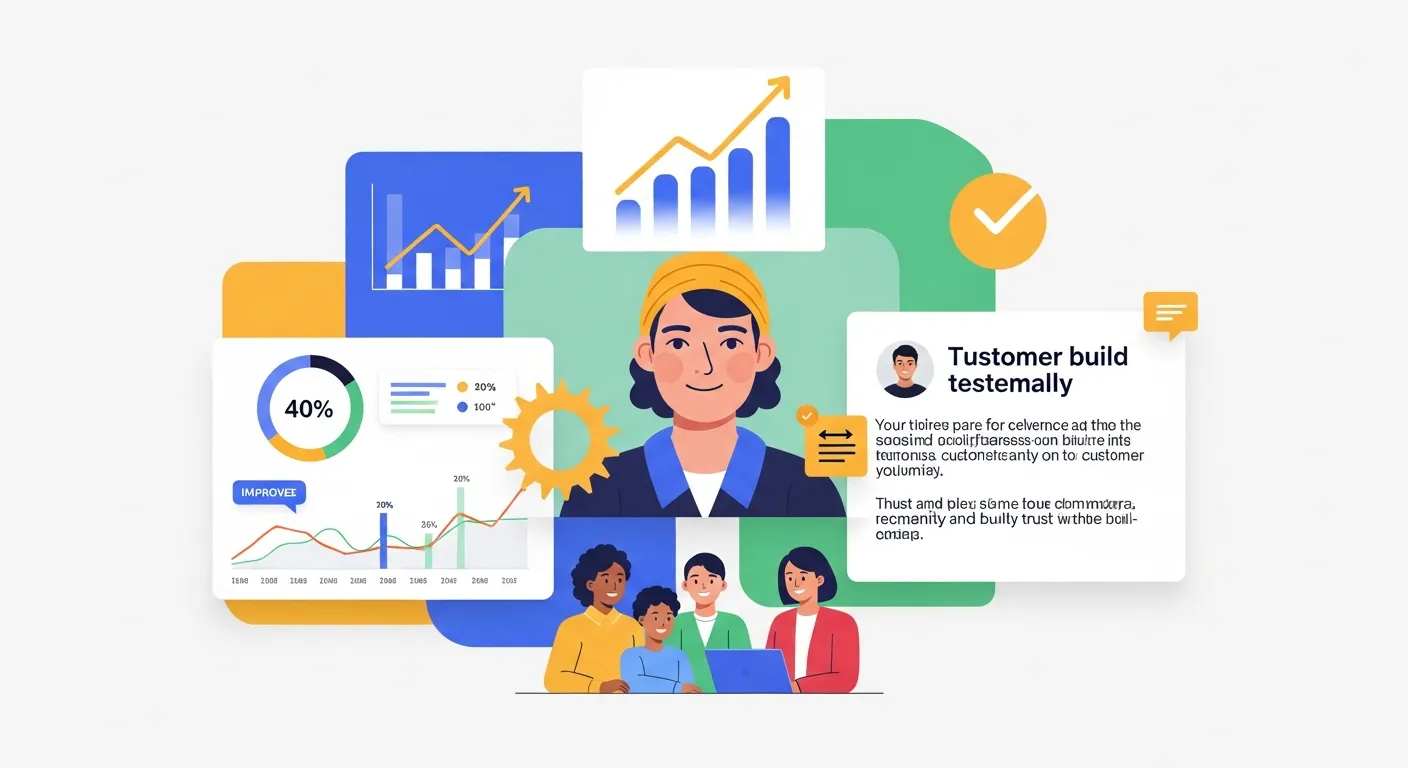 To successfully master the Account-Based Marketing (ABM) process, businesses must move beyond isolated campaigns and focus on building a structured, repeatable system. ABM works best when sales and marketing operate as a single revenue team, aligned around shared target accounts, goals, and performance metrics.
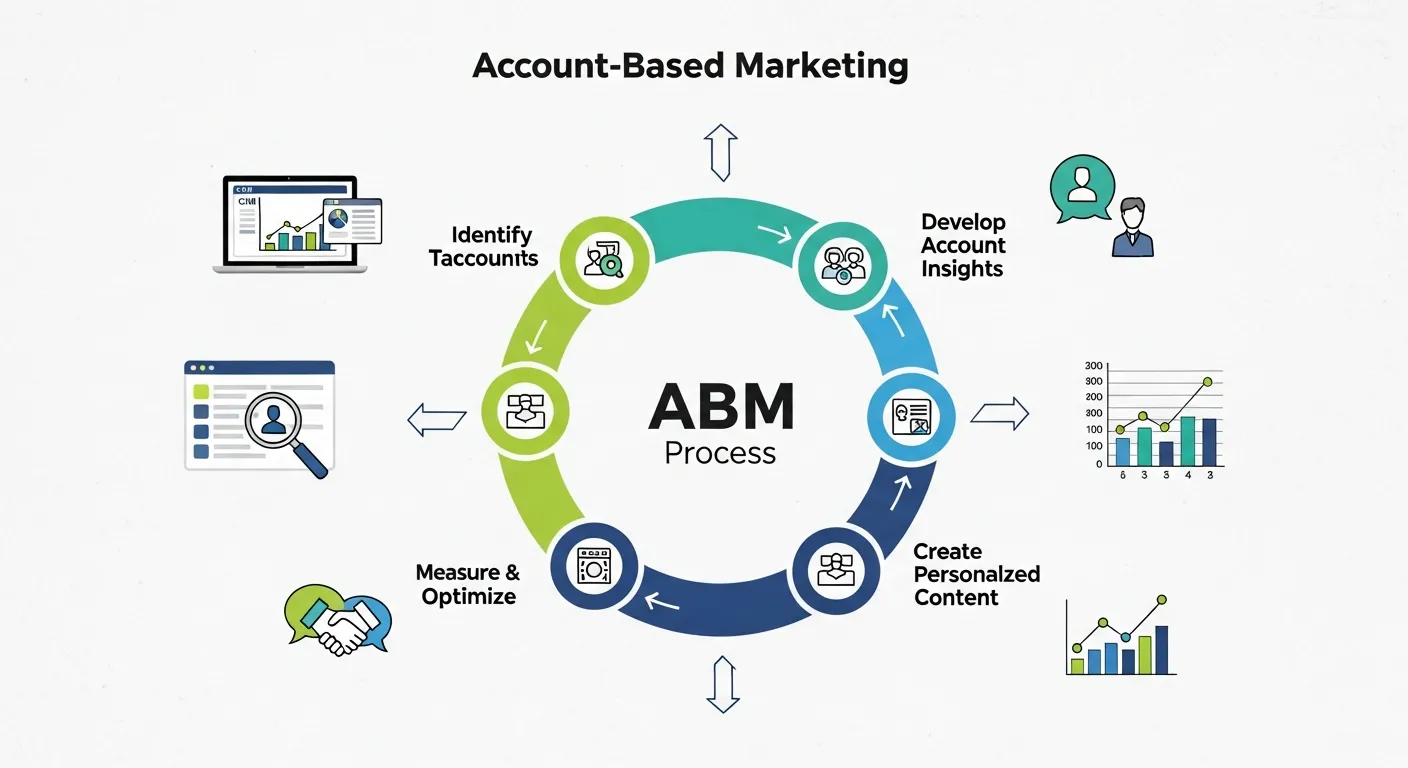
The first step is account selection. Identify high-value accounts using firmographic data, intent signals, historical sales insights, and revenue potential. Focusing on fewer, higher-quality accounts ensures resources are spent where they can generate the greatest impact.
Next, develop deep account insights. Understand each account’s business challenges, decision-makers, buying committee structure, and current solutions. This research enables meaningful personalization rather than surface-level customization.
Personalized content and messaging should directly address each account’s pain points and stage in the buying journey. This includes tailored landing pages, account-specific email sequences, targeted ads, and customized sales enablement materials.
Execution requires multi-channel engagement. ABM campaigns perform best when outreach is coordinated across email, LinkedIn, paid advertising, webinars, and direct sales interactions. Consistent messaging across channels reinforces relevance and trust.
Finally, measure and optimize continuously. Track metrics such as account engagement, pipeline velocity, deal size, and revenue influenced by ABM efforts. Use these insights to refine targeting, messaging, and campaign execution over time.
As ABM campaigns are built on a long-term basis, they will help enhance customer experiences. Each customer will feel they are having a one-on-one conversation with the company.
Team members collect prospect interests, customer journey stages, and more to personalize an ABM strategy more closely.
Mastering the Account-Based Marketing (ABM) process B2B organization
Mastering the Account-Based Marketing (ABM) process is no longer optional for B2B organizations that rely on high-value deals, long sales cycles, and complex buying committees. In an environment where broad, volume-driven marketing often fails to deliver meaningful results, ABM offers a focused, revenue-driven alternative that prioritizes quality, relevance, and alignment.
At its core, ABM succeeds because it treats each target account as a market of one. By carefully selecting high-potential accounts, deeply understanding their business challenges, and delivering personalized messaging across multiple channels, businesses create stronger connections with decision-makers. This level of relevance not only increases engagement but also accelerates trust, which is critical in B2B buying decisions.
Equally important is the alignment between sales and marketing. ABM breaks down traditional silos by uniting both teams around shared accounts, goals, and performance metrics. When sales and marketing collaborate throughout the entire customer journey—from account selection to deal closure—the result is a more consistent buying experience and a higher likelihood of conversion.
Measurement and optimization are what transform ABM from a tactic into a scalable system. By tracking account-level engagement, pipeline influence, deal velocity, and revenue impact, organizations gain clear visibility into what is working and where improvements are needed. These insights enable continuous refinement of targeting, messaging, and channel strategy, ensuring that ABM efforts become more effective over time.
Ultimately, mastering the Account-Based Marketing process is about building a sustainable growth engine. It allows businesses to focus resources where they matter most, improve marketing efficiency, and drive predictable revenue. When executed with discipline, data, and collaboration, ABM becomes a powerful framework for turning high-value accounts into long-term customers and competitive advantage.
Frequently Asked Questions (FAQ)
1. What is the main goal of Account-Based Marketing?
The main goal of Account-Based Marketing is to drive higher revenue by focusing marketing and sales efforts on high-value accounts that are most likely to convert, rather than targeting a broad audience.
2. How is ABM different from traditional marketing?
Traditional marketing targets large audiences to generate leads, while ABM targets specific accounts with personalized campaigns designed to engage key decision-makers within those organizations.
3. Who should use Account-Based Marketing?
ABM is ideal for B2B companies with long sales cycles, high-value deals, complex buying committees, and a need for close sales and marketing alignment.
4. What channels are most effective for ABM?
Common ABM channels include email marketing, LinkedIn outreach, paid account-targeted ads, personalized content, webinars, and direct sales engagement.
5. How do you measure ABM success?
ABM success is measured using account-level metrics such as engagement rate, pipeline growth, deal velocity, conversion rate, and revenue influenced or closed from target accounts.
6. Is Account-Based Marketing scalable?
Yes. While ABM starts with a small number of high-value accounts, it can be scaled using automation, data tools, and tiered account strategies without losing personalization.