


A data-driven ABM strategy helps B2B marketers focus on the accounts most likely to convert by using accurate data, personalized messaging, and coordinated multichannel outreach. By enriching account insights, aligning sales and marketing, and tailoring every touchpoint to each target’s needs, organizations can increase engagement, accelerate pipeline growth, and achieve stronger, more measurable ROI.
In today’s competitive B2B environment, marketers face the challenge of cutting through the noise and capturing the attention of high-value accounts. A data-driven Account-Based Marketing (ABM) strategy empowers teams to identify, engage, and convert the most promising prospects by leveraging rich insights, personalized messaging, and coordinated outreach. By focusing efforts on a targeted set of accounts, organizations can optimize resource allocation, improve win rates, and drive sustainable growth. This comprehensive guide will walk you through five proven steps to design, execute, and scale an ABM program fueled by accurate data and actionable intelligence.
Why a Data-Driven Approach Matters

Traditional outbound campaigns often spray broad messages and hope for a response. In contrast, a data-driven ABM approach starts with precise account selection and deep research into buyer behavior, firmographics, technographics, and intent signals. This level of clarity helps marketing and sales teams craft tailored campaigns that resonate at each stage of the buyer’s journey. By grounding your ABM strategy in reliable data, you reduce wasted spend, improve engagement rates, and demonstrate tangible ROI to stakeholders.
Step 1: Identify High-Value Target Accounts
The foundation of any successful ABM program is the careful selection of accounts most likely to deliver impact. Follow these guidelines to build your initial target list:
- Define Ideal Customer Profile (ICP): Chart the characteristics of your best customers, including industry, company size, revenue, growth stage, and technology stack.
- Leverage Firmographic and Technographic Data: Use third-party providers or in-house data to validate account attributes such as annual revenue, employee count, and existing marketing technologies.
- Monitor Intent Signals: Identify accounts showing buying intent through web visits, content downloads, search queries, or engagement with competitor solutions.
- Prioritize Fit and Intent: Score accounts based on a combination of ICP fit and purchase intent to focus on opportunities with the highest conversion potential.
- Collaborate with Sales: Align with sales leadership to refine the list, incorporate shield data, and ensure chosen accounts match revenue objectives.
Step 2: Collect and Enrich Your Data
Raw data alone is not enough; you need enriched insights to power personalization and predictive analytics. Invest in processes and tools that can:
- Aggregate Multiple Data Sources: Combine CRM records, web analytics, intent platforms, and third-party firmographics for a 360° view of each account.
- Verify and Cleanse Data: Remove duplicates, correct inaccuracies, and standardize formats to maintain high data quality.
- Enrich Contacts: Append new contacts, job titles, and organizational charts using enrichment APIs to reach decision-makers and influencers.
- Build Account Profiles: Consolidate key attributes—current vendors, existing pain points, recent news—to tailor outreach and priority sequencing.
- Implement Predictive Scoring: Use AI-driven models to forecast account propensity to buy based on historical patterns and external market signals.
Step 3: Craft Hyper-Personalized Content and Messaging
Personalization is the heart of ABM. Develop content tailored to each account’s unique priorities and challenges:
- Account-Specific Landing Pages: Create microsites that address the target company’s industry trends, pain points, and potential ROI narratives.
- Custom Email Sequences: Reference recent company events, leadership quotes, or market reports to demonstrate relevance and build credibility.
- Executive Briefing Decks: Develop concise slide decks that highlight how your solution aligns with the account’s strategic goals.
- Interactive Tools: Offer calculators or ROI estimators branded for the target account to deepen engagement and quantify value.
- Social and PR Personalization: Leverage LinkedIn and industry publications to share account-specific thought leadership and celebrate milestones.
Step 4: Orchestrate a Multichannel Campaign
ABM success depends on synchronized outreach across digital and offline channels. A well-orchestrated campaign might include:
- Digital Advertising: Serve targeted ads on LinkedIn, display networks, and programmatic platforms, using IP-recognition or cookie pools for precision.
- Email and Marketing Automation: Trigger personalized drip sequences timed to intent signals or account activities.
- Direct Mail Touches: Send branded gifts, handwritten notes, or custom reports to decision-makers to break through digital clutter.
- Sales Cadence Alignment: Ensure inside and field sales teams follow a coordinated call, email, and meeting schedule tied to marketing touchpoints.
- Events and Webinars: Host invitation-only roundtables or executive webinars focused on the account’s sector, challenges, or technology initiatives.
Step 5: Align Sales and Marketing for Maximum Impact
True ABM requires both departments to operate from the same playbook. To foster alignment:
- Joint Account Planning: Conduct regular strategy sessions to review account progress, adjust tactics, and share field intelligence.
- Shared KPIs: Define common success metrics such as pipeline velocity, deal size, and engagement depth to drive unified accountability.
- Real-Time Communication: Use collaboration platforms or dashboards to notify teams when an account takes a key action, such as requesting a demo or visiting a pricing page.
- Feedback Loops: Capture sales objections, campaign responses, and competitive insights to continuously refine messaging and channel mix.
- Incentive Structures: Reward both marketers and sales reps for closed-won revenue from target accounts to reinforce joint ownership.
Key Tools and Technologies

Building a data-driven ABM engine often requires an integrated tech stack. Consider solutions for:
- Data Enrichment: Clearbit, ZoomInfo, or Dun & Bradstreet for firmographic and contact-level insights.
- Intent Monitoring: 6sense, Bombora, or G2 for real-time signals on buying behavior.
- Account Scoring: Engagio, Terminus, or Demandbase to prioritize accounts and measure engagement health.
- Marketing Automation: HubSpot, Marketo, or Pardot for personalized nurture streams and workflow orchestration.
- Reporting and Analytics: Tableau, Power BI, or Looker for unified dashboards on attribution, deal progression, and ROI.
Advanced Personalization Techniques

Once you’ve mastered basic customization, elevate your program with advanced tactics that deepen relevance and urgency. AI and machine learning can help you analyze language patterns, purchase histories, and engagement sequences to automatically generate personalized subject lines, calls to action, and content blocks. Dynamic website personalization tools can swap out page headlines, imagery, and testimonials based on each visitor’s firmographic profile. You can even leverage predictive models to anticipate the next-best action for a target persona within an account, ensuring that every touchpoint pushes the deal forward with maximum resonance.
Real-Life Case Study
Consider a SaaS provider targeting enterprise financial services firms. By implementing a data-driven ABM strategy, they first enriched their CRM with technographic indicators, identifying banks using legacy core systems. They then created executive briefings highlighting integration risks and potential time-to-value improvements. Coordinating LinkedIn ads, custom landing pages, and direct mail invitations to a private webinar resulted in 35% engagement from C-level executives across 12 target accounts. Within six months, the company closed deals totaling $2.8 million in annual recurring revenue, achieving a fourfold ROI on its ABM investment.
Measuring Success: KPIs and Optimization
Continuous measurement ensures you can optimize your ABM playbook. Track metrics such as:
- Account Engagement Score: Aggregate email opens, ad clicks, page visits, and event attendance into a unified health metric.
- Pipeline Velocity: Measure the time it takes for accounts to move from initial touch to opportunity creation.
- Average Deal Size: Compare deal sizes from ABM accounts versus traditional demand-gen to quantify uplift.
- Win Rate: Monitor conversion rates at each funnel stage to identify bottlenecks and friction points.
- Customer Lifetime Value (CLV): Evaluate long-term revenue impact from accounts acquired through ABM versus other channels.
Common Pitfalls and How to Avoid Them
Even well-intentioned ABM programs can stumble if teams overlook fundamental practices. Watch out for:
- Overly Broad Account Lists: Casting too wide a net dilutes resources—focus on high-propensity targets.
- Insufficient Sales Alignment: Without buy-in and clear SLAs, campaigns can stall at handoff points.
- Stale Data: Outdated contact info or firmographics can waste outreach efforts and damage credibility.
- Underinvesting in Creative: Personalization requires bespoke assets—reuse is fine, but generic templates won’t suffice.
- Neglecting Measurement: Failure to track engagement and revenue outcomes prevents continuous improvement.
ROI Forecast and Business Impact
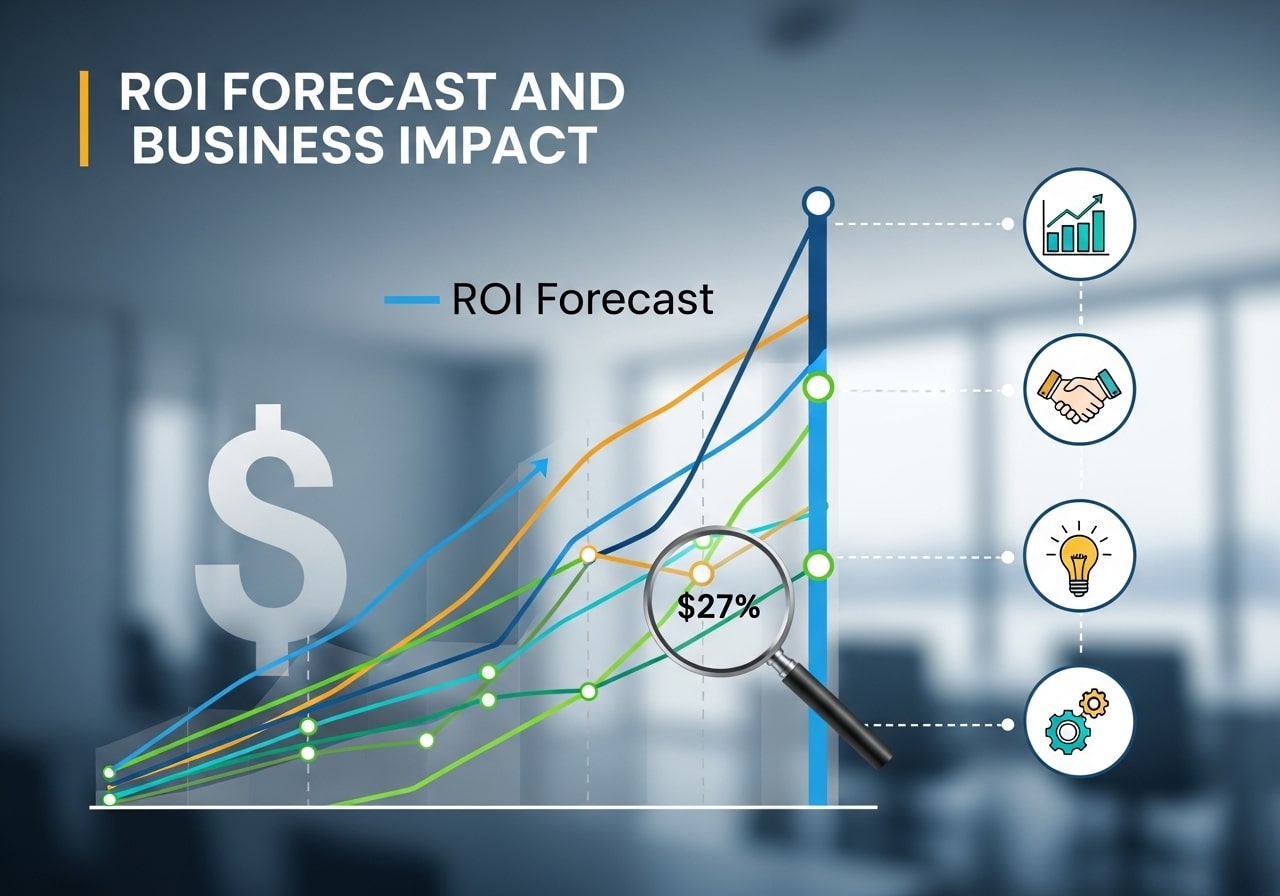
A disciplined, data-driven ABM approach can transform marketing into a revenue engine. Early-stage programs often see a 2–3x increase in engagement rates compared to generic campaigns, while win rates can double for targeted accounts. By carefully tracking pipeline velocity and deal size uplift, you can build a detailed ROI forecast. For instance, if you invest $200,000 in ABM tooling, content development, and paid channels, a conservative uplift of $1 million in incremental pipeline can yield a 5x return once deals close. Over time, the compounding effect of higher retention and cross-sell opportunities from strategic accounts further amplifies lifetime value and overall profitability.
Conclusion
Building a data-driven ABM strategy is not a one-off project—it’s an ongoing journey of refinement, collaboration, and innovation. By identifying the right accounts, enriching your data, personalizing content, orchestrating multichannel campaigns, and measuring every step, you create a repeatable blueprint for B2B growth. Align your sales and marketing teams around shared goals, leverage the right technology stack, and continuously optimize based on real-world performance. The result? A high-impact ABM engine that targets your most valuable prospects, accelerates pipeline creation, and drives sustainable revenue growth year after year.
Frequently Asked Questions (FAQ)
1. What is Account-Based Marketing (ABM)?
Account-Based Marketing is a strategic approach in which marketing and sales teams work together to identify and engage a defined set of high-value accounts with personalized campaigns. Instead of casting a wide net, ABM focuses resources on the accounts most likely to convert and deliver long-term value.
2. Why is data so important in ABM?
A data-driven approach ensures your target account selection, personalization, and campaign orchestration are based on real insights rather than assumptions. Accurate data improves targeting precision, boosts engagement, reduces wasted spend, and provides measurable ROI.
3. How do I know which accounts to target?
Identify accounts by defining your Ideal Customer Profile (ICP), analyzing firmographic and technographic data, monitoring intent signals, and collaborating closely with your sales team. Prioritization should combine both fit and real-time buying behavior.
4. What types of data should I collect before launching ABM?
You’ll want firmographics, technographics, intent signals, contact-level data, web analytics, CRM history, and account-specific insights like current vendors or recent news. This enriched data enables deeper personalization and more accurate account scoring.
5. How does personalization work in ABM?
Personalization goes beyond using a company’s name—it involves tailoring messages, offers, and experiences to the account’s industry, challenges, and buying stage. Examples include custom landing pages, executive briefs, tailored email sequences, and account-specific content.
6. What channels should I use for ABM campaigns?
Successful ABM programs use a coordinated, multichannel approach. Common channels include LinkedIn and display ads, email nurture programs, direct mail, sales outreach cadences, webinars, and invite-only events. Consistency across channels is key.
7. How should sales and marketing work together in ABM?
ABM only works when sales and marketing operate from a shared strategy. This includes joint account planning, unified KPIs, consistent communication via shared dashboards, and aligned incentives tied to revenue outcomes—not just lead volume.
8. What tools are essential for ABM success?
Typical tech stack components include data enrichment tools (ZoomInfo, Clearbit), intent platforms (Bombora, 6sense), ABM orchestration tools (Demandbase, Terminus), marketing automation systems (HubSpot, Marketo), and analytics/reporting tools (Looker, Power BI).
9. How do I measure ABM performance?
Key metrics include account engagement scores, pipeline velocity, opportunity creation rates, average deal size, win rate, and customer lifetime value (CLV). Tracking these KPIs helps you optimize your program over time.
10. What common mistakes should I avoid?
Avoid overly broad account lists, poor sales alignment, stale or inaccurate data, generic content, and weak measurement frameworks. Effective ABM requires precision, collaboration, and continuous optimization.
11. How long does it take to see results from ABM?
Most organizations see initial engagement improvements within 1–3 months. Pipeline acceleration and deal impact often become measurable within 3–6 months, with full ROI visibility typically around 6–12 months, depending on sales cycle length.
12. Is ABM only for large enterprises?
No. ABM is scalable. While enterprise companies may target dozens of accounts, smaller organizations can successfully run “lite” ABM programs focused on a handful of high-value prospects. The core principles remain the same—data, personalization, and alignment.
13. What kind of ROI can ABM deliver?
Many organizations see 2–3x higher engagement and significantly higher win rates compared to traditional outbound efforts. A well-executed ABM program can generate a 4–5x return on investment through larger deals, increased pipeline, and stronger retention.


