


Customer Relationship Management (CRM) helps businesses understand their customers, personalize interactions, and deliver consistent experiences across multiple channels. By leveraging data and automation, CRM strengthens customer loyalty, boosts retention, and drives revenue growth. Ultimately, it turns every touchpoint into an opportunity for meaningful engagement.
A business’s success depends entirely on its customers, making strong relationships essential, not optional. Customer Relationship Management (CRM) is the strategy and technology that help businesses manage, analyze, and improve interactions with customers. From personalizing marketing campaigns to tracking engagement across channels, CRM empowers companies to deliver meaningful experiences that drive loyalty, retention, and long-term growth. In this blog, we explore what Customer Relationship Management is in marketing, why it matters, and how it can transform business outcomes.
Customer Relationship Management — CRM Explained

Customer Relationship Management (CRM) is a strategy that businesses use to manage and foster relationships with their customers. It focuses on the capture, storage, and analysis of customer data to offer personalized services and targeted marketing. This helps answer the question: What is customer relationship management in marketing?
At its heart, CRM is a methodology for enhancing customer retention, satisfaction, and revenue through creating strong customer relationships. Some CRM tools offer simple methods to help businesses learn more about their customers, both new and old, and new old, whether through analytics or simply interacting with touchpoints.
Knowing what is customer relationship management in marketing helps clarify how these tools can shape better business strategies and customer journeys.
Essentials of CRM in the Marketing Domain
Data Collection and Administration
CRM is the process of extracting information about your customers from interactions on social channels, through email, purchasing history, and web activity. This data is then centrally available in a CRM system and more usable.
Customer Segmentation
With mined data, companies can segment their customers by demographic, preference, behavior or loyalty. Segmentation provides companies a way to focus marketing efforts towards the right audience.
Personalization
Customized text messages create customer stickiness. CRM systems allow marketers to develop personalised campaigns, suggest products, and provide unique experiences to customers.
Automation
Contemporary CRM systems connect to marketing automation solutions that help automate tasks that need to be lubricated, such as email follow-ups, drip campaigns, and customer satisfaction surveys.
Customer Feedback
CRM is more than a data collector: It is a data-based improver. Seeking and analyzing customer feedback helps businesses to better respond to changing customer requirements in a promising way. Understanding what is customer relationship management in marketing makes it easier to see why feedback loops matter.
CRM is a Game-Changer in Marketing — And Here’s How and Why

Enhancing Customer Experience
It’s like going to a shop where the personnel know your name, likes, and the stuff you bought before. That’s what I call getting to know your clients! CRM can replicate that experience in the online space, thus increasing overall customer satisfaction. That’s a major part of what customer relationship management in marketing is — personal connections at scale.
Increasing Retention And Loyalty
Obtaining a new customer can cost five times more than retaining an existing one. CRM allows businesses to track their most loyal customers and build a relationship with them. By knowing what they like, businesses can provide customized assistance and incentives to keep them around.
Targeted Marketing Campaigns
Through CRM, marketers can target campaigns at specific customer segments. For instance, a retail brand can send promotions on winter apparel to individuals in a cold-weather climate. This is why his laser precision targeting really maximizes ROI for our clients, while saving them wasted marketing dollars.
Knowing what is customer relationship management in marketing helps marketers align messages with each customer’s specific needs.
Deepening Customer Relationships
Using CRM, businesses can talk to their customers at the right time at various points during the customer lifecycle. Whether it’s onboarding, post-purchase follow-up or churn prevention, CRM makes sure that every interaction is both valuable and contributes to the customer relationship.
This is another example of what is customer relationship management in marketing — making each touchpoint count.
The Role of Customer Relationship Management Across the Customer Lifecycle
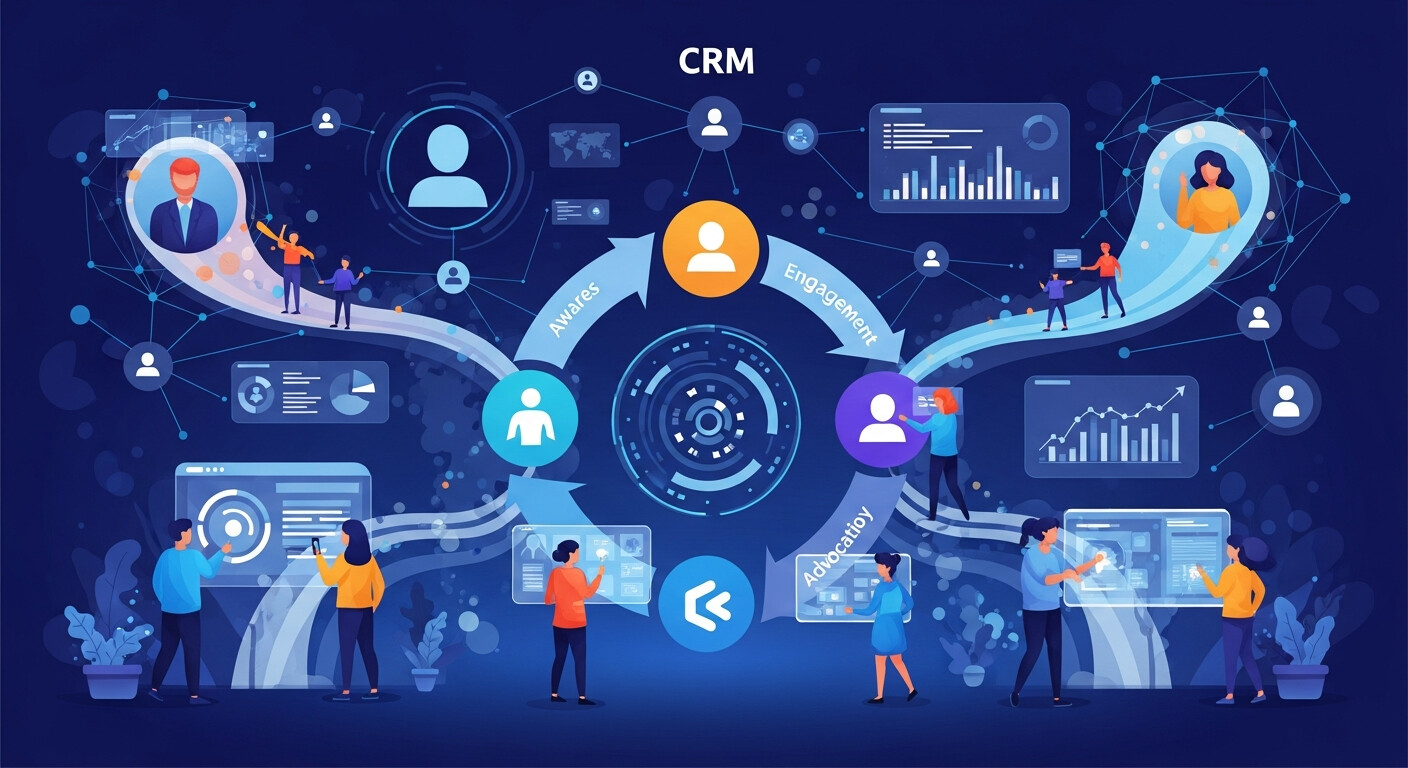
Customer Relationship Management in marketing delivers the greatest value when it is applied across the entire customer lifecycle. From the first point of awareness to long-term retention and brand advocacy, Customer Relationship Management enables businesses to build meaningful, data-driven relationships at every stage of the customer journey.
At the awareness and acquisition stage, Customer Relationship Management helps capture leads through multiple touchpoints such as websites, social media, and email campaigns. By collecting and organizing customer data, CRM systems allow marketers to nurture leads with personalized content, timely follow-ups, and targeted messaging that aligns with individual interests and behaviors.
As customers move into the engagement and conversion phase, Customer Relationship Management plays a critical role in tracking interactions and identifying buying signals. Marketers can use CRM insights to deliver relevant offers, product recommendations, and personalized experiences that increase conversion rates and shorten the sales cycle.
In the retention stage, Customer Relationship Management focuses on strengthening relationships beyond the initial purchase. CRM systems support loyalty programs, automated re-engagement campaigns, customer success initiatives, and proactive support. By understanding customer preferences and purchase history, businesses can anticipate needs and maintain consistent communication that builds trust and loyalty.
Finally, during the advocacy stage, Customer Relationship Management helps identify satisfied customers who are likely to recommend the brand. Through CRM-driven feedback collection, referral programs, and personalized rewards, businesses can turn loyal customers into long-term brand advocates.
Understanding what Customer Relationship Management is in marketing means recognizing its influence at every customer touchpoint. It is not just a post-sale tool, but a comprehensive strategy that guides customers throughout their entire journey, driving sustained growth and long-term business value.
CRM and Data-Driven Decision Making

In today’s competitive marketing landscape, businesses can no longer rely on intuition alone—data drives success. This is where Customer Relationship Management becomes indispensable. Modern marketing thrives on insights, and Customer Relationship Management systems serve as the central intelligence hub, collecting, organizing, and analyzing customer information from multiple touchpoints.
By consolidating customer data into a single platform, Customer Relationship Management enables marketers to gain deep insights into customer behavior, preferences, purchasing patterns, and engagement history. This data-driven approach allows marketing teams to understand not just who their customers are, but what they need, when they are most likely to act, and how to engage them effectively.
With these insights, businesses can make informed decisions about campaign timing, message personalization, channel selection, and budget allocation. Whether it’s deciding which social media platform will yield the highest ROI, determining which segment to target with a promotional offer, or adjusting email campaigns based on open and click-through rates, Customer Relationship Management ensures that every decision is backed by real customer data.
Moreover, Customer Relationship Management allows marketing teams to move from reactive strategies to proactive engagement. Predictive analytics and automated insights derived from CRM data can anticipate customer needs, uncover trends, and identify opportunities for cross-selling or upselling. This not only improves the effectiveness of marketing campaigns but also strengthens customer relationships over time.
In essence, integrating Customer Relationship Management into marketing operations transforms raw data into actionable intelligence. By leveraging CRM-driven insights, businesses can deliver personalized, timely, and relevant experiences that maximize customer satisfaction, loyalty, and lifetime value. Understanding the role of Customer Relationship Management in data-driven marketing is critical for any business seeking sustainable growth in today’s customer-centric market.
How Customer Relationship Management Supports Omnichannel Marketing
In today’s fast-paced digital world, customers interact with brands across multiple touchpoints—email, social media, websites, mobile apps, chatbots, and customer support. Customer Relationship Management (CRM) plays a crucial role in unifying these interactions into a single, cohesive customer view. By consolidating all customer data in one platform, Customer Relationship Management allows marketers to understand how each individual engages with the brand across every channel.
With Customer Relationship Management, marketers can ensure that messaging remains consistent, personalized, and relevant, no matter where the customer interacts. Whether a customer clicks on an email, leaves a comment on social media, browses your website, or contacts support, CRM systems record every interaction. This data helps marketing teams tailor future communications, anticipate customer needs, and provide a seamless experience across channels.
Effective Customer Relationship Management also enables brands to implement sophisticated omnichannel campaigns. For example, a customer who abandons a shopping cart online can be retargeted with personalized email reminders, while social media content reinforces the same message in a way that aligns with their preferences. This level of integration strengthens brand consistency and builds trust with customers, ultimately increasing engagement, conversions, and loyalty.
Moreover, Customer Relationship Management allows marketers to track the effectiveness of each channel, identify gaps, and optimize campaigns in real time. By analyzing engagement patterns, businesses can decide which channels perform best for specific segments, ensuring resources are allocated efficiently and ROI is maximized.
In essence, Customer Relationship Management is the backbone of omnichannel marketing. It transforms scattered customer interactions into actionable insights, enabling brands to deliver unified, personalized experiences at every stage of the customer journey. Understanding the role of Customer Relationship Management in omnichannel marketing is essential for businesses aiming to stay competitive in a customer-centric world.
How CRM Is (and Isn’t) Working in Today’s Marketing Industry
Example 1 – E-Commerce Recommendation Similarity Analysis for E-Commerce
Building sensitive recommendation engines is particularly important when the dataset is large, such as for an e-commerce site where hundreds or thousands of visualization items are available.
Amazon’s suggestion engine is one of the most famous instances of CRM at work. Amazon’s predictions, based on the thorough investigation of buying habits and browsing history, help suggest to customers which products they are most likely to purchase, both improving customer satisfaction and positively impacting sales.
Example 2 – Loyalty Programs
And Starbucks leverages CRM to push its successful loyalty program. The Starbucks app follows customers’ purchases and rewards them with stars that can be used for free drinks and food. This is seen as a way to reward customers and encourage them to make another purchase.
These examples illustrate what is customer relationship management in marketing with real-world use cases.
Example 3 – B2B Account Management
CRM isn’t confined to B2C. A lot of B2B companies use customer relationship management (CRM) software such as Salesforce to track client accounts. These platforms monitor interactions, manage follow-ups, and offer insight into opportunities where there is potential for upselling or cross-selling.
CRM Tools and Platforms

The software is crucial to keeping businesses organized and efficient when handling the large volumes of customer data. The following are some of the most commonly used CRM tools in marketing:
- HubSpot CRM: Free software that provides tools for email tracking, live chat, and capturing leads in an easy-to-use system.
- Salesforce: A CRM powerhouse, perfect for those with an eye on analytics and marketing automation.
- Zoho CRM: A cost-effective option for SMBs that includes features such as AI-driven analytics.
- Freshsales: Remembered for its easy-to-use interface and for its lead scoring, pipeline management, and email campaigns features.
- Pipedrive: This tool makes it easy to keep track of leads down the sales funnel, ideal for small sales and marketing teams.
If you’re choosing a platform, you’re essentially choosing how you want to approach what is customer relationship management in marketing.
How to Apply CRM to Your Marketing Efforts
Define Goals
Begin by thinking about what you want your CRM strategy to accomplish. Do you care more about customer satisfaction, sales, or customer retention? Set some clear goals that will direct how you will implement your service.
Choose the Right CRM Tool
Choose a CRM that suits your business. Think about your team’s size, budget, and needed features before you choose12.
Integrate CRM into Other Departments
CRM is at its best when sales, marketing, and customer service come together. Facilitate communication between teams by combining CRM workflows that promote interdepartmental collaboration.
Train Your Team
A CRM is no better than those who use it. Teach your staff to utilize the platform efficiently, whether that means tracking leads, creating marketing campaigns or interpreting data.
Leverage Customer Data
Leverage the information you’ve collected to send personalized campaigns that meet the users at their stage, automate workflows and perfect customer engagement.
This is the practical side of what is customer relationship management in marketing — turning data into action.
Measure Performance
Track the effectiveness of your CRM strategy with indicators such as CLV, churn rate, and customer satisfaction scores. Refactor your strategy according to these observations.
How CRM Can Take Your Business To New Heights

CRM is not an option, it is core for your marketing strategy. It enables enterprises to form relationships at scale, personalize engagement and be competitive in a customer-driven world.
If you’re ready to move beyond and begin using CRM to enhance your marketing, begin by looking at how your customers are interacting with you right now, and brainstorm ways to take that to the next level. That is where you’ll truly understand what is customer relationship management in marketing and how it transforms your business.
Frequently Asked Questions
Q1: What is Customer Relationship Management (CRM) in marketing?
CRM in marketing is a strategy and system for managing customer interactions and data to improve engagement, retention, and personalized marketing campaigns.
Q2: How does CRM improve customer retention?
By tracking preferences, purchase history, and engagement patterns, CRM allows businesses to deliver personalized offers, timely follow-ups, and loyalty programs that keep customers coming back.
Q3: Can CRM be used for both B2B and B2C businesses?
Yes. CRM tools are flexible and can manage relationships for B2C, like retail and e-commerce, and B2B, like account management and client services.
Q4: What role does CRM play in omnichannel marketing?
CRM consolidates customer interactions from multiple channels, ensuring consistent messaging and personalized experiences across email, social media, websites, apps, and customer support.
Q5: How do I choose the right CRM for my business?
Consider your team size, budget, marketing goals, and required features. Popular options include HubSpot, Salesforce, Zoho, Freshsales, and Pipedrive.



[…] Scaling personalized ABM campaigns is impossible if your marketing automation platform (MAP) and Customer Relationship Management (CRM) system remain disconnected. These systems must communicate bidirectionally in real-time to […]