
Driving Success with Account-Based Marketing Services
 11 min read
Account-Based Marketing (ABM) brings personalization in marketing to a whole new level, and it is an amazingly effective strategy for businesses with very precise clientele types. This leads to a greater return on investments, better relationships with customers, as well as more synergy between sales and marketing teams than ever.
So, what is the recipe for working ABM? Here’s where account-based marketing solutions come in, and with them, software built to supercharge and simplify those efforts.
This guide breaks down ABM, benefits, best solutions, and how to measure success. Beginner or advanced, you’re going to find real, useful advice to enhance your ABM strategies.
What Is Account-Based Marketing (ABM) For?
ABM is, at its heart, a form of targeted marketing that enables companies to concentrate their efforts on their most valuable accounts instead of trying to reach a wide number of prospects.
Rather than developing campaigns for a catchall, one-size-fits-all audience, ABM focuses on your most valuable accounts, those with the highest propensity to convert.
More doesn’t always mean better; it’s the quality that counts.
But by focusing your content more closely, you can offer personalized experiences that speak to the decision-makers.
Instead of taking a spray and pray approach, what if you could focus on one high-value account, building a tailored email sequence, ads, even a webinar, that speaks to the exact pain they’re feeling? That’s the ABM advantage.
Why Is ABM Important?
ABM works really well for B2B businesses with long sales cycles or selling into the enterprise. It brings sales and marketing closer together, with unified messaging and resource management.
With account-based marketing solutions, it has become easier and more effective to execute ABM.
Benefits of ABM Solutions
Enhanced Personalization
ABM technologies enable you to create personalized campaigns for specific accounts. Whether it is personalized email outreach or targeted ad campaigns, these platforms have simplified personalization.
Improved ROI
ABM concentrates on those high-value accounts, and stops you wasting spend on leads that look like they won’t convert. The Information Technology Services Marketing Association (ITSMA) says that ABM has the best ROI of all B2B marketing strategies.
Deeper Sales and Marketing Alignment
ABM thrives on collaboration. The two teams collaborate on identifying target accounts, developing campaigns, and closing business, creating a more efficient approach where marketing and sales operate in lock step.
Shorter Sales Cycles
Targeting the most-suitable accounts for the business, the sales cycle is shortened substantially through ABM. Prospects get content tailored to their stage of the buying process, thereby hastening their road to the sale.
Better Measurement
ABM: You’ll Never Have to Ask About Marketing Impact Again. With account-based marketing solutions, you’re able to follow the complete customer life cycle, which means precise insights into what’s working.
Must-Have ABM Software Features
- Targeting and Segmentation of Accounts
Seek out tools that help you quickly determine and tag high-value accounts. The fact that it is AI-powered segmentation is a plus. - Multi-Channel Campaigns
The ABM software you use must be as easy to use as possible, deploying across a variety of channels (email, social, paid ads, and even direct mail). - Personalization Capabilities
Your solution should give you the ability to deliver hyper-targeted, personalized campaigns. Dynamic content creation & automated workflow is pure gold. - Analytics and Reporting
Mechanisms to report on ABM performance are essential. Choose platforms that have strong reporting features, so you can monitor engagement, conversions and ROI. - Sales Integration
It must be able to integrate with CRM platforms such as Salesforce or HubSpot. We know that ABM succeeds when sales and marketing are aligned, so seamless tool communication is key.
Top ABM Solution Providers
- Demandbase
A leading pack option that mixes AI with B2B-oriented tools to help you target accounts and analyze them seamlessly. - Terminus
A great all-in-one solution for running multi-channel campaigns with automation. - HubSpot ABM Tools
Their ABM tools are the way to go if you’re already using HubSpot for your CRM—easy to integrate and strong on reporting. - 6sense
Recognized for its leadership in the predictive analytics space, 6sense helps businesses to realize and meet customer needs at every stage in the decision-making journey. - RollWorks
Softwares (Great)Winner: RollWorks by DiscoverOrg RollWorks, powered by machine learning, is a star at finding and engaging accounts.
How Do You Do ABM Right?
Step 1. Establish Ideal Customer Profiles (ICPs)
Begin with the accounts that have the most value for your business. Zero in on their industry, the size of their company, their pain points and those tasked with making the decisions.
Step 2. Get Your Sales and Marketing Teams on the Same Page
There must be a very clear division of labor and ownership as to who is doing what when it comes to targeting accounts, orchestrating campaigns, and following up.
Step 3. Create Tailored Campaigns
“Personalization is really the secret sauce to success with an ABM approach.” Design campaigns for each account that cater to their unique pain points and present the right solution.
Step 4. Leverage Data and Insights
Leverage analytics to monitor engagement and behavior of prospects. This information may be used to fine tune tactics, and increase efficiency with time.
Step 5. Use Multi-Channel Strategies
Get in front of target accounts on any channel. Combine these with email, social ads, webinars, and offline touchpoints for the best effect.
How to Measure the Success of Your ABM Efforts
Success in ABM isn’t a matter of just closing deals but creating and sustaining relationships and results you can measure.
Metrics to monitor:
- Engagement Metrics
Track website visits, email opens, social activities and content downloads for account interest and activity. - Pipeline Growth
Determine how many high-quality leads are flowing through the funnel thanks to ABM campaigns. - Close Rates
High engagement with focused campaigns often results higher close rates. - ROI
Track your ROI to make sure your ABM strategy is leading to improved profitability. - Customer Retention
ABM doesn’t stop when a deal is closed. Track how well you are being supportive of accounts for future upselling or cross selling discernment.
The Role of Data in Modern ABM Strategies
Data sits at the core of successful account-based marketing initiatives. Without reliable insights, it becomes difficult to identify high-value accounts or understand buyer intent. Modern ABM relies heavily on behavioral data, firmographic information, and engagement history to guide strategy. With the help of Predictive Account-Based Marketing, businesses can anticipate which accounts are most likely to convert and allocate resources accordingly. This approach reduces guesswork and improves campaign precision. By analyzing patterns such as website activity, content engagement, and historical conversions, marketers can prioritize accounts that show strong buying signals. As a result, ABM efforts become more efficient, scalable, and aligned with revenue goals, helping teams focus on opportunities that truly matter.
Personalization at Scale in ABM Campaigns
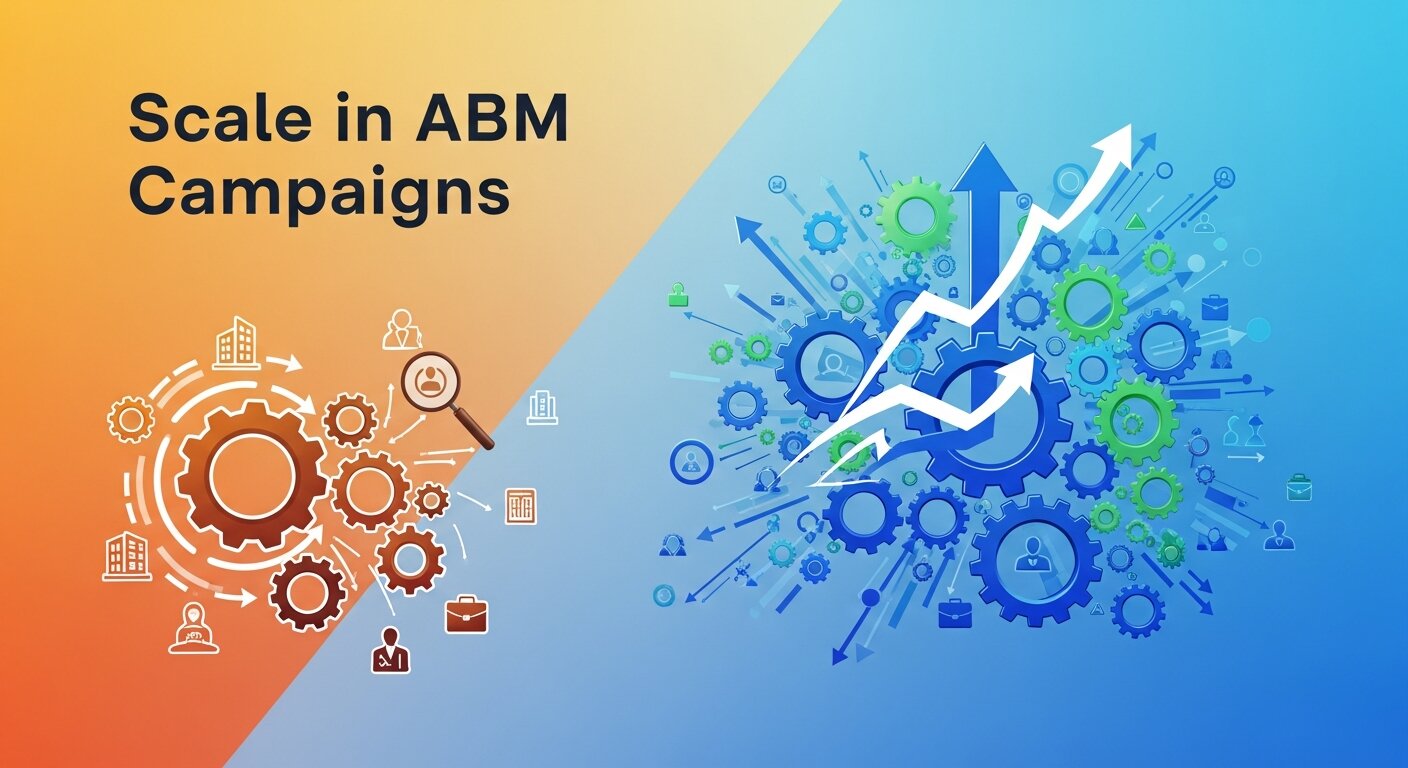
One of the biggest challenges in ABM is delivering personalized experiences without overwhelming marketing teams. Today’s tools make it possible to scale personalization while maintaining relevance. Using AI-Powered Account-Based Marketing, brands can automatically tailor messaging, content, and timing based on account behavior and preferences. This enables companies to create customized experiences across multiple touchpoints without manual effort. AI-driven insights help marketers understand what resonates with each account, ensuring content feels timely and relevant. The result is stronger engagement, improved trust, and better conversion rates. When personalization is executed at scale, ABM campaigns feel less intrusive and more like meaningful conversations with the right decision-makers.
Content Strategy for Account-Based Marketing
Content plays a critical role in nurturing target accounts throughout the buyer’s journey. Unlike traditional marketing, ABM content must address specific pain points, challenges, and goals of individual accounts or industries. High-performing ABM content includes personalized landing pages, tailored case studies, industry-specific whitepapers, and targeted webinars. Each asset should be mapped to the account’s stage in the decision-making process. Rather than producing large volumes of generic content, ABM focuses on relevance and value. When content directly reflects an account’s needs, it builds credibility and positions your brand as a trusted solution provider. A thoughtful content strategy ensures consistent engagement and supports sales conversations effectively.
Aligning ABM with the Sales Funnel
For ABM to succeed, it must align seamlessly with the sales funnel. Marketing efforts should support sales objectives at every stage, from awareness to deal closure. This requires close collaboration between teams to define shared goals, success metrics, and account engagement thresholds. Marketing can provide sales teams with insights on account activity, content interactions, and readiness signals. Meanwhile, sales feedback helps refine targeting and messaging. When ABM is integrated into the funnel, prospects receive relevant information exactly when they need it. This alignment shortens sales cycles, improves win rates, and ensures that both teams are working toward the same revenue-driven outcomes.
ABM Outreach and Communication Channels
Successful ABM campaigns rely on reaching accounts through the right mix of communication channels. Email, social media, paid advertising, webinars, and direct outreach all play a role in engaging decision-makers. ABM Email Marketing remains one of the most effective channels, allowing brands to deliver personalized messages directly to key stakeholders. However, email works best when combined with other touchpoints to reinforce messaging. A multi-channel approach ensures consistent visibility and increases the chances of engagement. The key is coordination—messages across channels should complement each other and guide accounts through a cohesive journey. This creates stronger brand recall and deeper relationships over time.
Overcoming Common ABM Implementation Challenges
While ABM delivers strong results, implementation can present challenges. Common obstacles include poor data quality, lack of internal alignment, and unrealistic expectations around timelines. Many organizations struggle with identifying the right accounts or maintaining consistent personalization. To overcome these issues, businesses should start small, refine their ideal customer profiles, and invest in the right tools. Clear communication between sales and marketing is essential, as is ongoing performance analysis. ABM is not a one-time campaign but an evolving strategy. Addressing challenges early helps teams build a sustainable ABM framework that delivers long-term value and measurable growth.
Scaling ABM for Long-Term Growth
Once ABM proves successful, the next step is scaling efforts without losing effectiveness. Scaling ABM requires refining processes, leveraging automation, and expanding account coverage strategically. Teams should focus on repeatable workflows, standardized personalization frameworks, and consistent measurement practices. Technology plays a key role by enabling automation while preserving relevance. As organizations grow, ABM can evolve from targeting a few strategic accounts to managing broader account tiers. The goal is to maintain quality while increasing reach. With the right foundation, ABM becomes a scalable growth engine that supports long-term business objectives and strengthens customer relationships.
The Future of ABM Solutions
The future of ABM looks bright and is expanding. ABM campaigns will continue to be more focused and targeted thanks to innovations in AI and predictive analytics.
Companies that are able to make ABM (account-based marketing) a strategic priority will not just compete… they’ll reshape market success.
In order to take advantage of this, you should begin to look at account-based marketing vendors that fit your needs. Don’t be left behind in this digital age!
Frequently Asked Questions (FAQs)
What is Account-Based Marketing (ABM)?
Account-Based Marketing (ABM) is a targeted B2B marketing strategy that focuses on high-value accounts rather than a broad audience. It aligns sales and marketing efforts to deliver personalized campaigns tailored to specific decision-makers.
Who should use Account-Based Marketing?
ABM is ideal for B2B companies, especially those with long sales cycles, high-value deals, or enterprise-level clients. It works particularly well for SaaS, IT services, manufacturing, and professional services.
How is ABM different from traditional marketing?
Traditional marketing casts a wide net to attract many leads, while Account-Based Marketing prioritizes quality over quantity by targeting specific accounts with personalized messaging and campaigns.
What are the main benefits of Account-Based Marketing?
Key benefits of ABM include:
-
Higher ROI
-
Improved sales and marketing alignment
-
Shorter sales cycles
-
Better personalization
-
Clearer measurement of marketing impact
What tools are used for Account-Based Marketing?
Popular ABM solutions include platforms like Demandbase, Terminus, HubSpot ABM tools, 6sense, and RollWorks. These tools help with account targeting, personalization, analytics, and sales integration.
How do you measure the success of an ABM campaign?
Success in Account-Based Marketing is measured using metrics such as account engagement, pipeline growth, deal close rates, ROI, and customer retention rather than just lead volume.
Is Account-Based Marketing expensive?
ABM can require a higher upfront investment, but it often delivers a higher return on investment by focusing resources on accounts most likely to convert and generate long-term value.
Can small businesses use Account-Based Marketing?
Yes. While ABM is popular among large enterprises, small and mid-sized businesses can implement ABM on a smaller scale using affordable tools and focusing on a limited number of high-value accounts.
How long does it take to see results from ABM?
ABM is a long-term strategy. While engagement improvements may be seen early, meaningful pipeline and revenue results typically appear over several months as relationships develop.
What is the future of Account-Based Marketing?
The future of Account-Based Marketing lies in AI-driven insights, predictive analytics, deeper personalization, and tighter integration between sales and marketing technologies.


Live Webinars for ABM: Strategies to Engage High-Value Accounts


Balancing Personalization and Privacy in Modern ABM

Virtual Events and Webinars: Powerful Strategies for ABM Success