

ABM is a powerful but complex strategy that requires alignment, personalization, and strong data foundations. Successfully overcoming Common Challenges in ABM enables businesses to drive higher-quality pipelines and stronger client relationships. With the right strategy, tools, and collaboration, ABM can become a long-term growth engine for B2B organizations.
Account-Based Marketing (ABM) has transformed the way B2B organizations approach growth, shifting the focus from volume-driven lead generation to precision, personalization, and long-term account value. As companies move away from broad marketing tactics, ABM has become a strategic necessity for businesses aiming to build deeper relationships with high-value clients and drive measurable revenue impact.
However, while ABM promises significant rewards, its execution is far from simple. Many organizations face operational, strategic, and technological barriers that slow down or even derail their ABM initiatives. From identifying the right target accounts to aligning internal teams and measuring success, businesses encounter multiple Common Challenges in ABM that require careful planning and execution.
This blog explores these Common Challenges in ABM in depth and provides practical, actionable solutions to help Marketing Managers, Sales Professionals, and Business Leaders implement ABM more effectively and confidently.
What is ABM, and Why Does It Matter?
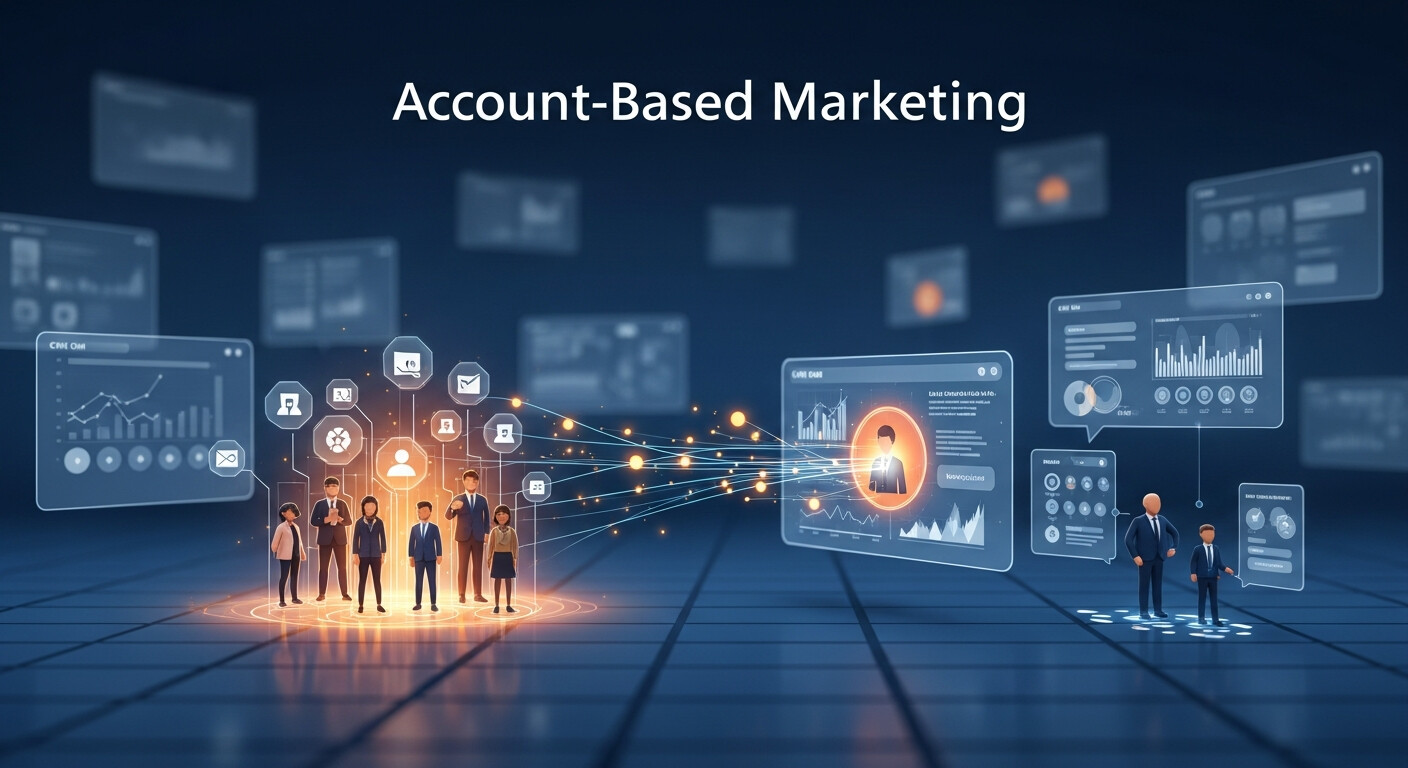
Account-Based Marketing (ABM) has rapidly emerged as one of the most effective strategies for B2B organizations that want more targeted growth, higher deal values, and stronger client relationships. Unlike traditional marketing approaches that focus on generating a large volume of leads, ABM takes a more focused and strategic route. Instead of casting a wide net, ABM concentrates on a carefully selected set of high-value accounts and delivers highly personalized experiences tailored to their specific needs, challenges, and business goals.
This targeted approach allows businesses to engage decision-makers more effectively, build deeper relationships, and ultimately drive higher conversions and revenue. However, while ABM offers significant benefits, implementing it successfully at scale is not a simple task. Many organizations struggle with common challenges in ABM such as selecting the right accounts, aligning sales and marketing teams, creating personalized content efficiently, and accurately measuring campaign performance.
This blog explores the most common ABM challenges and provides practical strategies to help Marketing Managers, Sales Professionals, and Business Leaders overcome them and build a stronger, more effective ABM strategy.
Identifying and Prioritizing Key Accounts
One of the most common challenges in ABM—and arguably the most critical—is determining which accounts to target. Unlike traditional marketing, where the goal is to reach as many potential customers as possible, ABM requires a highly selective and strategic approach. If businesses fail to clearly define and prioritize their target accounts, they risk investing valuable time, budget, and resources in prospects that are unlikely to convert or deliver meaningful business value.
Selecting the wrong accounts can weaken the entire ABM strategy, leading to low engagement, longer sales cycles, and disappointing results. This makes account selection one of the most fundamental common challenges in ABM that organizations must address from the very beginning.
Why This is a Challenge
Many businesses struggle with account prioritization because they lack reliable data, clear criteria, or a structured evaluation process. Some companies rely too heavily on surface-level factors such as company size or industry, without considering deeper insights like intent signals, buying readiness, or long-term revenue potential.
Another major issue is misalignment between sales and marketing teams. Marketing may prioritize accounts based on campaign performance or market trends, while sales may focus on accounts they already have relationships with. Without a shared understanding of what defines a “high-value” account, conflicting priorities can create inefficiencies, miscommunication, and delays—further contributing to common challenges in ABM.
How to Overcome It
To overcome this challenge, businesses must adopt a structured, data-driven, and collaborative approach to account selection and prioritization.
1) Define Ideal Customer Profiles (ICP)
Start by creating a clear and detailed Ideal Customer Profile (ICP). This should outline the characteristics of your best-fit accounts, including:
- Company size and annual revenue
- Industry and market segment
- Geographic location
- Organizational structure and decision-making hierarchy
- Technology stack and digital maturity
- Key business challenges your solution can solve
A strong ICP serves as a guiding framework that keeps your ABM strategy focused and aligned with your business objectives.
2) Use Data-Driven Tools and Insights
Instead of relying on assumptions, leverage data and technology to refine your account selection. CRM platforms like HubSpot, Salesforce, or Zoho, along with ABM tools such as Demandbase, Terminus, or 6sense, can provide valuable insights into:
- Firmographic data (company characteristics)
- Technographic data (tools and platforms they use)
- Behavioral and intent data (signals that indicate buying interest)
These insights help businesses move beyond guesswork and make informed decisions about which accounts are most likely to engage and convert.
3) Collaborate Across Teams
Successful ABM requires close collaboration between sales and marketing. Both teams must agree on what qualifies as a high-value account and work together to build a unified target account list. Regular meetings, shared dashboards, and clear communication can help ensure alignment and reduce friction—addressing one of the key common challenges in ABM.
4) Prioritize Accounts Strategically Using a Tiered Approach
Not all accounts require the same level of effort or personalization. A tiered model helps businesses allocate resources effectively:
- Tier 1 – Strategic Accounts:
These are your highest-value accounts with the greatest revenue potential. They require highly customized outreach, personalized content, and dedicated sales engagement. - Tier 2 – High-Potential Accounts:
These accounts show strong potential but may not justify fully bespoke campaigns. A mix of personalized and scalable marketing tactics works best here. - Tier 3 – Emerging Accounts:
These are broader target accounts that can be nurtured through more automated or programmatic ABM efforts.
By structuring accounts in this way, organizations can balance personalization with scalability—one of the most effective ways to overcome common challenges in ABM related to resource management and efficiency.
Aligning Sales and Marketing Teams

For ABM to succeed, sales and marketing must operate as a unified team rather than separate departments with different priorities. However, one of the most common challenges in ABM is the persistent misalignment between these two functions. In many organizations, sales and marketing still operate in silos, using different tools, metrics, and strategies, which leads to miscommunication, duplicated efforts, and inconsistent messaging to target accounts.
When teams are not aligned, ABM loses its effectiveness. Marketing may generate engagement and interest, but sales may not follow up strategically. Conversely, sales may pursue accounts that marketing has not sufficiently nurtured, creating disconnects in the customer journey.
Why This is a Challenge
Sales teams are typically driven by revenue and deal closure, focusing on immediate opportunities. Meanwhile, marketing teams often prioritize brand awareness, engagement, and long-term relationship building. While both goals are valuable, they can conflict if not aligned under a shared ABM strategy.
Without clearly defined shared objectives, teams may work in parallel rather than together—making this one of the most persistent common challenges in ABM that organizations must actively address.
How to Overcome It
To bridge this gap and strengthen alignment, organizations should take a structured approach to collaboration.
Establish Shared Goals:
Both teams must agree on what success looks like in ABM. Aligning on key KPIs such as pipeline influenced, conversion rates, account engagement, and revenue ensures that everyone is working toward the same outcomes.
Use Integrated Technology:
Implement centralized platforms like Salesforce, HubSpot, or Marketo that allow both teams to access real-time account data, track interactions, and coordinate outreach seamlessly.
Encourage Cross-Functional Meetings:
Regular ABM check-ins—weekly or bi-weekly—help sales and marketing review progress, refine strategies, and address challenges together. These discussions reduce friction and improve strategic alignment.
Create Joint Accountability:
Tie performance incentives or bonuses to shared ABM outcomes rather than individual departmental goals. This encourages true collaboration and collective responsibility for success.
When sales and marketing work as a cohesive unit, they not only overcome common challenges in ABM but also significantly improve overall campaign performance and revenue impact.
Creating Personalized and Engaging Content

Another major hurdle in ABM is creating highly personalized and engaging content at scale. Unlike traditional marketing, where one message can reach thousands of prospects, ABM requires customized messaging tailored to individual accounts. This makes content creation one of the most resource-intensive common challenges in ABM.
Many marketing teams struggle to balance personalization with efficiency, often finding themselves overwhelmed by the need to produce bespoke content for multiple accounts simultaneously.
Why This is a Challenge
In ABM, every email, landing page, case study, webinar, or sales asset should speak directly to the specific needs, pain points, and goals of the target account. Generic content simply does not resonate in an ABM framework.
This level of customization requires deep research, creative effort, and time—making it difficult to scale without the right processes and tools.
How to Overcome It
To make personalized content creation more manageable, businesses can adopt a smarter approach.
Understand Account Needs:
Conduct thorough research on each target account by analyzing their industry trends, business challenges, and digital presence. Social media insights, company reports, and intent data tools can provide valuable context.
Use Reusable Templates:
Rather than creating everything from scratch, develop adaptable templates for emails, presentations, and reports that can be customized quickly for each account.
Tell Human Stories:
Use case studies, testimonials, and success stories that demonstrate real-world value and align with the account’s challenges. Storytelling helps build trust and credibility.
Leverage AI Tools
Platforms like Jasper, Writer, or other AI content tools can help marketers generate tailored messaging efficiently, reducing time and effort while maintaining quality.
By refining content workflows and leveraging technology, organizations can overcome one of the most demanding common challenges in ABM and deliver meaningful, personalized engagement at scale.
Measuring the return on investment (ROI) of ABM campaigns remains one of the most debated and complex common challenges in ABM. Unlike traditional marketing, where success is often measured by lead volume or website traffic, ABM focuses on quality over quantity. This makes standard marketing metrics insufficient and sometimes misleading.
Many organizations struggle to demonstrate the financial impact of ABM, leading to internal skepticism and difficulty securing long-term investment in the strategy.
Why This is a Challenge
ABM typically involves longer sales cycles, multiple decision-makers, and numerous touchpoints before a deal is closed. This makes attribution complicated. Traditional metrics such as impressions, clicks, or lead count do not accurately reflect ABM success, which is more focused on account engagement, pipeline progression, and revenue influence.
How to Overcome It
To accurately measure ABM ROI, organizations must shift their approach to analytics.
Track Account-Level Metrics:
Instead of focusing on individual leads, track metrics such as:
- Account engagement score
- Pipeline velocity
- Deal conversion rate
- Average deal size
- Win rate for targeted accounts
Use Attribution Models:
Implement multi-touch attribution models to understand how different marketing and sales interactions contribute to revenue across the buyer journey.
Invest in ABM Analytics Tools:
Platforms like Engagio, Triblio, or PathFactory provide deeper insights into account behavior, content engagement, and campaign performance.
Be Patient and Strategic:
ABM is a long-term investment. While some results may take time, setting clear benchmarks and tracking progress consistently will help demonstrate its value over time.
By focusing on the right metrics and investing in the appropriate tools, organizations can overcome one of the most persistent common challenges in ABM and clearly showcase the impact of their efforts.
Building an ABM-Ready Data Foundation
A strong ABM strategy begins with clean, unified, and actionable data. One of the Common Challenges in ABM is that many organizations operate with fragmented data spread across CRM, marketing automation, and sales tools, which weakens targeting, personalization, and decision-making.
Without a reliable data foundation, businesses struggle to identify high-value accounts, track engagement, and measure performance—making this one of the most fundamental Common Challenges in ABM to address early. By investing in data hygiene, enrichment tools, and a centralized system of record, businesses can create a reliable foundation that powers smarter account selection, better personalization, and stronger engagement.
Securing Executive Buy-In for ABM
ABM often requires budget, cross-team coordination, and long-term commitment, making leadership support critical. A major Common Challenges in ABM is gaining and maintaining executive buy-in, especially when results take time to materialize.
Without clear executive alignment, initiatives can lose momentum, funding, or internal priority. Demonstrating early wins, aligning ABM goals with business outcomes, and presenting data-backed projections can help overcome this Common Challenges in ABM and secure sustained leadership approval.
Scaling Personalization with Technology
While personalization is at the heart of ABM, doing it manually at scale is impractical—another Common Challenges in ABM that many marketing teams face. Creating bespoke content for dozens or hundreds of accounts can quickly overwhelm resources if not supported by the right tools.
Marketing teams must leverage automation, AI, and ABM platforms to tailor messaging efficiently across accounts. The right mix of technology allows teams to maintain relevance while reducing manual effort and improving consistency, helping organizations overcome this Common Challenges in ABM effectively.
Orchestrating Multi-Channel Account Engagement
 Successful ABM extends beyond email or ads; it requires coordinated engagement across multiple touchpoints. One of the Common Challenges in ABM is ensuring consistency across channels while maintaining personalization.
This includes personalized emails, targeted ads, content marketing, social selling, and direct sales outreach. A well-orchestrated multi-channel approach ensures accounts receive consistent and meaningful interactions throughout their journey, reducing fragmentation—another key Common Challenges in ABM that businesses must manage.
Enhancing the Account Experience (ABX)
Modern ABM is evolving into Account-Based Experience (ABX), where the focus shifts from marketing alone to the entire customer journey. A frequent Common Challenges in ABM is that organizations still treat marketing, sales, and customer success as separate functions rather than a unified experience team.
ABX requires aligning marketing, sales, and customer success to deliver seamless, value-driven interactions at every stage of the account lifecycle. A strong ABX approach helps build trust, deepen relationships, and improve retention—helping businesses move beyond traditional Common Challenges in ABM toward a more holistic strategy.
Continuous Optimization Through Insights
ABM is not a “set it and forget it” strategy; it requires ongoing refinement. One of the most overlooked Common Challenges in ABM is failing to continuously analyze and optimize performance.
Teams should regularly review engagement data, pipeline movement, and campaign effectiveness, identify gaps, and experiment with new tactics. By adopting a culture of continuous learning and improvement, organizations can systematically overcome Common Challenges in ABM and maximize long-term impact.
Unlocking the Full Potential of ABM
Establishing an ABM framework is no easy task, and businesses must navigate multiple Common Challenges in ABM along the way. However, organizations that commit to overcoming these obstacles often see significant returns in pipeline quality, deal size, and customer retention.
As organizations refine their approach to account selection, internal alignment, personalization, and analytics, they unlock the true power of ABM to drive sustainable growth and reduce recurring Common Challenges in ABM over time.
The future of ABM will likely involve AI and predictive analytics to enhance personalization and performance tracking, helping businesses proactively address emerging Common Challenges in ABM before they become roadblocks. Companies that stay ahead of these trends will gain a competitive edge.
If you’re ready to take your ABM strategy to the next level and tackle Common Challenges in ABM more effectively, get in touch with our experts today and make the next leap toward measurable, scalable business growth.
Frequently Asked Questions
1. What are the most common challenges in ABM?
The most common challenges in ABM include selecting the right target accounts, aligning sales and marketing teams, creating personalized content at scale, measuring ROI accurately, building a strong data foundation, and securing executive buy-in.
2. How long does it take to see results from ABM?
ABM is a long-term strategy. While some early engagement improvements can be seen within a few months, meaningful revenue impact typically takes 6–12 months, depending on the sales cycle.
3. How is ABM different from traditional marketing?
Traditional marketing focuses on generating a high volume of leads, whereas ABM focuses on a smaller number of high-value target accounts with highly personalized marketing efforts.
4. What tools are best for ABM?
Popular ABM tools include HubSpot, Salesforce, Demandbase, Terminus, 6sense, Engagio, PathFactory, and Triblio. AI tools like Jasper and Writer can also support content personalization.
5. How do you measure ABM success?
ABM success should be measured using account-level metrics such as engagement score, pipeline velocity, deal conversion rate, average deal size, and revenue influenced rather than lead volume.
6. How can sales and marketing alignment be improved for ABM?
Alignment can be improved by establishing shared KPIs, using integrated platforms, holding regular cross-functional meetings, and tying incentives to joint performance outcomes.
7. Can small businesses use ABM?
Yes. Even small businesses can implement ABM by targeting a limited number of high-value accounts and using scalable personalization techniques.
8. What is the future of ABM?
The future of ABM will be driven by AI, predictive analytics, and Account-Based Experience (ABX), where marketing, sales, and customer success work together to deliver seamless account journeys.