AI-powered account-based marketing is transforming B2B growth by combining predictive analytics, real-time personalization, and ethical AI practices. By aligning sales and marketing, optimizing engagement, and focusing on high-value accounts, organizations can drive sustainable revenue and long-term customer relationships.
Account-based marketing (ABM) has evolved from a buzzword to a proven strategy that drives meaningful revenue growth. Now, artificial intelligence is transforming how businesses identify, engage, and convert their highest-value prospects.
Companies using AI-powered ABM strategies report 208% higher revenue attribution compared to traditional marketing approaches. This isn’t just about automation—it’s about creating hyper-personalized experiences that resonate with decision-makers at scale.
The convergence of AI and account-based marketing represents a fundamental shift in how B2B companies approach their most valuable accounts. Understanding what comes next will determine which organizations thrive in an increasingly competitive landscape.
The Current State of AI in Account-Based Marketing
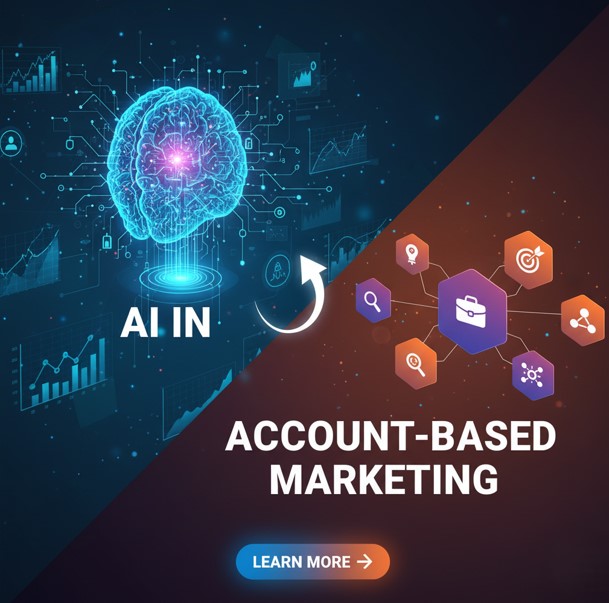
Modern ABM platforms now leverage machine learning algorithms to analyze vast datasets and identify buying signals that human marketers might miss. These systems process everything from website behavior to social media engagement, creating comprehensive account profiles that inform targeting decisions.
Predictive analytics has become particularly valuable for account selection. AI models can score potential accounts based on historical data patterns, helping marketing teams focus their efforts on prospects most likely to convert. This eliminates much of the guesswork traditionally associated with account prioritization.
Content personalization has reached new levels of sophistication through AI-driven dynamic content engines. These systems automatically customize messaging, imagery, and calls-to-action based on account characteristics, industry verticals, and engagement history.
Advanced Personalization Through Machine Learning
Machine learning algorithms excel at pattern recognition across multiple data points simultaneously. In the context of account-based marketing, this capability enables unprecedented levels of personalization that feel genuinely relevant rather than obviously automated.
AI systems now analyze job titles, company size, technology stack, recent funding rounds, and dozens of other variables to determine the most effective messaging approach. This multi-dimensional analysis creates personalization that goes far beyond simple name tokens and company references.
Dynamic email sequences represent one practical application of this technology. Instead of sending the same five-email sequence to every prospect, AI determines the optimal number of touchpoints, timing intervals, and content themes based on similar account profiles that successfully converted.
Website personalization has similarly advanced beyond basic demographic targeting. AI-powered platforms can modify entire page layouts, feature different product demos, and adjust pricing displays based on the visiting account’s specific needs and buying stage.
Predictive Analytics for Account Selection

The traditional spray-and-pray approach to account targeting wastes resources on prospects unlikely to convert. AI-powered predictive models solve this problem by analyzing historical conversion data to identify the characteristics of ideal customers.
These models consider hundreds of variables, including company growth rates, technology adoption patterns, hiring trends, and competitive landscape shifts. The result is a prioritized list of accounts ranked by conversion probability and potential lifetime value.
Look-alike modeling has become particularly sophisticated, moving beyond basic firmographic matching to analyze behavioral patterns and engagement sequences. AI can identify accounts that follow similar digital footprints to your best customers, even when they operate in different industries or geographic regions.
Intent data integration amplifies the power of predictive analytics by incorporating real-time buying signals. When AI systems detect that a high-scoring account is actively researching solutions in your category, it can automatically trigger personalized outreach sequences.
Real-Time Engagement Optimization
Static marketing campaigns can’t compete with AI-powered systems that optimize engagement strategies in real-time based on prospect behavior. These platforms continuously test and refine messaging, timing, and channel selection to maximize response rates.
Conversational AI has evolved beyond simple chatbots to sophisticated systems that can qualify prospects, schedule meetings, and even conduct preliminary needs assessments. These tools provide immediate engagement while capturing valuable data for human sales representatives.
Multi-channel orchestration ensures prospects receive consistent, coordinated messaging across email, social media, direct mail, and advertising channels. AI determines the optimal mix and sequence of touchpoints based on account preferences and historical response patterns.
Dynamic content optimization means marketing messages evolve based on engagement levels. If an account shows high interest in security features, AI automatically emphasizes those benefits in subsequent communications while de-emphasizing less relevant value propositions.
Integration Challenges and Solutions
Successful AI-powered ABM requires seamless integration between multiple technology platforms. CRM systems, marketing automation tools, advertising platforms, and analytics solutions must share data effectively to create unified account profiles.
Data quality issues represent the most significant obstacle to AI effectiveness. Inconsistent data formats, duplicate records, and incomplete information can skew algorithmic recommendations and reduce campaign performance. Investing in data hygiene processes becomes critical for AI success.
Privacy regulations like GDPR and CCPA complicate data collection and usage for AI systems. Organizations must implement compliance frameworks that enable personalization while respecting privacy requirements and maintaining prospect trust.
Change management challenges emerge when sales and marketing teams must adapt to AI-driven processes. Training programs and gradual implementation strategies help teams embrace rather than resist AI-powered workflows.
What’s Next: Emerging Trends and Technologies
Generative AI is beginning to transform content creation for account-based marketing campaigns. These systems can produce personalized case studies, industry-specific whitepapers, and custom video presentations tailored to individual accounts at scale.
Voice and conversational analytics will soon analyze sales calls and meeting recordings to identify successful engagement patterns. This data will feed back into AI models to improve future account interactions and messaging strategies.
Augmented reality applications for B2B marketing are emerging, particularly for complex product demonstrations. AI will personalize these experiences based on account needs and technical requirements, creating immersive presentations that drive engagement.
Cross-platform identity resolution is advancing to track prospects across devices and channels without relying on cookies. This capability will enable more accurate attribution and better understanding of account-level buyer journeys.
AI-Driven Sales and Marketing Alignment
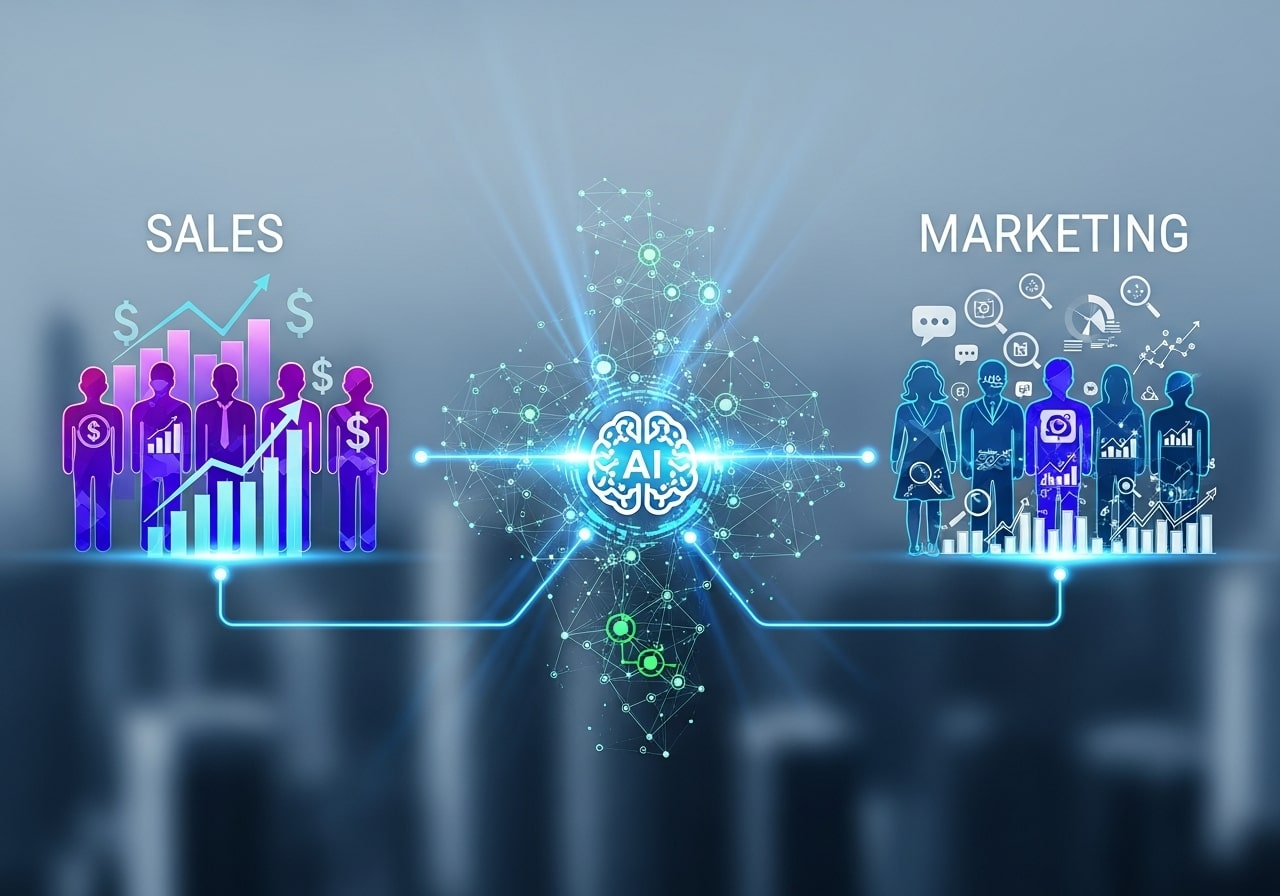
One of the most powerful benefits of AI in account-based marketing is improved alignment between sales and marketing teams. AI platforms provide both teams with a shared view of account-level insights, engagement data, and intent signals. This eliminates guesswork and ensures outreach efforts are coordinated and timely. Sales teams gain visibility into which accounts are actively engaging, while marketing can refine campaigns based on real sales feedback. By synchronizing strategies, AI-driven ABM reduces friction, shortens sales cycles, and creates a more seamless buyer experience across every touchpoint.
Enhancing Buyer Journey Mapping with AI
AI enables marketers to map complex B2B buyer journeys with greater accuracy than ever before. Instead of relying on linear funnels, AI analyzes real engagement data to understand how different stakeholders interact with content across channels. This insight allows marketers to anticipate needs, identify drop-off points, and deliver relevant messaging at the right moment. By continuously learning from account behavior, AI adapts journey maps in real time. The result is a more responsive ABM strategy that aligns closely with how modern buying committees research, evaluate, and make purchasing decisions.
AI-Powered Insights for Competitive Advantage
In competitive B2B markets, AI-powered ABM provides a critical edge by uncovering insights competitors may overlook. AI systems analyze market trends, competitor movements, and account-level intent data to identify emerging opportunities. This allows organizations to engage accounts earlier in the buying process with tailored value propositions. By understanding not just who to target, but when and how to engage, businesses can position themselves as trusted advisors rather than late-stage vendors. These insights help marketing and sales teams act proactively instead of reactively.
Ethical AI and Trust in Account-Based Marketing
As AI becomes more embedded in ABM strategies, ethical considerations and trust grow increasingly important. Responsible AI use involves transparent data practices, privacy compliance, and avoiding over-personalization that feels intrusive. Organizations must balance relevance with respect for buyer boundaries. Building trust through ethical AI not only protects brand reputation but also strengthens long-term relationships with target accounts. Companies that prioritize consent, data security, and fairness will be better positioned to sustain AI-driven ABM success while maintaining credibility in an evolving regulatory and buyer-conscious landscape.
Measuring Success in AI-Driven ABM
Traditional marketing metrics like email open rates and click-through rates provide limited insight into AI-powered ABM effectiveness. Account-level engagement scores and pipeline velocity metrics offer more meaningful performance indicators.
Attribution modeling must evolve to capture the complex, multi-touch nature of modern B2B buyer journeys. AI systems can analyze all touchpoints to determine which activities truly influence purchase decisions, enabling better resource allocation.
Lifetime value predictions become more accurate when AI systems continuously update account scores based on engagement patterns, product usage data, and expansion opportunities. This enables more sophisticated ROI calculations for ABM investments.
Customer satisfaction and retention metrics gain importance as AI-powered personalization raises prospect expectations. Measuring whether AI-driven experiences actually improve customer relationships becomes crucial for long-term success.
Getting Started with AI-Powered ABM
Organizations beginning their AI journey should start with specific use cases rather than attempting a comprehensive transformation. Account scoring, content personalization, or email optimization provide tangible starting points with measurable results.
Technology vendor evaluation requires careful consideration of integration capabilities, data requirements, and implementation timelines. Solutions that work with existing systems typically provide faster time-to-value than comprehensive platform replacements.
Pilot program development allows teams to test AI capabilities on a subset of accounts before full-scale deployment. This approach reduces risk while providing learning opportunities that inform broader implementation strategies.
Success metrics should be established before implementation begins. Clear expectations about performance improvements and measurement methodologies prevent disappointment and ensure proper resource allocation.
Building the Future of Account-Based Marketing
The next evolution of account-based marketing will blur the lines between human insight and artificial intelligence. The most successful organizations will create hybrid approaches that leverage AI capabilities while maintaining the strategic thinking and relationship-building skills that humans provide.
As AI technology continues advancing, the competitive advantage will shift from simply having access to these tools to implementing them strategically and ethically. Organizations that prioritize data quality, respect privacy, and focus on genuine value creation will build sustainable advantages in their markets.
The future belongs to marketers who view AI as an enhancement to human capabilities rather than a replacement. By combining artificial intelligence with strategic thinking, creative problem-solving, and authentic relationship building, account-based marketing will reach new levels of effectiveness and impact.
Frequently Asked Questions (FAQ)
1. What is AI-powered account-based marketing (ABM)?
AI-powered ABM combines artificial intelligence with account-based marketing strategies to identify high-value accounts, personalize engagement, and optimize outreach using data-driven insights. It goes beyond traditional ABM by automating analysis, prediction, and personalization at scale.
2. How does AI improve account selection in ABM?
AI uses predictive analytics and machine learning to analyze historical data, intent signals, and behavioral patterns. This helps marketers prioritize accounts that are most likely to convert and generate long-term value.
3. Is AI-powered ABM only suitable for large enterprises?
No. While large enterprises often adopt AI-powered ABM first, mid-sized and even smaller B2B organizations can benefit by starting with focused use cases such as account scoring, email personalization, or intent-based targeting.
4. What types of data does AI use in ABM strategies?
AI systems typically analyze firmographic data, behavioral data, engagement history, intent data, CRM records, website interactions, and third-party signals to create a unified account profile.
5. How does AI enable personalization at scale?
AI dynamically customizes content, messaging, timing, and channels based on account attributes and real-time behavior. This allows businesses to deliver highly relevant experiences without manually creating content for each account.
6. What are the biggest challenges in implementing AI-driven ABM?
Common challenges include poor data quality, platform integration issues, privacy and compliance concerns, and internal resistance to change. Addressing these with strong data governance and change management is critical.
7. How is success measured in AI-powered ABM?
Success is measured using account-level metrics such as engagement scores, pipeline velocity, deal size, conversion rates, and customer lifetime value rather than traditional campaign-level metrics alone.
8. Does AI replace human marketers and sales teams?
No. AI enhances human capabilities by handling data analysis and optimization, while humans focus on strategy, creativity, and relationship building. The most effective ABM programs use a hybrid human–AI approach.
9. How long does it take to see results from AI-powered ABM?
Results can vary, but organizations often see early improvements within a few months, especially when starting with pilot programs or targeted use cases like predictive account scoring or personalized outreach.
10. What is the future of AI in account-based marketing?
The future includes generative AI for personalized content, conversational analytics, advanced attribution modeling, and privacy-safe identity resolution—making ABM more precise, scalable, and revenue-focused.