

Account Based Marketing (ABM) targets high-value B2B accounts with personalized strategies, aligning marketing and sales. By focusing on specific prospects, leveraging technology, and measuring account-level engagement, ABM drives higher revenue, faster sales cycles, and stronger long-term customer relationships.
Account Based Marketing has transformed how B2B companies approach their most valuable prospects. Rather than casting a wide net and hoping for the best, ABM flips the traditional sales funnel by focusing resources on specific high-value accounts that match your ideal customer profile.
This targeted approach has proven remarkably effective. Companies using ABM strategies report 208% higher revenue for their marketing efforts compared to traditional methods. The reason is simple: when you tailor your entire marketing and sales approach to specific accounts, you create more meaningful connections and drive better results.
But successful ABM requires more than just picking a few big companies and hoping they’ll buy. It demands careful strategy, precise execution, and seamless alignment between marketing and sales teams. This guide will walk you through the essential best practices that separate winning ABM programs from those that fail to deliver results.
Understanding Account Based Marketing Fundamentals
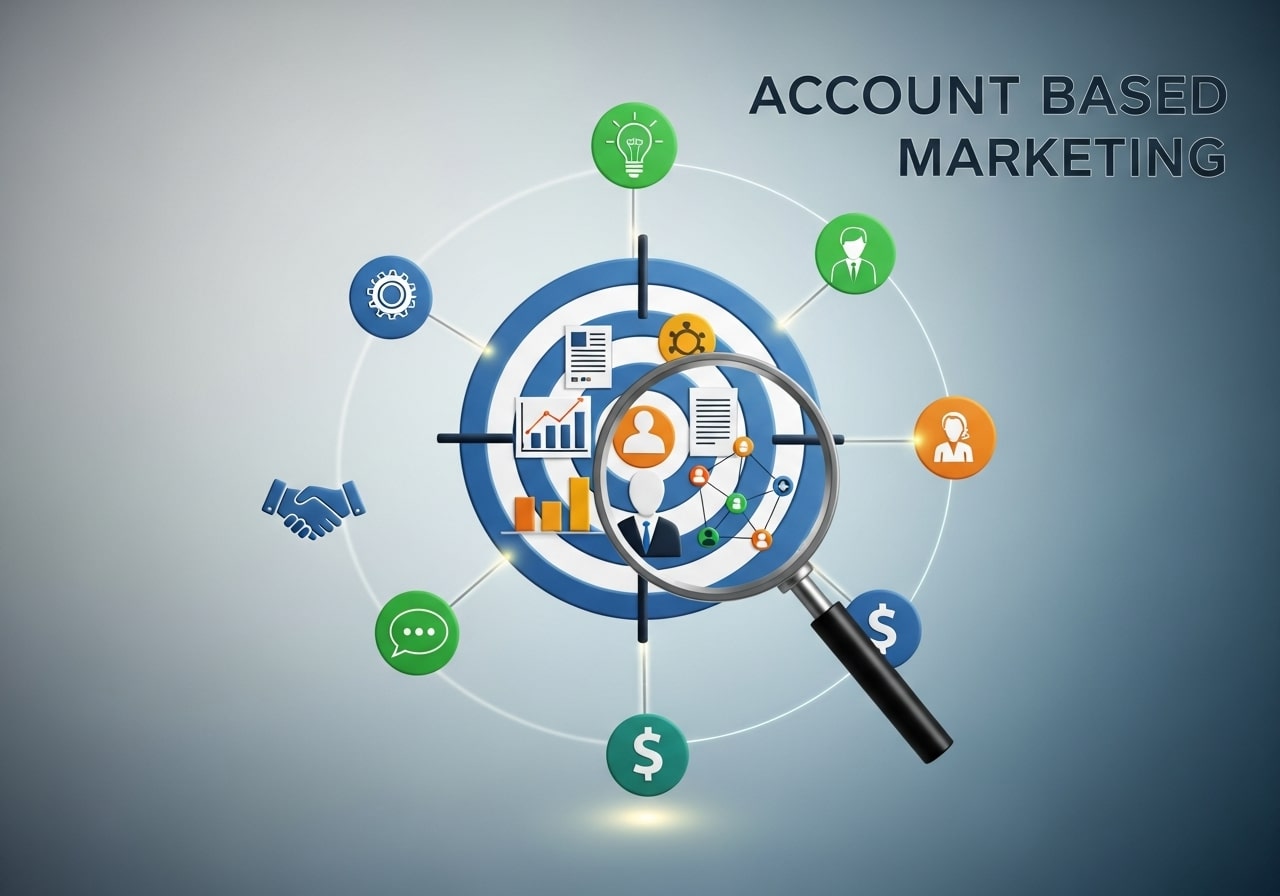
Account Based Marketing treats individual prospects as markets of one. Instead of creating broad campaigns aimed at general demographics, ABM develops personalized strategies for each target account.
The approach starts with identifying companies that represent the highest potential value for your business. These aren’t necessarily the biggest companies in your space, but rather those that align perfectly with your product’s capabilities and have the budget and authority to make purchasing decisions.
Once you’ve identified these accounts, every touchpoint becomes an opportunity to demonstrate value. Your website visitors from target accounts might see customized content. Your sales team receives detailed insights about each account’s pain points and decision-makers. Your marketing campaigns speak directly to the challenges facing that specific organization.
This level of personalization requires significant coordination between teams, but the payoff justifies the effort. ABM programs typically see 36% higher customer retention rates and 38% higher win rates compared to traditional approaches.
Building Your Target Account List
The foundation of any successful Account-Based Marketing program lies in selecting the right accounts. This process requires both data analysis and strategic thinking.
Start by analyzing your existing customer base. Look for patterns among your most profitable, long-term clients. What industries do they represent? What company sizes generate the best lifetime value? Which types of organizations implement your solution most successfully?
Use this analysis to create an Ideal Customer Profile (ICP) that defines the characteristics of accounts most likely to become valuable customers. Your ICP should include firmographic data like industry, company size, and revenue, as well as technographic information about the tools and platforms they use.
Technology can accelerate this process significantly. Intent data platforms reveal which companies are actively researching solutions like yours. Sales intelligence tools help you identify accounts experiencing the specific challenges your product solves. CRM integration ensures your target account data stays current and actionable.
Quality matters more than quantity when building your target list. Most successful ABM programs focus on 50-100 accounts rather than thousands. This concentrated approach allows for the deep personalization that makes ABM effective.
Creating Personalized Content Strategies
Generic content has no place in Account Based Marketing. Every piece of content you create should speak directly to the specific challenges, goals, and context of your target accounts.
Research each account thoroughly before creating content. Understand their business model, competitive pressures, and recent company developments. Review their website, social media presence, and recent press releases. This research informs content that feels relevant rather than generic.
Develop content themes that resonate with different stakeholder groups within each account. C-level executives care about strategic outcomes and competitive advantage. Technical teams focus on implementation details and integration capabilities. Procurement teams need cost justification and vendor comparison data.
Video content performs particularly well in ABM campaigns. Personalized video messages from your CEO or sales team create immediate connection and demonstrate the attention you’re giving to their account. Case studies featuring similar companies in their industry provide social proof and implementation roadmaps.
Don’t forget about the sales enablement angle. Create one-pagers, competitive battle cards, and presentation templates that help your sales team communicate value effectively during account conversations. The best ABM content serves both marketing and sales objectives.
Leveraging Technology and Tools
Modern ABM programs rely heavily on technology to scale personalization and track engagement across multiple touchpoints. The right technology stack makes the difference between programs that feel genuinely personal and those that come across as automated mass marketing.
Customer Relationship Management platforms serve as the central hub for account information and interaction history. Your CRM should integrate with other ABM tools to provide a complete view of each account’s journey. Look for platforms that offer account-level reporting and can track engagement across multiple contacts within the same organization.
Marketing automation platforms enable personalized communication at scale. Advanced platforms allow you to trigger different campaigns based on account characteristics, engagement levels, and buying stage. They can also coordinate multi-channel campaigns that reach different stakeholders with relevant messaging.
Account intelligence tools provide the deep insights that fuel effective personalization. These platforms track company news, personnel changes, technology adoptions, and other signals that indicate buying intent or opportunity timing. Some tools even provide organizational charts and decision-maker identification.
Website personalization technology creates customized experiences for visitors from target accounts. When someone from a target company visits your site, they might see industry-specific case studies, customized messaging, or even personalized calls-to-action that reference their company by name.
Aligning Sales and Marketing Teams
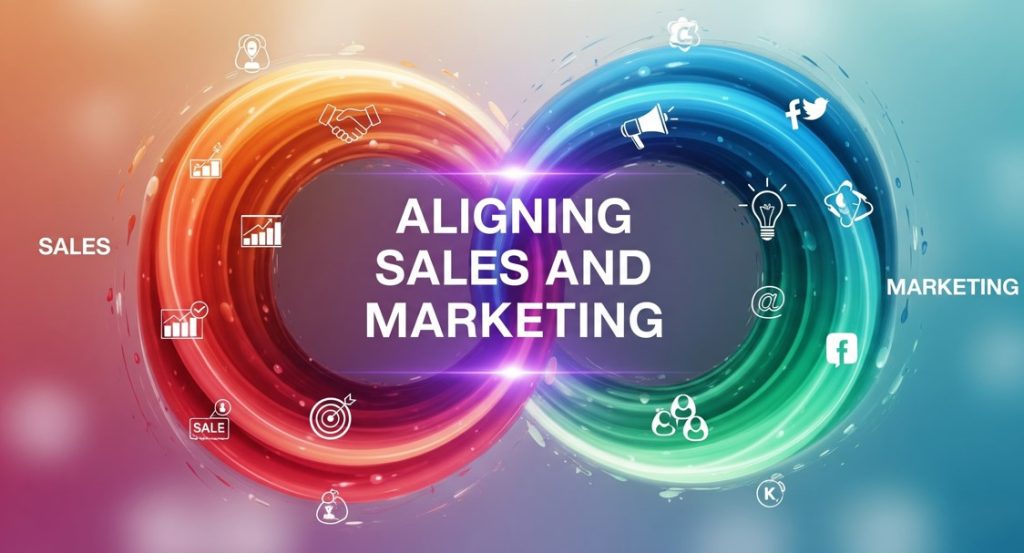
Account Based Marketing demands unprecedented collaboration between sales and marketing teams. Traditional handoffs between marketing qualified leads and sales acceptance become obsolete when both teams focus on the same target accounts from day one.
Establish shared definitions of target accounts, ideal customer profiles, and success metrics. Both teams should agree on which accounts receive ABM treatment and what constitutes meaningful engagement from each account. Regular account review meetings keep everyone aligned on progress and strategy adjustments.
Create joint account planning processes where sales and marketing collaborate on strategy for each target account. Marketing brings insights about digital engagement and content consumption patterns. Sales contributes relationship intelligence and competitive landscape knowledge. Together, they develop comprehensive approaches that address each account’s specific situation.
Implement shared technology platforms that provide visibility into all account interactions. When sales representatives can see exactly which marketing materials prospects have consumed, they can have more informed conversations. When marketers understand the specific objections sales teams encounter, they can create content that addresses those concerns proactively.
Attribution becomes more complex in ABM programs since multiple touchpoints contribute to eventual success. Focus on account-level metrics rather than individual lead conversions. Track engagement across all contacts within target accounts and measure progress toward account-level goals.
Measuring ABM Success

Traditional marketing metrics like click-through rates and cost-per-lead provide incomplete pictures of ABM performance. Account Based Marketing requires different measurement approaches that reflect the program’s focus on account-level outcomes.
Pipeline velocity serves as a crucial ABM metric. Measure how quickly target accounts move through your sales process compared to non-ABM prospects. Successful ABM programs typically see faster progression through sales stages because of the increased personalization and coordination.
Account engagement scoring provides insights into overall account interest and buying readiness. Track metrics like website visits from multiple contacts within the same account, content downloads across different stakeholder groups, and email engagement rates. Rising engagement scores often predict sales opportunities.
Revenue attribution in ABM requires looking beyond last-touch models. Since ABM involves multiple touchpoints across different stakeholders over extended timeframes, use multi-touch attribution models that give credit to various marketing and sales activities throughout the buyer’s journey.
Customer lifetime value becomes particularly important in ABM measurement. The intensive resources required for ABM programs must generate returns through larger deals, shorter sales cycles, or higher retention rates. Track these metrics to demonstrate ABM’s long-term value.
Optimizing Your ABM Strategy

Successful Account Based Marketing programs continuously evolve based on performance data and market feedback. Regular optimization ensures your approach stays relevant and effective as target accounts change and competitive landscapes shift.
Conduct quarterly reviews of your target account list. Remove accounts that haven’t shown engagement despite consistent outreach efforts. Add new accounts that match your ideal customer profile and show buying signals. This keeps your program focused on the most promising opportunities.
Analyze content performance across different account segments. Which materials generate the most engagement from C-level executives versus technical teams? What content formats drive the deepest engagement? Use these insights to refine your content strategy and resource allocation.
Test different personalization levels to find the optimal balance between relevance and scalability. Some accounts might respond well to highly customized content, while others prefer educational materials with light personalization. Segment your approach based on account characteristics and engagement patterns.
Monitor competitive intelligence to identify new messaging opportunities or potential threats to your target accounts. When competitors make announcements that affect your prospects, proactive outreach demonstrates market awareness and positions you as a strategic partner.
Taking Your ABM Program to the Next Level
Account Based Marketing represents a fundamental shift in how B2B companies approach their most valuable prospects. Success requires strategic thinking, operational excellence, and genuine commitment to customer-centricity.
The best ABM programs treat target accounts as strategic partnerships before any contracts are signed. They invest time in understanding each account’s unique situation and develop solutions that address specific business challenges. This approach creates competitive advantages that extend far beyond individual deal cycles.
Ready to implement these Account Based Marketing best practices in your organization? Start by selecting 10-20 target accounts that represent your ideal customers. Develop detailed account profiles, create personalized content strategies, and establish measurement frameworks that track progress toward account-level goals.
Remember that ABM is a marathon, not a sprint. The most successful programs show consistent improvement over 6-12 months as teams refine their approaches and target accounts recognize the value of the personalized attention. Stay committed to the process, and you’ll see the revenue impact that makes Account Based Marketing one of the most effective B2B strategies available.
Account Based Marketing (ABM) FAQs
1. What is Account Based Marketing?
Account Based Marketing is a B2B strategy that focuses marketing and sales resources on a defined set of high-value target accounts, treating each account as a market of one to drive personalized engagement and higher revenue.
2. How does ABM differ from traditional marketing?
Unlike broad-based marketing that targets large audiences, ABM tailors campaigns, content, and sales efforts to specific accounts, aligning marketing and sales to create more meaningful interactions and faster deal closures.
3. How do you identify target accounts?
Target accounts are chosen based on an Ideal Customer Profile (ICP), analyzing firmographics, technographics, buying intent, and historical customer success patterns. Tools like CRM systems, intent data platforms, and sales intelligence solutions help refine this list.
4. What role does content play in ABM?
Content in ABM is personalized to address the unique challenges and goals of each account. This can include custom case studies, videos, whitepapers, and sales enablement materials designed to resonate with different stakeholders within the target account.
5. Which technologies support ABM programs?
Key technologies include CRM platforms for account management, marketing automation for personalized communication, account intelligence tools for insights, and website personalization software to tailor experiences for target account visitors.
6. How do sales and marketing teams collaborate in ABM?
ABM requires close alignment between sales and marketing. Teams jointly define target accounts, share insights, coordinate campaigns, and track account-level engagement to ensure consistent messaging and strategy execution.
7. How is ABM success measured?
ABM success is measured using account-level metrics such as pipeline velocity, account engagement scores, multi-touch revenue attribution, and customer lifetime value, rather than individual lead-focused KPIs.
8. What are the challenges of implementing ABM?
Challenges include coordinating sales and marketing teams, managing personalized content at scale, tracking engagement across multiple stakeholders, and allocating resources efficiently to high-value accounts.
9. How many accounts should a typical ABM program target?
Most effective ABM programs focus on 50-100 high-value accounts for broader programs or 10-20 for pilot programs, emphasizing quality over quantity to maximize personalization and engagement.
10. Can small and medium-sized businesses benefit from ABM?
Yes, ABM can be highly effective for smaller organizations. By focusing on a carefully selected group of high-value accounts, even limited resources can achieve significant revenue impact and stronger client relationships.