
4 Benefits of Account Based Marketing for Programmatic
 11 min read
Account-Based Marketing (ABM) has become a game-changer for B2B marketers looking to target high-value accounts through tailored strategies. When combined with modern programmatic advertising, ABM takes personalization and efficiency to the next level. By focusing on specific accounts and leveraging data-driven technology, businesses achieve more precise targeting, stronger engagement, and maximized ROI.
But how exactly does ABM improve programmatic marketing efforts, and why should forward-thinking organizations consider adopting it? This article explores the four key benefits of applying Account-Based Marketing to programmatic, with practical insights to get started.
What Is Account-Based Marketing?
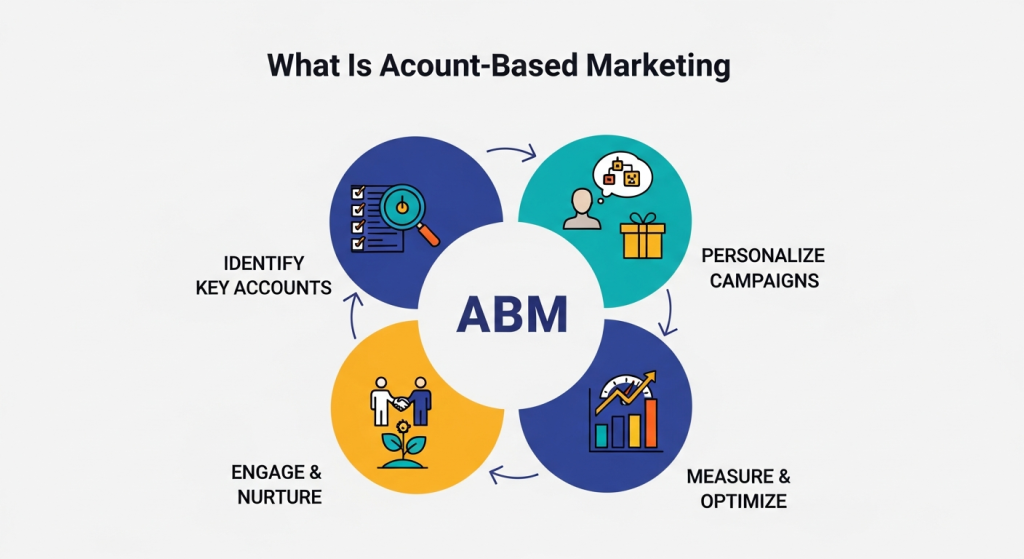
Before we jump in, let’s define ABM. Account-Based Marketing is a focused approach to B2B marketing where businesses tailor campaigns to engage specific high-value accounts rather than marketing to a broad audience. By honing in on companies or decision-makers that align closely with your business goals, ABM delivers personalized experiences that resonate deeply and drive results.
This methodology flips the traditional lead generation funnel, starting with key account identification and delivering customized interactions tailored to their unique needs. The synthesis of ABM with programmatic capabilities offers a scalable, data-driven way to enhance reach and engagement, making it particularly beneficial for modern, tech-enabled marketing strategies.
Pinpoint Precision in Targeting
ABM paired with programmatic advertising provides unmatched precision when it comes to targeting your ideal customers. By focusing on a select few high-value accounts, ABM steers away from the broad-stroke efforts typical of traditional campaigns. Programmatic technologies further refine this by enabling marketers to use data and algorithms to deliver hyper-targeted ads directly to decision-makers within those accounts.
How It Works:
- Use first- and third-party data to identify key accounts most likely to benefit from or invest in your services.
- Combine programmatic ad platforms (such as LinkedIn or Google Ads) with ABM tools to reach specific employees at those companies.
- Employ retargeting to re-engage potential buyers with precise, account-specific content that reflects their previous interactions.
Example
Imagine you’re marketing an enterprise-level customer relationship management (CRM) tool. Instead of targeting general audiences, you can serve ads directly to CMOs or sales directors at your top 50 target accounts, increasing the likelihood of conversions.
The Result:
Enhanced precision minimizes wasted ad spend and ensures your messaging reaches the most relevant individuals, boosting your return on investment.
Highly Personalized Content Delivery
One of ABM’s standout features is its ability to deliver personalized experiences to each target account. When layered into a programmatic strategy, this personalization becomes automated yet uniquely tailored across multiple channels. By leveraging data insights and predictive analytics, you can present dynamic, highly relevant content to decision-makers in a way that demonstrates your deep understanding of their specific business challenges.
Why It Matters:
According to Salesforce, 84% of business buyers are more likely to engage with companies that deliver personalized insights. When programmatic advertising aligns with ABM, the level of customization grows exponentially, showing prospects that they’re not just another name in a database, but valued potential partners.
Methods:
- Dynamic Creatives: Use programmatic platforms to deploy custom ads based on user behavior and account preferences. For example, showcase product benefits that solve a specific pain point in their industry.
- Custom Landing Pages: Design landing pages that reflect the messaging used in targeted ads to ensure consistency and heighten engagement.
- Segmented Campaigns: Divide your selected accounts into segments by industry, size, or needs, and craft tailored messages aimed precisely at those distinctions.
Stronger Alignment Between Sales and Marketing

ABM bridges the gap between sales and marketing by unifying both teams around shared goals and specific accounts. This synergy is critical for programmatic campaigns, as sales can offer insights into the accounts’ purchasing behaviors, while marketing brings in creative and technical expertise.
With ABM integrated into a programmatic framework, both teams work in tandem to generate highly targeted campaigns that resonate with the selected accounts.
Why Sales-Marketing Alignment Matters:
- Unified strategies create a seamless customer experience.
- Shared metrics, such as account engagement or pipeline velocity, enhance collaboration and accountability.
- Marketers help nurture quality leads, giving sales teams a leg up when closing deals.
Example in Action
For instance, a sales team may identify that a key decision-maker at a targeted account is most influenced by case studies from similar industries. Marketing can use programmatic tools to serve ads that lead directly to those case studies, reinforcing trust and relevance.
Greater ROI and Efficiency
Because ABM focuses efforts on a smaller, high-value audience, it eliminates wasteful spending typically associated with broad, unfocused marketing. Programmatic advertising adds an extra layer of efficiency by automating many aspects of your efforts, such as ad placements and bidding.
Benefits Include:
- Cost Savings: You’re spending money reaching only your most valuable prospects instead of wasting budget on generalized audiences.
- Improved Metrics: Metrics like click-through rates (CTR) or cost-per-engagement are often more favorable with account-based campaigns.
- Better Long-Term Relationships: Focused targeting allows for deeper engagement with accounts, cultivating meaningful relationships that extend beyond a single sale.
How to Start Implementing ABM for Programmatic Success
If you’re ready to elevate your programmatic strategy with ABM, here’s how to get started:
Step 1: Identify Key Accounts
Collaborate with your sales team to identify the accounts with the greatest growth potential. Leverage CRM data and predictive analytics to refine your list.
Step 2: Choose the Right Tools
Invest in ABM platforms like Demandbase, HubSpot, or Marketo Engage alongside robust programmatic ad platforms like Google Ads or LinkedIn Campaign Manager.
Step 3: Create Compelling Content
Align your programmatic ads with tailored content, such as personalized whitepapers, targeted case studies, or bespoke demos.
Step 4: Monitor and Optimize
Track metrics like engagement, click-through rates, and conversions. Use these insights to optimize campaigns and improve long-term ROI.
Keep Ahead with Account-Based Marketing
Account-Based Marketing for programmatic offers an exceptional way to cut through the noise and engage decision-makers directly. By merging the personalization of ABM with the scalability of programmatic advertising, businesses can reach new levels of precision, engagement, and profitability.
Start taking advantage of ABM today and watch your ROI grow. If you’re curious about implementing ABM strategies or want to explore tools that simplify the process, consider signing up for an ABM platform to drive your campaigns forward.
Understanding Account-Based Marketing (ABM)

Account-Based Marketing is a strategic B2B approach that focuses marketing and sales efforts on a defined set of high-value accounts rather than a broad audience. Instead of generating large volumes of leads, ABM prioritizes quality by targeting organizations that closely align with business goals. Campaigns are customized based on each account’s industry, challenges, and decision-making structure. This approach allows marketers to create more relevant messaging and experiences that resonate with key stakeholders. By treating individual accounts as markets of their own, ABM improves engagement, shortens sales cycles, and increases conversion potential. It is especially effective for businesses offering high-ticket or complex solutions that require personalized communication and relationship building.
The Role of Programmatic Advertising in ABM
Programmatic advertising enhances ABM by automating ad delivery using data, algorithms, and real-time bidding. When combined with ABM, programmatic ensures ads are shown specifically to decision-makers within target accounts rather than generic audiences. This technology allows marketers to control when, where, and to whom ads appear, making campaigns more efficient and scalable. Programmatic platforms analyze user behavior, job roles, and company data to deliver relevant messages across multiple digital channels. As a result, ABM campaigns become more consistent and impactful throughout the buyer journey. This integration enables marketers to maintain personalization at scale while optimizing ad spend and reducing unnecessary impressions.
Precision Targeting for High-Value Accounts
One of the strongest advantages of combining ABM with programmatic advertising is precision targeting. Instead of reaching thousands of unqualified users, marketers focus on a carefully selected list of high-value accounts. Using firmographic, behavioral, and intent data, campaigns are tailored to specific companies and roles within those organizations. This approach ensures that messaging reaches decision-makers who have the authority and intent to purchase. Precision targeting reduces wasted budget and increases the likelihood of meaningful engagement. By delivering the right message to the right person at the right time, businesses can significantly improve campaign performance and create stronger connections with priority accounts.
Personalized Content Across the Buyer Journey
Personalization is at the core of ABM success. When powered by programmatic advertising, personalization can be delivered dynamically across multiple touchpoints. Content such as ads, landing pages, and offers can be customized based on industry, company size, or buyer intent. This creates a cohesive and relevant experience throughout the buyer journey. Personalized messaging helps prospects feel understood and valued, increasing trust and engagement. Rather than generic promotions, accounts receive content that addresses their specific challenges and goals. This level of relevance improves click-through rates, time spent engaging with content, and overall campaign effectiveness.
Aligning Sales and Marketing Through ABM
ABM naturally aligns sales and marketing teams by focusing both on the same target accounts and shared objectives. Instead of working in silos, teams collaborate on account selection, messaging, and performance measurement. Sales teams provide insights into account needs and decision-maker behavior, while marketing teams use those insights to create targeted campaigns. This alignment ensures consistent communication across all touchpoints and improves the overall customer experience. When sales and marketing share accountability for engagement and revenue, lead quality improves and sales cycles become more efficient. ABM creates a unified strategy that supports long-term growth and stronger customer relationships.
Improving ROI and Campaign Efficiency
ABM-driven programmatic campaigns are designed to maximize return on investment by focusing resources on accounts with the highest potential value. Since marketing spend is concentrated on a smaller, qualified audience, inefficiencies common in broad campaigns are minimized. Automation further improves efficiency by optimizing ad placements, frequency, and timing. Campaign performance is easier to measure because success is tied directly to account engagement and revenue impact. This focused approach often results in higher engagement rates, lower cost per acquisition, and stronger long-term results. By prioritizing quality over quantity, businesses can achieve sustainable growth and better financial outcomes.
Getting Started with ABM for Programmatic Success
Implementing ABM with programmatic advertising begins with identifying the right target accounts based on business goals and data insights. Collaboration between sales and marketing is essential during this stage. Next, selecting appropriate tools and platforms helps manage targeting, personalization, and measurement effectively. Content should be developed to address the specific needs of each account segment, ensuring relevance and consistency. Finally, ongoing monitoring and optimization are critical. By analyzing engagement and performance data, marketers can refine messaging and tactics over time. A well-executed ABM program enables organizations to stay competitive, build stronger relationships, and drive measurable business results.
Frequently Asked Questions (FAQ)
Is Account-Based Marketing (ABM) only suitable for large B2B enterprises?
No. While ABM is often associated with larger companies, smaller and mid-sized businesses can also gain value by focusing on a defined set of high-value accounts and tailoring their marketing efforts accordingly.
How does Account-Based Marketing work with programmatic advertising?
ABM identifies specific high-value accounts and programmatic advertising uses data and automation to deliver ads to decision-makers within those accounts. Together, they enable precise targeting and consistent messaging.
How does ABM improve ROI in programmatic marketing campaigns?
ABM improves ROI by reducing wasted ad spend and concentrating marketing resources on accounts most likely to convert. This focused approach often leads to stronger engagement and higher returns compared to broad, lead-based strategies.
What types of data are most important for ABM-driven programmatic campaigns?
Important data types include first-party data such as CRM and website behavior, firmographic data like company size and industry, and intent signals that show buyer interest. These help marketers tailor and deliver more relevant content to target accounts.
Does ABM help improve alignment between sales and marketing teams?
Yes. ABM aligns sales and marketing around shared target accounts and common performance goals. This alignment improves lead quality, shortens sales cycles, and boosts conversion outcomes.
How is success measured in ABM programmatic campaigns?
Success is typically measured using account-level metrics such as engagement levels, click-through rates, pipeline velocity, and revenue attributed to target accounts. These measurements often offer deeper insight than traditional lead-focused metrics.
Are specialized tools required to run ABM programmatic campaigns?
Yes. Effective ABM programs often use dedicated ABM platforms along with programmatic ad platforms to identify accounts, automate delivery, personalize content, and track performance.


Live Webinars for ABM: Strategies to Engage High-Value Accounts


Balancing Personalization and Privacy in Modern ABM

Virtual Events and Webinars: Powerful Strategies for ABM Success