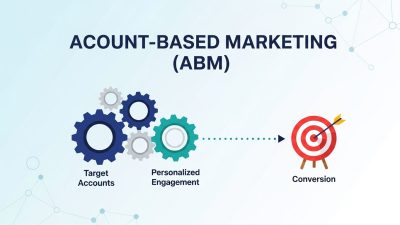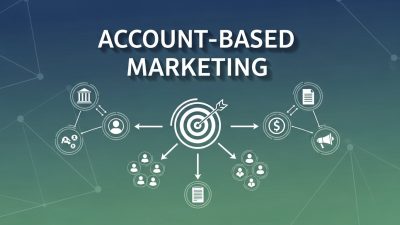

ABM shifts marketing from volume to value by prioritizing high-impact accounts. A strong ABM Campaign Strategy aligns sales and marketing, personalizes outreach, and leverages data-driven tools. With the right execution, ABM delivers higher ROI, stronger relationships, and long-term growth.
Account-Based Marketing (ABM) has become one of the most powerful strategies in modern B2B marketing. As businesses move away from broad, generic outreach, ABM enables teams to focus their time and resources on the accounts that matter most. By aligning sales and marketing around high-value targets, ABM creates more meaningful engagement, stronger relationships, and measurable business impact.
In this guide, we explore what ABM is, why it matters, and how organizations can implement a structured ABM Campaign Strategy step by step. From identifying target accounts to using the right tools and measuring success, this blog provides a comprehensive roadmap for businesses looking to drive sustainable growth through ABM.
What is Account-Based Marketing (ABM)?

At its heart, Account-Based Marketing is a marketing and sales strategy that gets them both working together to target key accounts with hyper-personalized campaigns. A well-designed ABM Campaign Strategy aligns teams, tools, and messaging so that every interaction with a target account feels relevant, intentional, and valuable. Unlike old-school broad-reach marketing, ABM does not blast out generic content for the world to see—even if you promise to make it relevant. Instead, ABM hones in on best-fit accounts that are most likely to convert, helping businesses focus their time, budget, and effort where they will see the highest ROI.
This ABM Campaign Strategy is laser-focused by nature. Rather than chasing a large number of leads, businesses concentrate on a smaller set of high-value accounts and nurture them strategically. By focusing on key accounts with the right content, timing, and messaging, companies can deliver a superior customer experience, build deeper relationships, and ultimately close deals faster and more efficiently.
Some key benefits of ABM include:
- Prioritizing high-value leads
- Aligning sales and marketing teams
- Reducing wasted resources
- Driving higher ROI and shorter sales cycles
Now that we’ve covered the basics, let’s explore the step-by-step process of implementing ABM.
Identifying High-Value Accounts
ABM starts with selecting the accounts you want to target. But not all accounts are created equal. The foundation of a strong ABM Campaign Strategy is clearly defining what a high-value account looks like for your business. This can be based on factors such as:
- Company size and revenue
- Industry or niche
- Buying potential and behavior
- Alignment with your product or service
Work closely with your sales team to analyze your current customer base and identify patterns among your most successful customers. Use CRM platforms, customer data, and intent signals to build a list of ideal target accounts that are most likely to benefit from your solution.
Pro Tip:
Focus on “dream accounts” with the highest growth potential. Targeting fewer high-value accounts often yields better engagement and higher returns than trying to reach a broad audience with limited relevance.
Researching and Understanding Target Accounts

Once you’ve identified your high-value targets, the next step is to gain a deep understanding of their business needs, challenges, and goals. A successful ABM Campaign Strategy is built on detailed research and data-driven insights rather than assumptions.
Research areas to focus on include:
- Decision-makers: Identify key stakeholders and their roles within the organization.
- Pain points: Understand the challenges they face and how your product can help solve them.
- Industry trends: Study external factors that influence their business decisions.
- Current platforms: Find out if they are using competing tools or solutions.
Use tools like LinkedIn, industry reports, and data platforms such as ZoomInfo to gather meaningful information about your accounts. The more you know about them, the more effectively you can tailor your approach.
Pro Tip:
Set up alerts for your target accounts on platforms like Google Alerts or LinkedIn so you stay informed about company news, leadership changes, or strategic developments.
Creating Personalized Content and Campaigns
Content is the engine of your ABM Campaign Strategy. Once you have a clear understanding of your target accounts, it’s time to create content that speaks directly to their specific needs and priorities. Personalization is at the core of ABM, so generic marketing materials will not be effective.
Develop these types of content for ABM:
- Personalized emails tailored to each stakeholder’s pain points and objectives.
- Custom proposals that clearly show how your solution fits their challenges.
- Exclusive assets such as industry-specific case studies, whitepapers, or reports.
Your messaging should demonstrate that you truly understand the account while highlighting the unique value your business brings. Pair this with account-specific landing pages, direct outreach, or targeted ads to create a seamless experience.
Pro Tip:
Use dynamic content tools to personalize messaging for multiple decision-makers within the same organization.
Engaging Key Stakeholders

Building a meaningful connection with stakeholders is one of the most critical steps in any ABM Campaign Strategy. These individuals are not just decision-makers; they are the bridge between your proposal, internal alignment, and the final sale. In many B2B organizations, buying decisions are made by committees rather than a single person, which makes stakeholder engagement even more important.
A strong ABM Campaign Strategy prioritizes relationship-building over aggressive selling. The goal is to position your brand as a trusted partner rather than just another vendor. When stakeholders feel understood and valued, they are more likely to advocate for your solution internally.
Effective ways to reach stakeholders include:
Social media engagement
Engage with their thought leadership by commenting on their posts, sharing relevant industry insights, or tagging them in meaningful discussions.
1-on-1 meetings
Arrange personalized product demos, discovery calls, or strategic discussions tailored to their role and priorities.
Account-focused advertisements
Use targeted, cookie-based retargeting ads to keep your brand top-of-mind.
Since decision-making often involves multiple individuals, your ABM Campaign Strategy should include mapping all key influencers within the account.
Pro Tip: Invest in relationship-building rather than just sales. Actively connect with stakeholders on platforms like LinkedIn and share valuable insights that help them succeed.
Measuring and Analyzing Results
A data-driven ABM Campaign Strategy relies on tracking the right metrics rather than just vanity numbers. While traditional marketing metrics such as impressions, clicks, and reach still have their place, ABM prioritizes account-level engagement and real business impact. This means looking beyond surface-level activity and focusing on how deeply target accounts are interacting with your brand and how that translates into pipeline and revenue.
Key metrics to track include:
- Account engagement – Monitor website visits from target accounts, time spent on key pages, email open and response rates, webinar attendance, content downloads, and meeting participation. Higher engagement indicates stronger interest and alignment with your messaging.
- Pipeline growth – Track how many new opportunities are created within your target accounts and how existing deals progress through different sales stages as a result of your ABM efforts.
- Account conversion rate – Measure the percentage of targeted accounts that move from prospects to active opportunities and eventually to paying customers.
- Revenue growth – Evaluate deal size, contract value, renewal rates, and lifetime customer value generated from your ABM initiatives to determine overall return on investment.
- Regularly compare performance against predefined goals, analyze patterns, and refine your approach accordingly. If certain campaigns underperform, adjust messaging, targeting, or engagement tactics to improve results.
Pro Tip:
Use integrated analytics platforms such as HubSpot or Salesforce that connect sales and marketing data, providing a clear, unified view of how your ABM efforts influence revenue.
Tools and Technologies for ABM
A well-executed ABM Campaign Strategy requires a strong and integrated technology stack to manage accounts, personalize outreach, and measure performance effectively. The right tools enable seamless collaboration between sales and marketing while ensuring data accuracy, efficiency, and scalability.
Essential tools include:
- CRM Platforms (HubSpot, Salesforce) – Serve as the backbone of your ABM operations by storing account data, tracking interactions, and aligning sales and marketing activities in one centralized system.
- ABM Platforms (Demandbase, Terminus, 6sense) – Help identify high-value accounts using intent data, deliver personalized ads, and measure engagement at the account level.
- Data Enrichment Tools (ZoomInfo, Clearbit) – Provide deeper insights into target accounts, including company details, decision-makers, and buying signals, strengthening your overall approach.
- Marketing Automation Tools (Marketo, HubSpot) – Enable automated, personalized email campaigns, lead nurturing, and content delivery tailored to each account.
- Analytics Tools (Google Analytics, Databox) – Track performance, visualize trends, and help teams make data-driven decisions to continuously optimize their ABM efforts.
When these tools work together, they create a unified, efficient, and scalable system that supports a high-performing ABM Campaign Strategy.
Aligning Sales and Marketing Around Target Accounts
A successful ABM Campaign Strategy depends heavily on strong alignment between sales and marketing teams. Unlike traditional marketing, where both teams often operate separately, ABM requires close collaboration, shared accountability, and unified objectives.
To create alignment, both teams must agree on a clearly defined list of target accounts, shared goals, and common KPIs such as engagement, pipeline contribution, and revenue impact. Regular communication through joint planning sessions, weekly check-ins, and shared dashboards ensures consistency throughout the campaign.
Additionally, developing a unified account plan helps guide outreach strategies, content creation, and engagement tactics. When sales and marketing work as a single cohesive unit, ABM becomes more structured, efficient, and results-driven.
Building an Ideal Customer Profile (ICP) for ABM
A well-defined Ideal Customer Profile (ICP) is the foundation of any strong ABM Campaign Strategy. Instead of targeting every possible company, businesses must clearly define the characteristics of their best-fit customers to improve targeting accuracy.
To build an ICP, analyze firmographics such as company size, industry, revenue, location, and market position. Next, assess technographics, including the software and tools your target accounts currently use, which can indicate compatibility with your solution.
Intent signals, such as content consumption, search behavior, and engagement with similar solutions, also help identify accounts that are actively in the buying process. Combining these data points allows businesses to create a precise and actionable ICP that guides their ABM efforts.
Account Mapping and Buyer Journey Strategy

Account mapping is a critical element of a structured ABM Campaign Strategy because B2B purchasing decisions often involve multiple stakeholders with different priorities.
Businesses should identify key decision-makers, influencers, and end-users within each target account, including executives, managers, technical leaders, and procurement teams. Understanding their roles, challenges, and decision-making authority allows for more tailored messaging.
Once stakeholders are mapped, align content with different stages of the buyer journey. Early-stage content should focus on awareness and education, while mid-stage content addresses challenges and solutions. Later-stage content should highlight case studies, ROI, and implementation value to support final decision-making.
Multi-Channel ABM Engagement Strategy
A strong ABM Campaign Strategy integrates multiple touchpoints rather than relying on a single channel. A multi-channel approach ensures consistent visibility and deeper engagement with target accounts.
Key channels include:
- Email marketing – Personalized outreach tailored to each stakeholder’s role and pain points.
- LinkedIn outreach – Thought leadership engagement, relationship-building, and targeted messaging.
- Content marketing – Blogs, whitepapers, case studies, and reports that educate and build credibility.
- Retargeting ads – Keep your brand top-of-mind through personalized, account-based advertising.
- Webinars and virtual events – Provide interactive platforms for education, discussion, and engagement.
By coordinating messaging across all channels, businesses create a seamless and impactful ABM experience.
Scaling ABM Without Losing Personalization

As organizations grow, scaling ABM becomes necessary, but personalization must remain a priority. Many companies begin with 1:1 ABM, targeting a small number of high-value accounts with highly customized campaigns.
As they expand, they may shift to 1:few ABM, grouping similar accounts and tailoring campaigns accordingly, or 1:many ABM, using automation and data-driven personalization to reach a larger audience while maintaining relevance.
Using AI insights, dynamic content, and marketing automation allows businesses to scale their ABM efforts efficiently without sacrificing personalization.
Common ABM Mistakes and How to Avoid Them
Even with a strong ABM approach, businesses often make mistakes that hinder success. Common pitfalls include:
- Poor sales and marketing alignment – Leads to inconsistent messaging and missed opportunities.
- Weak or outdated data – Results in ineffective targeting and poor personalization.
- Lack of proper measurement – Makes it difficult to assess performance and optimize campaigns.
- Unrealistic expectations – ABM requires time, patience, and continuous refinement.
By addressing these challenges proactively, businesses can build a more effective and sustainable ABM Campaign Strategy.
ABM is the Future of B2B Marketing
The one-size-fits-all era of marketing is truly over. A well-defined ABM Campaign Strategy is reshaping how businesses attract, engage, nurture, and close high-value accounts in today’s competitive B2B landscape.
ABM delivers higher ROI, stronger client relationships, and better alignment between sales and marketing. Instead of treating all prospects the same, businesses can be more strategic, intentional, and impactful with their marketing efforts.
The best approach is to start small — focus on a handful of high-value accounts, refine your strategy, and gradually scale using the right tools, data, and processes. With the right execution, ABM will continue to be the future of successful B2B marketing.
Frequently Asked Questions
1. What is Account-Based Marketing (ABM)?
ABM is a strategy where sales and marketing work together to target specific high-value accounts with personalized campaigns rather than marketing to a broad audience.
2. How is ABM different from traditional marketing?
Traditional marketing focuses on generating a large number of leads, while ABM focuses on engaging a smaller number of high-value accounts with tailored strategies.
3. Who should use ABM?
ABM is best suited for B2B companies, enterprise businesses, SaaS firms, and organizations with long sales cycles and high-value deals.
4. What are the main benefits of ABM?
ABM improves sales and marketing alignment, increases ROI, shortens sales cycles, and builds stronger customer relationships.
5. What tools are best for ABM?
Commonly used ABM tools include HubSpot, Salesforce, ZoomInfo, Demandbase, Terminus, 6sense, and Google Analytics.
6. How long does it take to see results from ABM?
ABM is a long-term strategy. Most companies start seeing meaningful results within 3 to 6 months with consistent execution.
7. Can small businesses use ABM?
Yes. Small businesses can start with 1:1 ABM by targeting a few high-value accounts before scaling.