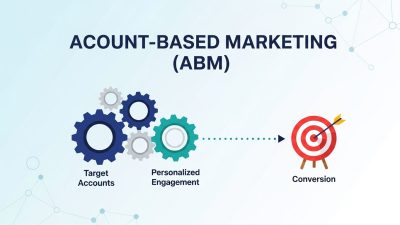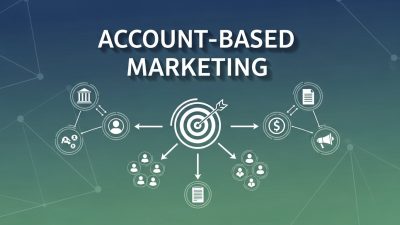

ABM shifts marketing from volume to value by focusing on high-priority accounts, ensuring more precise and effective outreach. It strengthens sales-marketing alignment while delivering highly personalized buyer experiences that build trust and engagement. When executed strategically, ABM drives higher ROI, better engagement, and long-term sustainable revenue growth.
B2B buying has changed dramatically. Decisions are now made by committees rather than individuals, sales cycles are longer, and buyers expect highly relevant, personalized engagement. In this environment, traditional mass marketing approaches often fall short, making it harder for businesses to stand out and win high-value deals.
This is where Account-Based Marketing (ABM) becomes a game-changer. Instead of trying to reach everyone, ABM enables businesses to focus on the right accounts with precision, personalization, and strategic intent. By aligning sales and marketing around shared goals, ABM creates a more efficient, predictable, and revenue-driven approach to growth.
In this blog, we explore what ABM is, its key benefits, best practices for implementation, and real-world examples that showcase its measurable impact on B2B success.
Account-Based Marketing (ABM): Benefits, Best Practices, and Real-World Impact
Account-Based Marketing (ABM) is more than just another buzzword in B2B marketing—it represents a fundamental shift in how businesses approach growth, customer acquisition, and long-term relationship-building. Unlike traditional demand generation models that prioritize volume, this strategy treats high-value accounts as individual markets in their own right and designs highly customized marketing efforts around them. Rather than making a splash in a large pool to catch a few scattered leads, ABM casts a smaller, smarter net to capture the most valuable prospects, focusing on select accounts that are most likely to become long-term, high-revenue customers.
While traditional marketing strategies concentrate on broad awareness and inbound lead generation, ABM emphasizes deep personalization, precision targeting, and stronger collaboration between sales and marketing. It is a laser-focused approach that prioritizes meaningful engagement with the right decision-makers rather than chasing large numbers of unqualified leads. By aligning messaging, data, and outreach, this model ensures that every interaction is relevant, timely, and strategically aligned with business objectives.
Curious how this approach could transform your business? Read on to explore the powerful benefits of ABM and why it consistently outperforms traditional marketing approaches in today’s highly competitive B2B landscape.
The Benefits of Account-Based Marketing (ABM)

Enhanced ROI and Revenue Growth
One of the strongest reasons businesses adopt Account-Based Marketing (ABM) is its clear and measurable impact on return on investment. Research from the Information Technology Services Marketing Association (ITSMA) shows that as many as 87% of marketers report that Account-Based Marketing (ABM) delivers higher ROI than other marketing strategies. By prioritizing high-value accounts and tailoring outreach accordingly, Account-Based Marketing (ABM) ensures that marketing spend is directly linked to revenue outcomes rather than vanity metrics like impressions or clicks.
Additionally, companies implementing Account-Based Marketing (ABM) often report larger deal sizes and stronger client relationships. Instead of chasing hundreds of small accounts, this strategy enables businesses to focus on fewer but more profitable partnerships—leading to sustainable, long-term revenue growth. Over time, Account-Based Marketing (ABM) results in a more predictable pipeline, better forecasting, and stronger customer retention.
Improved Sales and Marketing Alignment
Account-Based Marketing (ABM) thrives on close collaboration between sales and marketing teams. Unlike traditional models where departments operate in silos, this approach brings both teams together around shared goals, target accounts, and success metrics.
Sales teams provide valuable insights about target accounts, while marketing develops personalized campaigns based on this intelligence. This alignment ensures consistent messaging, improved efficiency, and stronger engagement strategies—making Account-Based Marketing (ABM) far more effective than disconnected marketing approaches. Regular communication, shared dashboards, and unified objectives help both teams work toward the same revenue outcomes.
More Personalized Customer Experiences
Modern B2B buyers expect highly relevant, customized interactions—and Account-Based Marketing (ABM) is built to deliver exactly that. Instead of generic messaging, this strategy enables businesses to create tailored campaigns that directly address each account’s unique challenges and objectives.
Through personalized emails, custom landing pages, industry-specific case studies, and targeted product demonstrations, Account-Based Marketing (ABM) helps build trust, credibility, and long-term relationships with decision-makers. This level of personalization makes prospects feel understood rather than marketed to, increasing engagement and conversion rates.
Better Targeting and Reduced Waste
Traditional marketing often results in wasted time and resources due to broad targeting. In contrast, Account-Based Marketing (ABM) eliminates inefficiencies by focusing only on the most relevant, high-value accounts from the start.
With advanced data analytics and AI-powered tools, Account-Based Marketing (ABM) allows marketers to identify accounts with the highest likelihood of conversion—reducing wasted spend and improving overall campaign performance. Instead of chasing every potential lead, businesses using Account-Based Marketing (ABM) can invest their resources where they are most likely to generate meaningful returns.
How to Implement Account-Based Marketing (ABM) Successfully

Identify and Prioritize Key Accounts
The foundation of ABM lies in selecting the right target accounts. Businesses should analyze CRM data, historical engagement, and revenue potential to build a strong Ideal Customer Profile (ICP). This helps ensure that marketing and sales efforts are focused on the most promising opportunities.
A successful ABM strategy balances quantitative data with qualitative insights, such as a company’s growth trajectory, strategic priorities, and existing pain points that your solution can address.
Create Targeted and Personalized Content
Once key accounts are identified, businesses must develop customized content aligned with ABM principles, including:
- Industry-specific white papers
- Personalized video messages
- Tailored email campaigns
- Custom presentations and proposals
The goal is to make every piece of communication feel bespoke and relevant, rather than generic or mass-produced.
Align Your Sales and Marketing Teams
For ABM to succeed, sales and marketing must function as a unified team. Marketing should share engagement insights, while sales provides real-time feedback from customer interactions.
Integrated CRM and ABM platforms help streamline collaboration and improve decision-making, ensuring both teams have a clear, shared view of each account.
Measure and Analyze Results
Unlike traditional marketing, ABM success is measured at the account level. Key metrics include:
- Account engagement score
- Deal velocity
- Win rate
- Pipeline influence
Continuous optimization based on these metrics ensures ABM remains effective over time and adapts to changing market conditions.
Key Pillars of a Strong ABM Strategy

Account Selection: Quality Over Quantity
Successful ABM begins with targeting fewer, high-value accounts rather than spreading efforts too thin across hundreds of prospects. Instead of trying to engage every possible lead, businesses must be strategic in selecting accounts that align closely with their Ideal Customer Profile (ICP). This allows marketing and sales teams to invest more time, resources, and creativity into each account, resulting in deeper personalization, stronger engagement, and more meaningful relationships. By focusing on quality over quantity, organizations can improve efficiency, reduce wasted effort, and increase their chances of winning high-value deals.
The Role of Intent Data in ABM
Intent data plays a crucial role in modern ABM strategies by helping businesses identify which accounts are actively researching relevant solutions or showing signs of purchase readiness. This data, gathered from online behavior such as content consumption, search activity, and website engagement, provides valuable insights into buyer intent. By leveraging intent signals, marketers can prioritize outreach to companies that are already in the consideration or evaluation stage, making their efforts more timely, relevant, and effective. This data-driven approach helps reduce guesswork and increases the likelihood of successful conversions.
Leveraging Technology for Scalable ABM
As ABM strategies grow in complexity, technology becomes essential for scalability and efficiency. AI-driven tools, CRM platforms, and marketing automation systems make ABM more structured, data-driven, and measurable. These technologies help track account engagement, analyze buyer behavior, personalize messaging, and streamline campaign workflows. With the right tools in place, businesses can manage multiple target accounts simultaneously while maintaining a high level of personalization and strategic focus.
Content Personalization at Scale
One of the biggest challenges in ABM is delivering personalized experiences across multiple accounts without overwhelming marketing teams. This is where dynamic content and role-based messaging come into play. By using adaptive content, businesses can tailor their communications based on industry, company size, pain points, and decision-maker roles. This allows marketers to scale personalization efficiently, ensuring that each account receives relevant and customized messaging while maintaining consistency and brand alignment.
Aligning Leadership Around ABM Goals
For ABM to be truly successful, alignment must extend beyond just sales and marketing—it requires commitment from leadership across the entire organization. Marketing, sales, and operations teams must work toward shared objectives, clearly defined KPIs, and unified revenue goals. Regular cross-department communication, collaborative planning sessions, and transparent reporting ensure that everyone remains aligned and accountable. Strong leadership support also helps secure necessary resources, technology, and budget to sustain long-term ABM success.
Continuous Optimization and Learning
ABM is not a one-time campaign but an ongoing strategic process that requires continuous refinement and improvement. Businesses must regularly analyze performance data, gather feedback from sales teams, and monitor changes in the market and buyer behavior. By testing new tactics, adjusting messaging, and optimizing targeting strategies, organizations can ensure their ABM efforts remain relevant, effective, and adaptable over time. A culture of learning and experimentation is key to maximizing the long-term impact of ABM.
Real-World Examples of ABM Success
Companies like Snowflake and Terminus clearly demonstrate the real power of ABM when implemented with a well-defined strategy, the right technology, and strong sales-marketing alignment. Rather than relying on broad-based marketing tactics, both organizations focused their efforts on high-value target accounts with personalized and data-driven engagement.
Snowflake adopted an account-focused marketing approach that helped them achieve a remarkable 300% increase in engagement with their key target accounts. This was not just about reaching more people, but about reaching the right people—decision-makers within their ideal customer segment. Their ABM strategy allowed them to deliver more relevant messaging, build stronger relationships, and significantly improve brand visibility and buyer interest among enterprise-level prospects.
Similarly, Terminus, a leading ABM platform provider, leveraged its own technology to execute a highly structured ABM strategy that resulted in a 43% increase in pipeline contribution. This demonstrates how well-planned ABM campaigns can directly impact revenue growth, shorten sales cycles, and accelerate deal closures. Their success showcases the importance of combining intent data, personalized content, and multi-channel engagement in a scalable ABM framework.
These real-world examples highlight how a structured, data-driven, and personalized ABM strategy can deliver measurable business results. When executed correctly, ABM not only improves engagement and conversions but also strengthens customer relationships, enhances brand credibility, and provides a strong competitive advantage in the increasingly crowded B2B marketplace.
ABM: The Future of B2B Marketing
Account-Based Marketing is not just a passing trend or temporary marketing tactic—it represents the future direction of B2B marketing. As digital transformation accelerates and buying behavior evolves, traditional mass marketing approaches are becoming less effective. Today’s B2B buyers are more selective, better informed, and expect highly personalized interactions from the companies they engage with.
In this shifting landscape, businesses must move beyond broad, generic marketing strategies that treat all prospects the same. Instead, they need a more focused, strategic, and account-centric approach—and that is exactly what ABM provides. By prioritizing high-value accounts, aligning sales and marketing teams around shared goals, and delivering tailored, relevant experiences, ABM enables organizations to engage buyers in a more meaningful and impactful way.
ABM also helps businesses operate more efficiently by reducing wasted marketing spend, improving targeting accuracy, and ensuring that efforts are concentrated where they are most likely to generate revenue. When implemented correctly, it creates a seamless collaboration between sales and marketing, leading to better communication, stronger account planning, and more predictable pipeline performance.
Implementing ABM does require thoughtful planning, investment in the right technology, and organizational alignment across teams. It may take time to fully integrate into existing processes, but the long-term benefits make it well worth the effort. Companies that successfully adopt ABM gain higher ROI, deeper customer relationships, improved deal win rates, and more sustainable revenue growth over time.
If you are looking to modernize your marketing strategy, improve sales effectiveness, and drive more meaningful business outcomes, now is the ideal time to embrace ABM. By adopting an account-based approach, you can position your organization for long-term success, stronger market differentiation, and measurable growth in today’s competitive B2B environment.
Frequently Asked Questions
1. What is Account-Based Marketing (ABM)?
ABM is a strategic marketing approach that focuses on targeting specific high-value accounts rather than a broad audience. It involves personalized campaigns tailored to key decision-makers within those accounts.
2. How is ABM different from traditional marketing?
Traditional marketing focuses on generating a high volume of leads, while ABM prioritizes quality over quantity by targeting select accounts with customized messaging and outreach.
3. Is ABM suitable for small businesses?
Yes. ABM can be highly effective for small businesses, especially those selling high-value products or services with longer sales cycles. Even a small list of carefully chosen target accounts can yield strong results.
4. What tools are needed for ABM?
Common ABM tools include CRM platforms (such as Salesforce or HubSpot), marketing automation software, intent data tools, personalization platforms, and analytics solutions.
5. How long does it take to see results from ABM?
ABM is typically a medium-to-long-term strategy. Many companies begin seeing meaningful engagement within 3–6 months, with stronger revenue impact over time.
6. What are the biggest challenges in ABM?
The most common challenges include poor sales-marketing alignment, lack of quality data, targeting too many accounts, and insufficient personalization.