
Account-Based Marketing (ABM) is evolving beyond basic targeting into a more intelligent, data-driven, and scalable approach. By leveraging buyer intent, multi-channel engagement, personalized content, and advanced technology, businesses can refine their ABM strategy to drive better results. This section explores how ABM can be optimized, scaled, and prepared for the future of B2B marketing.
As Account-Based Marketing continues to reshape B2B marketing, businesses are moving beyond basic targeting toward more intelligent, data-driven, and scalable strategies. The next phase of ABM focuses on buyer intent, multi-channel engagement, personalization at scale, and stronger content alignment. In this section, we explore advanced aspects of ABM that help organizations refine their approach, overcome challenges, and prepare for the future of account-based strategies.
What is Account-Based Marketing (ABM)?
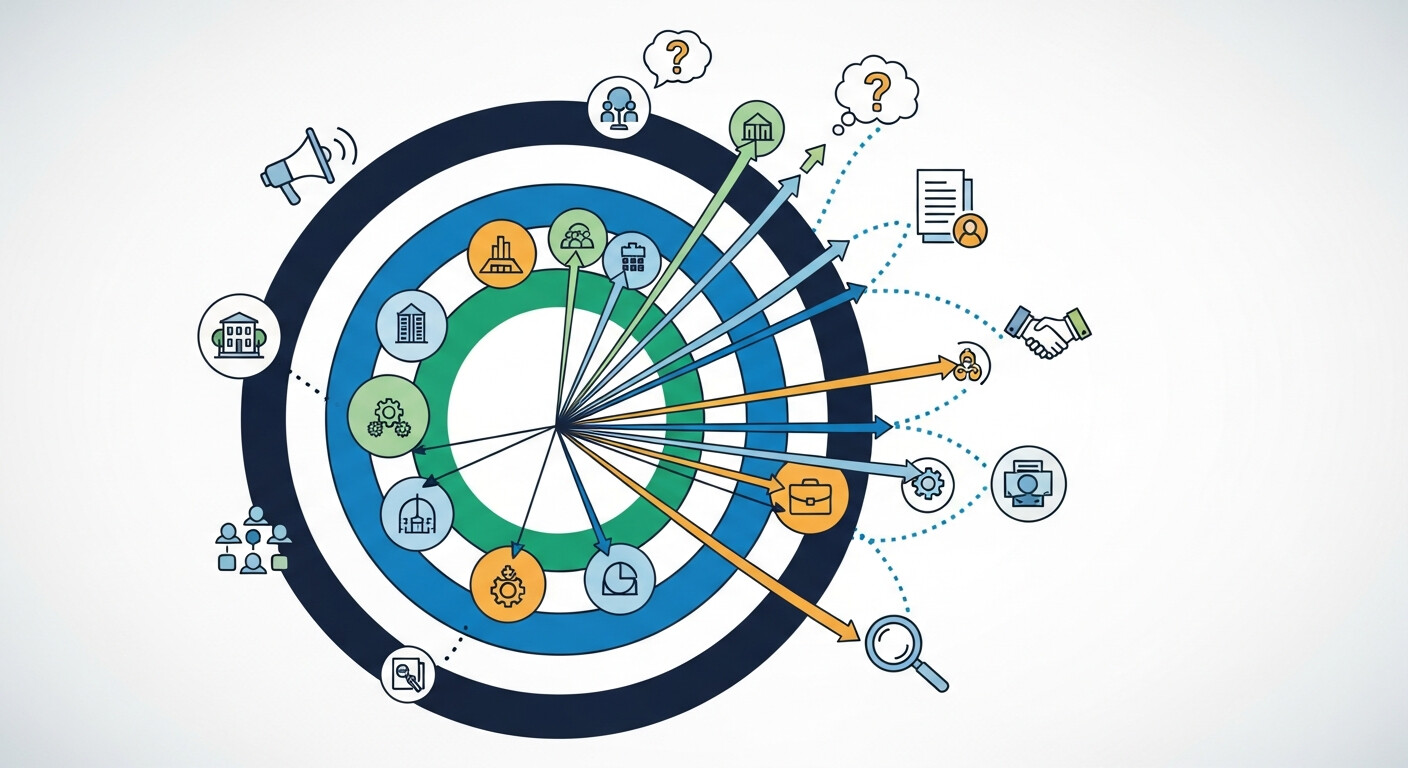
A Focused Approach to High-Value Accounts
At its core, Account-Based Marketing (ABM) is a highly focused, strategic marketing approach that treats individual accounts as markets in their own right. Rather than casting a wide net and hoping for conversions, ABM is designed for unlocking growth with ABM by concentrating efforts on a carefully selected group of high-value prospects. These accounts are deeply researched, analyzed, and understood before any marketing effort is launched. Every message, campaign, and interaction is then customized to address their specific business challenges, goals, and priorities.
By shifting from mass marketing to a more targeted approach, businesses can engage more meaningfully with decision-makers, build stronger relationships, and increase the likelihood of successful conversions. This strategic precision is what makes ABM a powerful tool for companies looking to drive sustainable B2B growth.
How ABM Differs from Traditional Marketing

Traditional marketing typically follows a broad, volume-based strategy, using generalized messaging and large-scale campaigns in hopes of capturing as many leads as possible. This approach often results in wasted resources, low-quality leads, and limited engagement from key decision-makers.
ABM takes a completely different path toward unlocking growth with ABM. Instead of focusing on quantity, it prioritizes quality. It replaces generic outreach with highly personalized, account-specific campaigns that speak directly to the needs of target companies and their stakeholders. This ensures that marketing efforts are more relevant, impactful, and aligned with real business opportunities.
As a result, ABM generates higher engagement, stronger brand positioning, and significantly improved conversion rates compared to traditional marketing approaches.
Key Components of a Successful ABM Strategy

To successfully implement ABM and maximize the benefits of Unlocking Growth with ABM, businesses must focus on three core components:
Target Account Identification:
Carefully select accounts with the highest revenue potential and strategic importance.
Personalized Messaging:
Develop customized content and communication tailored to each account’s unique needs.
Sales and Marketing Alignment:
Ensure close collaboration between teams to execute ABM campaigns effectively and consistently.
Now that we understand what ABM is, let’s explore why it’s a must-have strategy for Account-Based Marketing Strategy.
Enhanced Targeting and Personalization
ABM empowers marketers with the ability to focus their efforts on the right accounts with laser precision. Instead of wasting resources on broad audiences, businesses can concentrate on prospects that truly matter for ABM Targeting Approach. By tailoring campaigns to the specific needs of each target account, companies can create deeper relevance, stronger engagement, and more meaningful connections.
How ABM Enables Hyper-Targeting
With data-driven insights guiding strategy, ABM enables marketers to craft highly relevant messaging that speaks directly to a prospect’s pain points, opportunities, and business objectives. This level of personalization increases trust, credibility, and influence within target accounts, especially when supported by tools like Intent Data Platforms and LinkedIn Sales Navigator.
Why Personalization Matters for Engagement
Personalized marketing is a key driver of trust and loyalty. Studies show that 80% of customers are more likely to buy from a company that provides personalized experiences. ABM plays a crucial role in PersonalizedB2B Marketing by ensuring that every interaction feels relevant, valuable, and tailored to the individual account.
Businesses using Marketing Automation Platforms such as HubSpot, Marketo, or Demandbase can scale personalization while maintaining quality and consistency across campaigns.
Example:
Instead of sending a generic email to thousands of leads, ABM allows businesses to create a customized proposal, case study, or solution specifically designed for one high-value account—directly addressing their unique challenges and goals.
Improved Lead Quality
Not all leads carry the same value, and ABM recognizes this by prioritizing quality over quantity. Unlocking growth with ABM means focusing only on accounts that have the highest potential to generate long-term revenue and business impact.
Targeting Accounts with High Potential Value
ABM helps businesses identify and prioritize accounts that are most likely to convert, ensuring that marketing and sales efforts are directed where they matter most.
Benefits of Deeper Lead Insights
With deeper insights into target accounts, companies can create more relevant content, stronger value propositions, and better sales strategies—further supporting the goal of unlocking growth with ABM.
Pro Tip:
Use tools like LinkedIn Sales Navigator or intent data platforms to identify, analyze, and prioritize high-value accounts more effectively.
Increased ROI
One of the biggest advantages of ABM is its ability to drive higher return on investment, making it a key factor in unlocking growth with ABM.
Why ABM Outperforms Traditional Marketing
By concentrating resources on high-value accounts, ABM minimizes wasted ad spend, improves efficiency, and delivers more measurable business outcomes.
Measuring ABM ROI
Key performance indicators such as revenue from target accounts, engagement rates, and conversion metrics help businesses track and optimize their ABM performance.
Real-World Example:
A B2B SaaS company that implemented ABM to target 20 strategic accounts closed $1.8M in new business within six months—achieving a 300% increase in ROI compared to traditional marketing efforts. This clearly demonstrates the power of unlocking growth with ABM.
Better Sales and Marketing Alignment

One of the strongest advantages of unlocking growth with ABM is the alignment it creates between sales and marketing teams. Unlike traditional marketing, where these departments often operate in silos, ABM encourages close collaboration, shared responsibility, and unified objectives.
How ABM Brings Teams Together
With ABM, both sales and marketing work toward the same goal: winning high-value accounts. They jointly define target accounts, craft personalized messaging, and coordinate outreach strategies. This shared approach ensures that every interaction with a prospect is strategic, relevant, and consistent—ultimately supporting the mission of unlocking growth with ABM.
Benefits of Better Collaboration
When sales and marketing are aligned, prospects experience a seamless and cohesive journey from first touchpoint to final deal. Consistent messaging builds trust, reduces confusion, and strengthens relationships, making it easier to move accounts through the pipeline.
Quick Tip:
Host weekly meetings between sales and marketing to review ABM performance, share insights, and refine strategies collaboratively.
Accelerated Sales Cycles
Another major benefit of unlocking growth with ABM is its ability to shorten the sales cycle. By focusing only on high-value, well-qualified accounts and aligning sales and marketing efforts, ABM helps businesses close deals faster and more efficiently.
How to Streamline the Sales Process
With ABM, sales teams no longer waste time pursuing low-quality leads. Instead, they concentrate on accounts that are already highly relevant and more likely to convert. This targeted approach reduces delays, improves efficiency, and speeds up decision-making.
Strategies for Faster Deal Closure
- Provide prospects with tailored content that directly addresses their business challenges and questions.
- Use personalized videos, customized proposals, and account-specific presentations to build trust and credibility quickly.
These tactics play a key role in unlocking growth with ABM by creating meaningful engagement that accelerates buying decisions.
Enhanced Customer Relationships
ABM goes beyond just winning deals—it is also a powerful strategy for unlocking growth with ABM through long-term relationship building. Instead of treating customers as one-time buyers, ABM nurtures them as strategic partners.
Building Trust and Credibility
Personalized engagement makes customers feel valued and understood. By consistently delivering relevant insights and solutions, your brand becomes a trusted advisor rather than just a vendor.
Providing Value Beyond Sales
Successful ABM focuses on adding value, not just making sales. This includes sharing industry insights, offering thought leadership content, and providing solutions that genuinely help customers achieve their goals.
Pro Tip:
Host exclusive webinars, workshops, or networking events for your key accounts to strengthen loyalty and long-term partnerships.
Better Tracking and Measurement
Data is central to unlocking growth with ABM. Unlike traditional marketing, where success can be difficult to measure, ABM provides clear, account-level insights that enable precise tracking and continuous improvement.
Tracking ABM Success
To evaluate performance, businesses should monitor key metrics such as:
- Engagement rates with target accounts
- Pipeline velocity and deal progression
- Customer acquisition costs
- Revenue generated from ABM accounts
These insights help teams understand what is working and where adjustments are needed.
Why Analytics Matter
Accurate analytics ensure that ABM strategies remain effective and aligned with business goals. By continuously analyzing data, companies can refine their approach, optimize campaigns, and further strengthen their journey toward Unlocking Growth with ABM.
Aligning ABM with Buyer Intent
Modern ABM relies heavily on understanding buyer intent, making it a crucial element in Unlocking Growth with ABM. By tracking signals such as content engagement, search behavior, and platform activity, marketers can time their outreach more effectively. This ensures that messaging reaches accounts when they are most ready to engage.
By integrating intent data into your ABM strategy, you can prioritize accounts that are actively researching solutions like yours, making your marketing efforts more relevant, impactful, and aligned with the goal of Unlocking Growth with ABM.
Multi-Channel Engagement for Stronger Impact
Successful ABM doesn’t rely on just one channel. To support Unlocking Growth with ABM, it integrates email, social media, paid advertising, content marketing, and direct sales outreach to create a consistent experience across all touchpoints.
This multi-channel approach ensures that your target accounts encounter your brand multiple times in meaningful ways, reinforcing your message and increasing the likelihood of engagement, conversion, and long-term success through Unlocking Growth with ABM.
Scaling ABM Without Losing Personalization

Many businesses hesitate to adopt ABM, fearing it won’t scale. However, with the right tools and automation, companies can expand their ABM efforts while maintaining personalized messaging—an essential factor in Unlocking Growth with ABM.
Marketing platforms like HubSpot, Marketo, and Demandbase allow businesses to segment accounts intelligently, automate outreach, and still deliver tailored experiences that feel personal rather than generic, ensuring scalable success in Unlocking Growth with ABM.
The Role of Content in ABM Success
Content plays a crucial role in Unlocking Growth with ABM by educating, influencing, and nurturing key accounts. Instead of generic blog posts, ABM-focused content is highly customized and relevant to specific industries, companies, or decision-makers.
Account-specific case studies, industry reports, whitepapers, and personalized presentations help build credibility and move prospects further down the sales funnel. Strong content ensures that ABM is not just about targeting, but also about delivering real value that fuels Unlocking Growth with ABM.
Common Challenges in ABM and How to Overcome Them
Implementing ABM is not always easy, and challenges can slow down Unlocking Growth with ABM. Many organizations face issues such as poor data quality, lack of alignment between sales and marketing, or limited budget and resources.
To overcome these obstacles, companies need a clear ABM strategy, strong collaboration between teams, and the right technology stack. Regular performance reviews and continuous optimization also play a key role in sustaining progress toward Unlocking Growth with ABM.
The Future of Account-Based Marketing
As technology evolves, ABM will become even more data-driven and AI-powered, accelerating Unlocking Growth with ABM. Predictive analytics, machine learning, and advanced automation will help marketers identify high-value accounts more accurately and engage them more effectively.
In the future, ABM will not just be a marketing strategy—it will be a core business approach that aligns sales, marketing, and customer success around key accounts to drive sustainable growth and long-term success through Unlocking Growth with ABM.
How to Implement an ABM Strategy
Step-by-Step Guide:
- Define Target Accounts: Use data to identify accounts with the highest potential value.
- Create Personalized Content: Craft messaging and materials tailored to each account.
- Align Teams: Foster collaboration between sales and marketing to support Unlocking Growth with ABM.
- Leverage Technology: Use ABM tools like HubSpot, Marketo, or Demandbase to automate and optimize campaigns.
- Analyze and Optimize: Continuously measure performance and refine your strategy to strengthen Unlocking Growth with ABM.
Recommended Tools:
Platforms like Demandbase, LinkedIn Sales Navigator, and Marketo provide powerful solutions to kickstart your ABM journey and strengthen your overall marketing performance.
Take Your Marketing Strategy to the Next Level
Account-Based Marketing is more than just another trend; it is a must-have for any company that is serious about growth in the B2B sector. By honing in on high-value accounts, personalizing experiences, and aligning marketing with sales, ABM enables businesses to achieve more predictable and sustainable results.
If you’re ready to master ABM, visit ABMTips.com for professional tips, tools, and resources to help you implement and optimize your strategy effectively.
It’s time to stop marketing broadly and start marketing intelligently. The next evolution of your business begins with the first strategic step toward a more focused and results-driven approach.
Frequently Asked Questions (FAQ)
1. What is Account-Based Marketing (ABM)?
ABM is a strategic marketing approach that focuses on targeting specific high-value accounts rather than a broad audience, using personalized campaigns to engage key decision-makers.
2. Is ABM only suitable for large businesses?
No. Businesses of all sizes can use ABM by starting with a small set of high-priority accounts and scaling gradually over time.
3. How long does it take to see results from ABM?
Most companies begin seeing measurable results within 3 to 6 months, depending on their strategy, execution, and alignment between sales and marketing.
4. Do I need special tools to run ABM?
While not mandatory, tools like HubSpot, Marketo, Demandbase, and LinkedIn Sales Navigator can significantly improve ABM effectiveness and efficiency.
5. Can ABM work alongside traditional marketing?
Yes. Many companies use ABM alongside inbound and traditional marketing to create a balanced and comprehensive marketing strategy.
6. How do I measure ABM success?
You can track metrics such as engagement rates, pipeline growth, deal velocity, and revenue generated from target accounts to evaluate ABM performance.