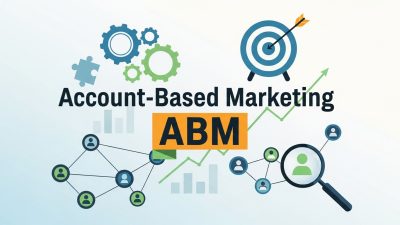

Account-Based Marketing (ABM) enables B2B companies to focus on high-value accounts, delivering personalized campaigns that drive engagement, shorten sales cycles, and increase ROI. By defining your ICP, prioritizing target accounts, leveraging tools, and optimizing campaigns, businesses can achieve successful account-based marketing at scale. ABM is not just a strategy—it’s a long-term approach to building meaningful relationships and measurable business growth.
In the fast-paced world of B2B marketing, traditional strategies that focus on casting a wide net are no longer sufficient. Businesses are facing longer buying cycles, increasingly sophisticated decision-makers, and growing competition for high-value accounts. This is where Account-Based Marketing (ABM) comes in.
ABM shifts the focus from broad audience campaigns to targeted, personalized strategies that engage the companies most likely to deliver significant ROI. By aligning sales and marketing, ABM ensures every touchpoint is intentional, every message is relevant, and every resource is optimized for maximum impact.
Implementing successful account-based marketing isn’t just about personalization—it’s about creating a cohesive strategy that identifies high-value accounts, delivers tailored content across multiple channels, and continuously measures and optimizes performance. For B2B companies looking to drive meaningful growth, ABM has become not just an option, but a necessity.
What is ABM and Why Does it Matter?

Account-Based Marketing (ABM) is a strategic approach that focuses on aligning marketing and sales efforts to engage and convert high-value target accounts. Unlike traditional marketing, which often targets broad audiences, ABM zeroes in on specific companies, delivering highly personalized messaging, content, and solutions designed to address their unique needs.
Implementing successful account-based marketing allows businesses to prioritize accounts that bring the highest ROI, build stronger relationships, and create measurable outcomes. By focusing on quality over quantity, companies can optimize resources and generate meaningful results.
Why is ABM so effective in the B2B sector?
- It aligns your sales and marketing teams for cohesive efforts.
- It delivers higher ROI than traditional marketing approaches.
- It fosters stronger, long-term relationships with key accounts.
- It enables precise targeting, reducing waste on unqualified leads.
Understanding these fundamentals is critical before diving into the strategies that make successful account-based marketing campaigns thrive.
Building a Data-Driven Ideal Customer Profile (ICP)
The foundation of successful account-based marketing starts with identifying high-value accounts through a data-driven Ideal Customer Profile (ICP). An ICP helps you pinpoint which companies are most likely to convert and deliver long-term value.
Tips to Define Your ICP:
- Analyze Existing Customers: Examine your most successful accounts. What characteristics do they share? Where do you deliver the most value?
- Consider Firmographics: Company size, budget, industry, and technology adoption are fundamental factors in ICP creation.
- Focus on Challenges: Understand the problems your solution can solve. The more aligned your offering is with their pain points, the higher your chances of success.
- Collaborate with Teams: Sales and customer success teams have firsthand knowledge of accounts. Their insights can refine your ICP for more precise targeting.
By building a strong, data-driven ICP, you lay the groundwork for successful account-based marketing campaigns that reach the right people with the right message.
Prioritizing High-Impact Target Accounts
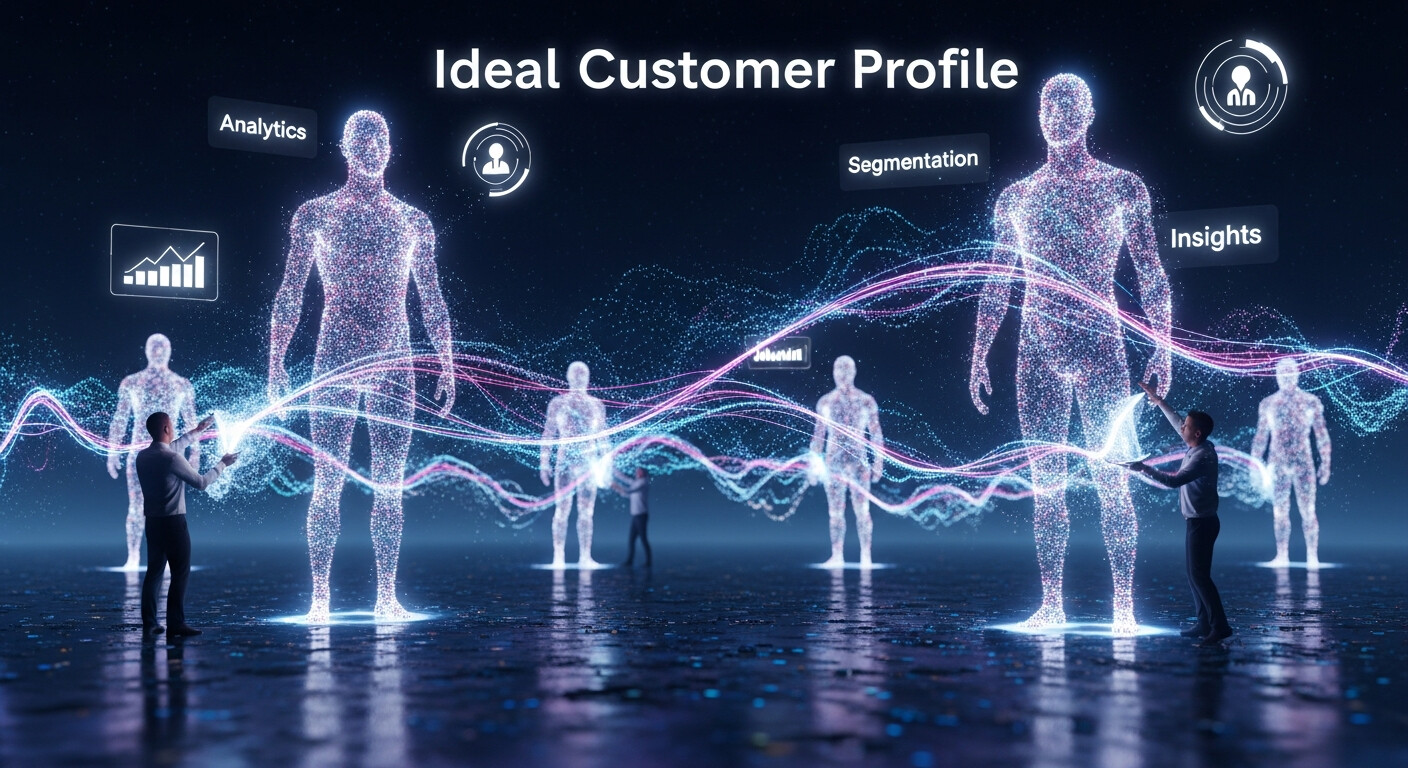
Once your ICP is defined, the next step in successful account-based marketing is prioritizing the accounts with the highest potential impact. Not all accounts are equal—focusing on the right targets ensures that marketing and sales efforts produce measurable results.
Steps to Determine Key Accounts:
- Go Beyond Firmographics: Incorporate behavioral data such as website visits, content downloads, and webinar attendance to identify genuinely interested accounts.
- Engage with Tools: Platforms like LinkedIn Sales Navigator and Demandbase help locate accounts matching your ICP.
- Evaluate Strategic Value: Focus on accounts in industries or regions that align with your company’s growth strategy.
Prioritizing high-impact accounts ensures that your team spends time on opportunities most likely to contribute to revenue, which is a hallmark of successful account-based marketing.
Crafting Personalized Multi-Channel Engagement

Personalization is the heart of successful account-based marketing. Every account has unique needs, and your messaging should reflect that. Generic campaigns won’t yield the engagement necessary to close high-value deals.
How to Build an Effective Content Strategy for ABM:
- Understand Account Needs: Research their challenges, goals, and industry pain points to identify what matters most.
- Create Account-Specific Content: Develop personalized emails, whitepapers, case studies, or even co-branded materials tailored to each account.
- Leverage Multi-Channel Strategies: Reach accounts through email, social media, webinars, direct mail, or in-person events for maximum engagement.
- Focus on Value: Clearly articulate the benefits of partnering with your company to solve their unique challenges.
By deploying multi-channel, personalized campaigns, companies increase engagement rates, strengthen relationships, and accelerate the sales cycle—key outcomes of successful account-based marketing.
Leveraging ABM Tools and Automation
Managing an ABM campaign manually can quickly become overwhelming and prone to errors, especially as the number of target accounts grows. To execute successful account-based marketing, leveraging automation tools and platforms is not just helpful—it’s essential. These platforms provide advanced targeting, personalization, analytics, and workflow automation, enabling your team to focus on strategy, relationship building, and content creation rather than repetitive operational tasks.
Why Tools Are Critical for Successful Account-Based Marketing:
- Hyper-Targeting of Accounts:
Modern ABM tools allow you to segment and target accounts with precision using firmographics, intent data, purchase signals, and historical engagement. By focusing on accounts that have the highest potential ROI, you maximize efficiency and improve the likelihood of conversion—a key principle of successful account-based marketing. - Automated Personalization at Scale:
Automation ensures each account receives timely, relevant, and personalized outreach. From dynamic emails to account-specific landing pages and retargeting campaigns, these tools help scale personalization efforts that would be impossible to manage manually, which is critical for achieving successful account-based marketing outcomes. - Analytics and Insights:
ABM platforms provide dashboards and reporting that track every engagement touchpoint. These insights allow marketing and sales teams to identify trends, optimize content, refine messaging, and make data-driven decisions—all of which are essential for running successful account-based marketing programs. - Workflow Automation:
By automating repetitive tasks—like follow-up emails, lead scoring, and campaign reporting—teams save time while maintaining consistency. Automation reduces human error and ensures that every account receives the right message at the right time, a cornerstone of successful account-based marketing.
Top Tools to Drive ABM Success:
- HubSpot / Marketo:
These platforms automate email campaigns, manage account scoring, and track engagement across multiple touchpoints. HubSpot and Marketo provide a foundation for building workflows that support successful account-based marketing, allowing your team to nurture accounts efficiently. - Demandbase:
Demandbase specializes in hyper-targeting high-value accounts in complex B2B sales cycles. By identifying accounts with the highest engagement potential, Demandbase ensures that your resources are focused on accounts most likely to convert—a vital practice in successful account-based marketing. - 6sense:
Using AI and predictive analytics, 6sense identifies when accounts are most likely to engage and what messaging resonates best. This predictive capability enhances timing and personalization, both critical for executing successful account-based marketing campaigns. - LinkedIn Ads:
LinkedIn allows marketers to reach decision-makers directly with highly targeted content. When paired with personalization strategies, LinkedIn campaigns reinforce account-specific messaging—a core element of successful account-based marketing.
How to Leverage ABM Tools Effectively:
- Integrate Across Teams: Ensure marketing and sales platforms are aligned. Sync account data, engagement signals, and outreach workflows to maintain a unified approach to target accounts.
- Automate Without Losing Personalization: Use templates and dynamic content blocks to scale personalization while retaining account-specific messaging.
- Monitor and Refine Campaigns: Utilize dashboards to measure campaign performance, engagement, and conversion metrics. Adjust campaigns in real-time to maximize ROI, reinforcing the principles of successful account-based marketing.
-
Combine Multiple Tools Strategically: For optimal impact, integrate CRM, automation, and analytics tools. A multi-tool approach allows your team to track every interaction, identify trends, and respond to account behavior promptly—ensuring your ABM efforts remain highly effective.
By combining automation, predictive analytics, and intelligent workflows, companies can execute successful account-based marketing campaigns at scale. This approach reduces operational complexity, improves account engagement, and ensures measurable business outcomes. Leveraging the right ABM tools is not just a best practice—it’s a requirement for any company serious about driving results from targeted accounts.
Iterating and Optimizing ABM Campaigns

ABM is not a set-it-and-forget-it strategy—it’s dynamic and requires continuous iteration to maintain effectiveness. Successful account-based marketing relies on ongoing testing, learning, and optimization at every stage of the account journey.
Key Optimization Activities:
- Test Messaging and Content:
ABM campaigns are most effective when messaging resonates with each account. Experiment with account-specific messaging, content formats, and offers. A/B testing subject lines, email content, ad creative, and landing pages ensures that your communications are highly relevant. Constant refinement of messaging is essential for achieving successful account-based marketing. - Adjust Channels:
Different accounts engage through different channels. Monitor which channels—email, social media, webinars, direct mail, or in-person events—drive the highest engagement for specific accounts. Optimizing the channel mix based on performance ensures your efforts are efficient, scalable, and aligned with successful account-based marketing principles. - Update Account Prioritization:
Engagement levels, intent signals, and business priorities may shift over time. Continuously reassess which accounts are most likely to convert and adjust resource allocation accordingly. Dynamic account prioritization is a key tactic in successful account-based marketing. - Share Learnings Across Teams:
Sales and marketing alignment is crucial for ABM success. Share insights from engagement data, messaging experiments, and content performance across teams to ensure consistent follow-ups, unified messaging, and coordinated campaigns. Strong collaboration is a defining feature of successful account-based marketing. - Refine Strategy Using Analytics:
Analyze engagement patterns, deal outcomes, and account behaviors to identify trends and improvement opportunities. Use these insights to iterate on ICP definitions, content strategy, and channel selection. Continuous refinement based on data ensures your ABM campaigns remain relevant, efficient, and impactful, which is the essence of successful account-based marketing.
Outcome of Iteration and Optimization:
Regularly iterating and optimizing ABM campaigns improves engagement, accelerates pipeline velocity, maximizes revenue, and strengthens long-term relationships with high-value accounts. Companies that embrace a culture of continuous optimization are the ones consistently achieving the highest levels of successful account-based marketing.
The Future of ABM in B2B Marketing
Account-Based Marketing (ABM) is rapidly evolving and becoming a standard approach for modern B2B marketing. As buying cycles grow longer and more complex, and as decision-makers become increasingly sophisticated, businesses must focus their efforts on high-value accounts rather than broad, generalized audiences. This strategic focus ensures resources are used efficiently, messaging is highly relevant, and ROI is maximized.
Emerging trends shaping successful account-based marketing:
- AI and Predictive Analytics:
Artificial intelligence and predictive analytics are revolutionizing ABM by enabling marketers to identify the best accounts to target with unprecedented accuracy. These technologies analyze historical data, engagement patterns, and intent signals to predict which accounts are most likely to convert. By leveraging AI, marketers can optimize the timing, channel, and content of outreach, ensuring campaigns are highly personalized and effective—essential components of successful account-based marketing. - Hyper-Personalization:
The future of ABM relies on hyper-personalized campaigns that speak directly to the unique challenges, goals, and priorities of each target account. Using detailed account data, marketers can craft tailored messages, content, and offers that resonate deeply with decision-makers. Hyper-personalization not only increases engagement but also strengthens trust and credibility, which are central to successful account-based marketing strategies. - Customer Feedback Loops and Data Enrichment:
High-performing ABM programs incorporate feedback from current customers and prospects to continuously refine Ideal Customer Profiles (ICPs) and campaign strategies. Insights from surveys, interviews, and engagement analytics help marketers understand evolving account needs and preferences. Integrating these learnings into campaigns ensures relevance, boosts conversion rates, and reinforces long-term relationships—key pillars of successful account-based marketing. - Integration of Sales and Marketing Technology:
The future of ABM also hinges on the seamless integration of sales and marketing technologies. Platforms that unify CRM, marketing automation, analytics, and AI-driven tools allow teams to share real-time account insights, track engagement, and coordinate outreach effectively. Such alignment ensures that every touchpoint reinforces the same messaging, a critical factor for successful account-based marketing. - Data-Driven Decision Making:
In the coming years, the most effective ABM programs will be those that consistently rely on data to guide every strategic decision—from account selection and prioritization to channel mix and content creation. Continuous monitoring and optimization based on measurable outcomes will differentiate companies achieving successful account-based marketing from those running ineffective, scattershot campaigns. - Long-Term Relationship Building:
ABM is not just about closing deals—it’s about nurturing high-value accounts over time. Future-focused ABM strategies will emphasize relationship management, ongoing engagement, and value creation throughout the account lifecycle. By maintaining strong, personalized connections, businesses can increase customer retention, drive upsell opportunities, and achieve sustained growth, all hallmarks of successful account-based marketing.
Conclusion:
To thrive in the future, B2B companies must embrace emerging technologies, prioritize hyper-personalization, integrate feedback loops, and maintain tight alignment between sales and marketing teams. Organizations that adopt these practices will consistently achieve successful account-based marketing, maximize ROI, and cultivate long-term partnerships with high-value accounts—ensuring their ABM programs remain competitive, relevant, and highly effective
Frequently Asked Questions
1. What is Account-Based Marketing (ABM)?
ABM is a strategic B2B marketing approach that targets high-value accounts with personalized campaigns to improve engagement, conversion, and ROI. It aligns marketing and sales for maximum impact.
2. Why is ABM important for B2B companies?
ABM allows companies to focus on accounts with the highest potential ROI, reducing wasted effort, building stronger relationships, and accelerating the sales process.
3. How do you define a high-value account?
High-value accounts are identified through your Ideal Customer Profile (ICP), combining firmographics, engagement history, intent signals, and strategic alignment with your business goals.
4. What tools are essential for successful ABM?
HubSpot, Marketo, Demandbase, 6sense, and LinkedIn Ads help automate campaigns, personalize content, track engagement, and optimize account targeting.
5. How is ABM performance measured?
Key metrics include engagement rates, pipeline velocity, close rates, and revenue influenced. Analytics tools allow data-driven optimization of campaigns for sustained success.
6. How often should ABM campaigns be optimized?
ABM is dynamic. Campaigns should be iteratively refined based on account behavior, engagement trends, and performance analytics to ensure continuous improvement.
7. What’s the future of ABM?
The future of ABM focuses on hyper-personalization, AI-driven insights, integrated tech stacks, and long-term relationship building to maximize ROI and maintain competitive advantage.