Account-based marketing, and specifically an ABM email marketing strategy, often raises practical questions for marketers who are new to the approach or looking to refine their execution. From personalization and segmentation to tools and measurement, many teams want clarity on how to implement ABM emails effectively and at scale.
The following frequently asked questions address some of the most common concerns and misconceptions about ABM email marketing. Whether you are just starting or optimizing an existing program, these answers will help you better understand how to plan, execute, and measure high-impact ABM email campaigns.
What Is ABM and Why Is It Important?
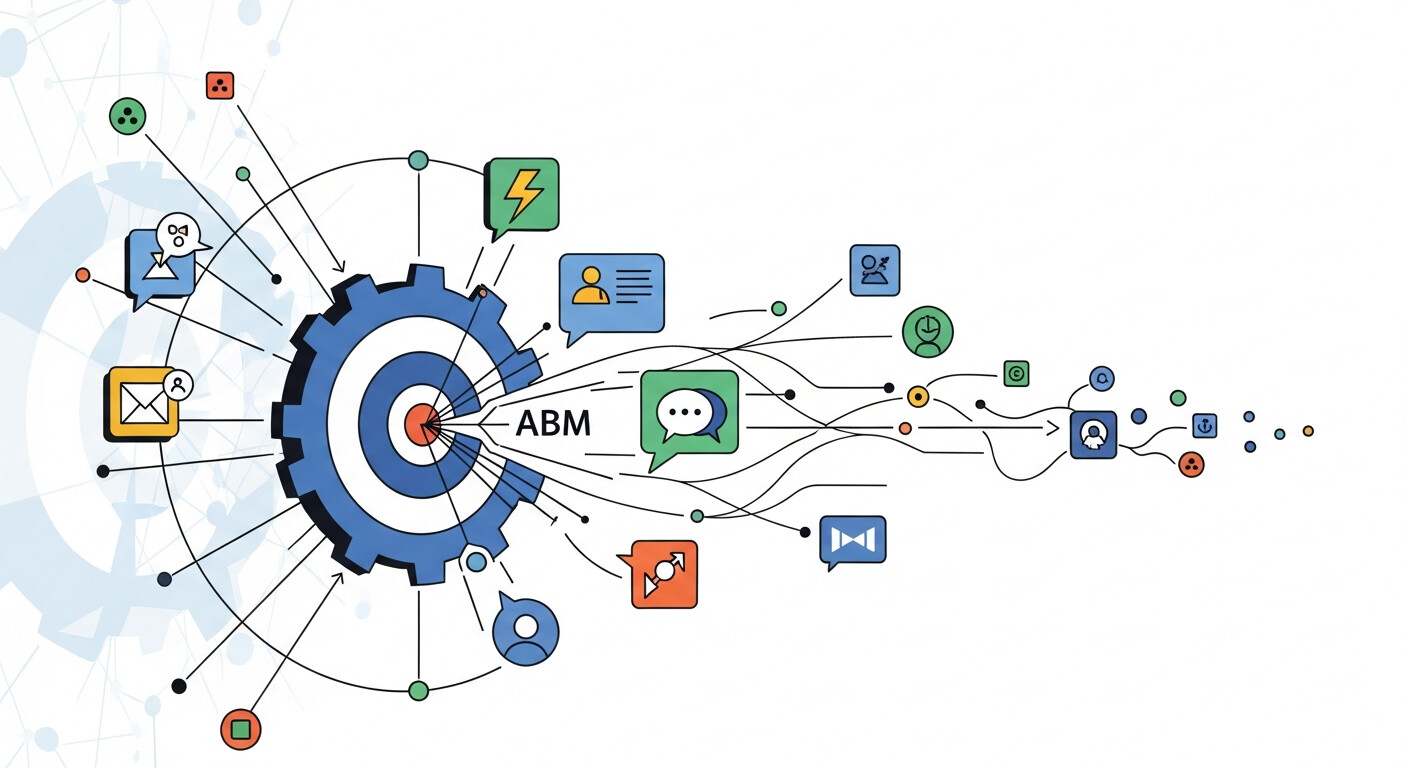 At its core, Account-Based Marketing (ABM) operates as a reverse funnel. Instead of casting a wide net to attract as many leads as possible, ABM flips the traditional approach by identifying and prioritizing high-value accounts from the start. Rather than focusing on quantity, ABM emphasizes quality—ensuring that every marketing touchpoint, including email, is carefully tailored to the specific needs, challenges, and objectives of target accounts. This precision-driven approach makes ABM one of the most effective strategies in modern B2B marketing.
So why does ABM matter? The answer is simple—it delivers measurable results. According to an ITSMA report, 87% of marketers agree that ABM generates higher ROI than other marketing approaches. By targeting the right accounts with highly relevant messaging, businesses can build stronger trust, nurture meaningful relationships, and significantly shorten sales cycles. This is where a well-planned ABM email marketing strategy plays a crucial role.
To build that strategy effectively, marketers must first understand both the right targets and the right tactics. This begins with How to Identify Your Ideal Accounts for ABM: A Step-by-Step Guide and is followed by applying proven outreach methods such as ABM Email Marketing Tactics That Actually Work—both of which form the foundation of a high-performing ABM program.
Emails and ABM are a powerful combination. Email allows marketers to communicate directly with decision-makers while enabling deep personalization at scale. However, ABM email marketing is not about sending generic mass emails. Instead, it requires a highly strategic, data-driven, and laser-focused approach that aligns with each account’s unique business goals.
Evaluating the Impact of Your ABM Email Campaigns
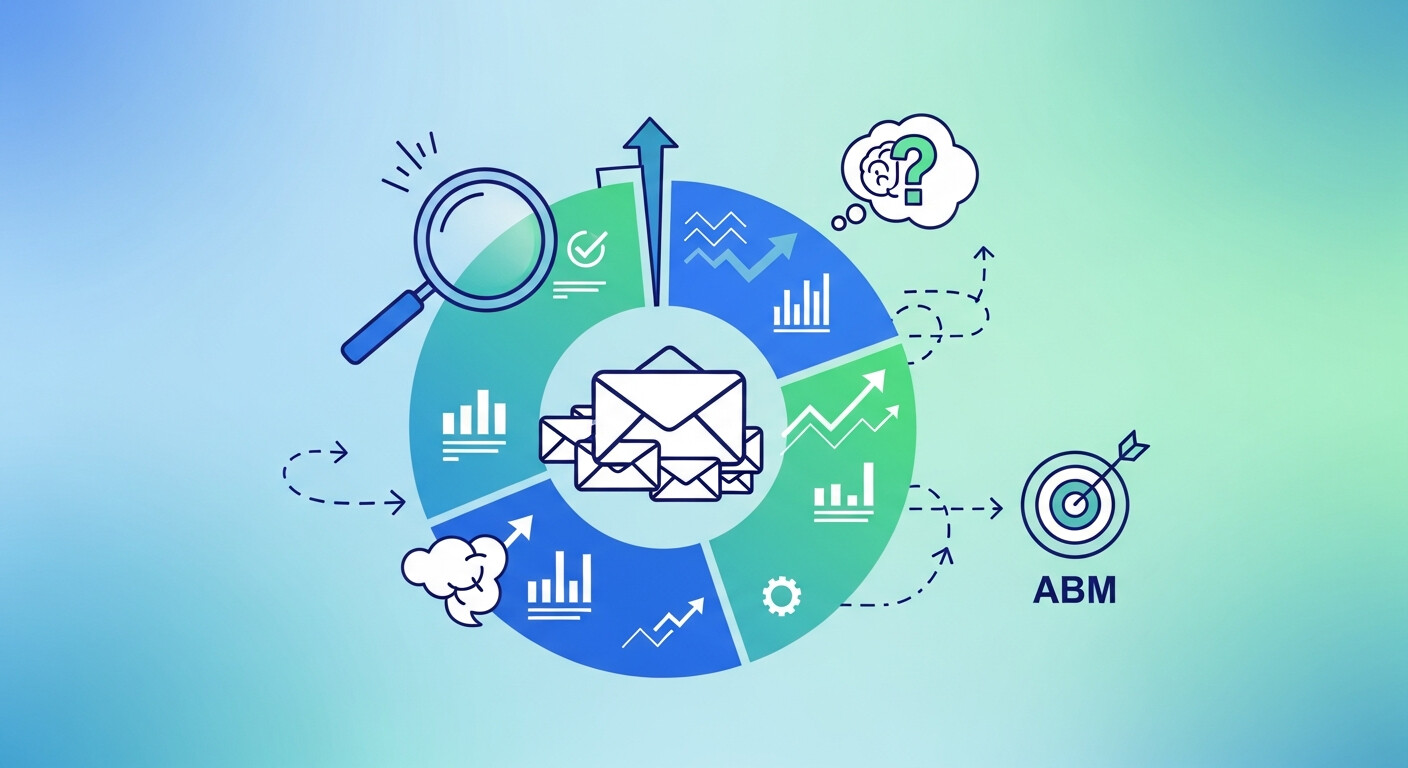 To prove the effectiveness of your ABM email marketing strategy, you must track the right performance metrics. Instead of vanity metrics, focus on data that truly reflects business impact.
Open Rates and Click-Through Rates (CTR):
These indicators show how compelling your subject lines and email content are. Higher engagement suggests that your messaging resonates with your target accounts. However, in ABM, these metrics should be interpreted at the account level rather than individual level, since meaningful engagement from even one key stakeholder can be more valuable than broad but shallow engagement.
Emails Read:
If recipients are actually reading your emails, it signals strong content relevance and alignment with their interests. Longer read times often indicate that your message is insightful, well-structured, and directly tied to the recipient’s business challenges.
Beyond these basic engagement signals, it is also useful to track reply rates and qualitative feedback, as responses often provide richer insights into buyer intent, objections, and priorities.
Account-Specific Metrics
Account Penetration Rate:
Are you reaching multiple stakeholders within your target accounts? Successful ABM relies on influencing more than one decision-maker. The more roles you engage—such as marketing, sales, operations, or leadership—the stronger your position within the account.
Deal Velocity:
Are your emails helping move opportunities through the pipeline faster? A high-performing ABM email marketing strategy should accelerate decision-making, not slow it down. If engagement increases but deals stall, it may indicate a misalignment between your messaging and buyer needs.
You should also monitor engagement depth across roles, as involvement from senior decision-makers often signals higher likelihood of conversion.
ROI Measurements
Percentage of revenue generated from ABM and email campaigns
Cost per acquisition (CPA) for email-targeted accounts
To get a fuller picture, many teams also track customer lifetime value (CLV) influenced by ABM emails and marketing-influenced pipeline rather than only closed-won revenue.
Finally, continuous testing is essential. Use A/B testing on subject lines, email copy, and call-to-actions to refine your approach and optimize your ABM email marketing strategy over time.
Tools and Technology to Supercharge Your ABM Email Efforts
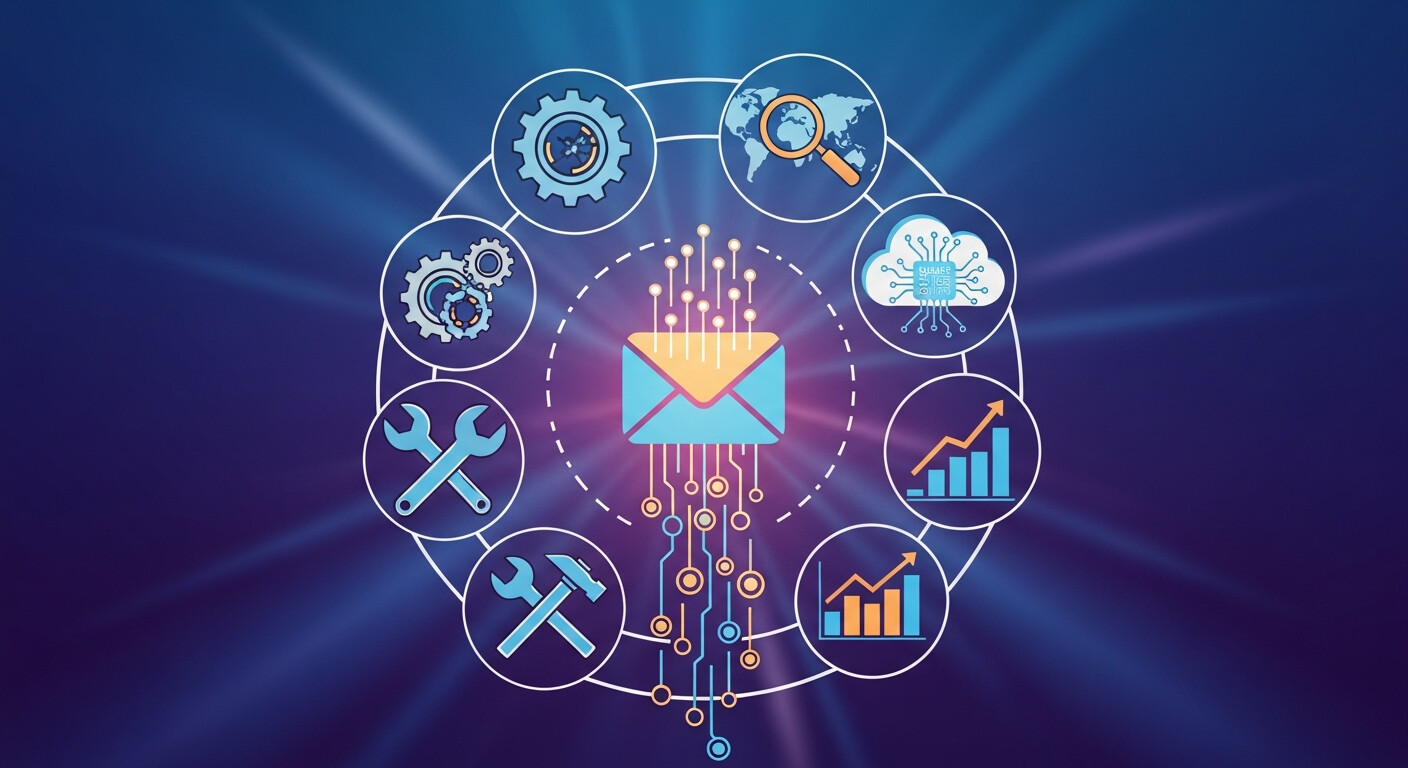 Executing a high-level ABM email marketing strategy manually is difficult. Fortunately, several powerful tools—ranging from CRM platforms, email automation software, engagement tracking tools, and data analytics platforms—can help you personalize, automate, and measure your campaigns effectively.
CRM (Customer Relationship Management) Solutions
Platforms like Salesforce and HubSpot CRM act as your single source of truth, storing all interactions with target accounts. This data is invaluable for crafting highly personalized emails that align with your overall ABM email marketing strategy.
Email Automation Tools
Email automation tools are a cornerstone of any modern ABM email marketing strategy because they allow marketers to deliver highly personalized messages at scale without sacrificing relevance or quality. Instead of relying on manual outreach, these platforms enable teams to systematize their communication while still maintaining a human touch.
Platforms such as Marketo and Mailchimp empower marketing teams to design sophisticated, tailored email journeys based on account behavior, industry, engagement history, and sales stage. For example, an account that has downloaded a whitepaper can automatically receive a follow-up email, while another account that attended a webinar can be nurtured with related case studies.
Rather than manually crafting every single message, you can build intelligent, automated workflows that trigger the right email at the right time based on real user actions. This not only saves time but also ensures consistency, timeliness, and relevance—making your ABM email marketing strategy more efficient, scalable, and impactful in driving engagement and conversions.
Engagement Tracking Software
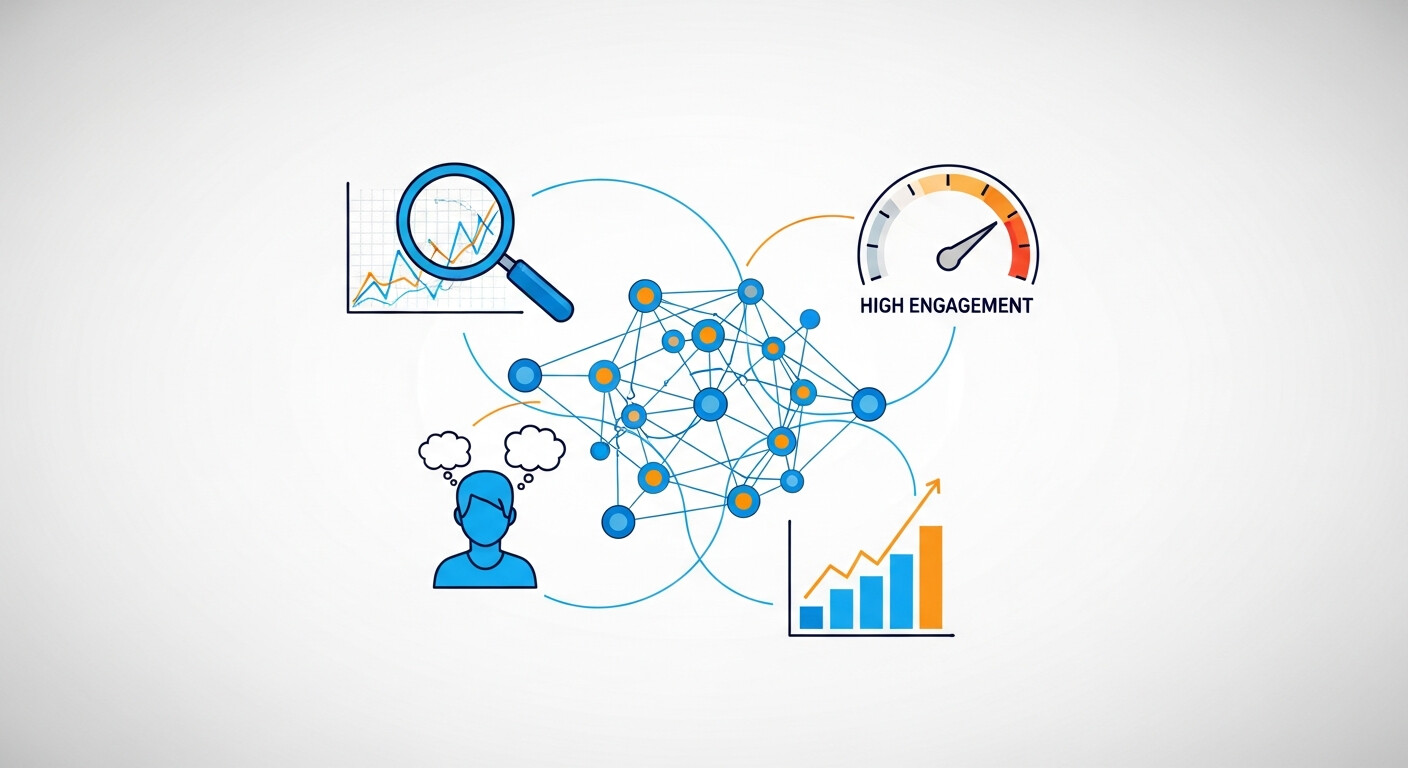 Understanding how your target accounts interact with your emails is essential for continuously refining and improving your ABM email marketing strategy. Without proper tracking, you are essentially operating in the dark, relying on assumptions rather than real behavioral insights.
Engagement tracking tools like Outreach and Yesware provide deep insights into key email performance metrics, including open rates, click-through rates, reply rates, email response times, and follow-up effectiveness. These platforms give you a clear picture of how your messaging is being received at an account level, rather than just at an individual contact level. This is particularly important in ABM, where multiple stakeholders within the same organization may engage differently with your content.
Beyond basic metrics, modern engagement tools also offer features such as email sequencing, automated follow-ups, and activity tracking across multiple channels. This means you can monitor not only whether an email was opened, but also how long it was read, whether attachments were viewed, and whether links were clicked. Such granular data allows you to assess intent more accurately and tailor future outreach accordingly.
With this data, you can identify which messages resonate most with your audience, which subject lines perform best, and which emails need improvement. You can also determine the optimal timing for follow-ups, ensuring your outreach is both data-driven and relationship-focused rather than aggressive or random. Over time, this helps you build a more refined and effective ABM email marketing strategy that aligns closely with how your target accounts actually behave.
Another key benefit of engagement tracking tools is their ability to integrate with your CRM and sales platforms. This creates a seamless flow of information between marketing and sales teams, ensuring that both departments have visibility into account interactions. As a result, sales representatives can engage in more informed and meaningful conversations with prospects, improving the overall customer experience and increasing the likelihood of conversion.
Data Analytics Platforms
To truly measure the effectiveness of your ABM email marketing strategy, you need robust and reliable data analytics platforms. Simply tracking email opens is not enough—you need to understand how your emails contribute to real business outcomes, such as pipeline movement, deal progression, and revenue growth.
Tools like Tableau and Google Analytics allow you to track campaign performance in real terms, connecting email engagement to website behavior, pipeline movement, and revenue generation. These platforms help you visualize trends, identify patterns, and measure the overall impact of your ABM efforts through dashboards, reports, and real-time analytics.
For example, you can analyze how email engagement correlates with website visits, content downloads, demo requests, or product inquiries. This helps you determine whether your ABM email campaigns are actually driving meaningful actions rather than just superficial engagement. By linking email activity to downstream business results, you gain a clearer understanding of what truly works.
Advanced analytics platforms also allow you to segment performance data by industry, company size, job role, or account tier. This enables you to compare how different types of accounts respond to your messaging and adjust your strategy accordingly. If enterprise accounts show higher engagement than mid-market companies, for instance, you may choose to allocate more resources toward high-value targets.
By analyzing conversion rates, account engagement levels, and deal progression, you can continuously optimize your strategy, allocate resources more effectively, and clearly demonstrate the ROI of your ABM email marketing strategy to stakeholders and leadership teams. This data-driven approach not only improves campaign performance but also strengthens credibility and buy-in from decision-makers within your organization.
AI-Powered Copywriting Tools
Crafting compelling, personalized emails at scale can be challenging, especially when targeting multiple high-value accounts with unique needs. This is why AI-powered tools are becoming an essential part of a strong ABM email marketing strategy.
Platforms such as Jasper and Grammarly Business help marketers refine their email tone, clarity, structure, and grammar while maintaining a natural, human voice. These tools can assist in generating personalized email drafts, improving sentence flow, and ensuring consistency across communications.
By leveraging AI-powered writing tools, teams can produce high-quality, professional, and engaging emails more efficiently. This not only improves overall content quality but also strengthens the effectiveness of your ABM email marketing strategy by making every message clearer, more persuasive, and more aligned with your brand voice.
Level Up Your ABM Email Game
ABM emails are a powerful way to build deeper, more meaningful relationships with high-priority accounts. When personalization, smart segmentation, and performance measurement are embedded into your ABM email marketing strategy, you create a repeatable system that drives engagement, trust, and revenue.
By consistently analyzing results, testing new approaches, and leveraging the right technology stack, your ABM email marketing strategy can become a true competitive advantage rather than just another marketing tactic.
The tools and techniques covered here are just the foundation. If you’re ready to take your outreach to the next level, consider experimenting with next-generation email platforms that can further automate, personalize, and optimize your ABM email marketing strategy—helping you turn targeted outreach into measurable business growth.
Discover best practices for using chatbots to enhance customer engagement and streamline communication.
Frequently Asked Questions (FAQ)
1. What is an ABM email marketing strategy?
An ABM email marketing strategy is a targeted approach where emails are personalized for specific high-value accounts rather than sent to a broad audience. It focuses on building relationships, addressing account-specific pain points, and aligning email outreach with overall sales and marketing goals.
2. How is ABM email marketing different from traditional email marketing?
Traditional email marketing targets large lists with relatively generic messaging, while ABM email marketing focuses on a smaller number of priority accounts with highly personalized, relevant, and contextual emails tailored to each account’s needs.
3. Why is personalization important in ABM emails?
Personalization increases relevance, builds trust, and improves engagement. When recipients feel that an email speaks directly to their challenges and goals, they are more likely to open, read, and respond.
4. What are the most important metrics to track in ABM email campaigns?
Key metrics include:
- Open rates and click-through rates (CTR)
- Emails read
- Account penetration rate
- Deal velocity
- Revenue attributed to ABM emails
- Cost per acquisition (CPA)
5. What tools are best for executing ABM email campaigns?
Some of the best tools include:
- CRM: Salesforce, HubSpot
- Email automation: Marketo, Mailchimp
- Engagement tracking: Outreach, Yesware
- Analytics: Google Analytics, Tableau
- AI writing tools: Jasper, Grammarly Business
6. How can I improve my ABM email subject lines?
Make them specific, relevant, and personalized. Mention the recipient’s company, pain points, or recent activity. Avoid generic sales phrases and focus on value.
7. How often should I send ABM emails?
There is no fixed rule, but quality matters more than quantity. Space out emails based on engagement, sales stage, and account behavior rather than sending frequent generic messages.
8. How does segmentation improve ABM email performance?
Segmentation ensures that messaging is tailored based on industry, company size, buyer persona, sales stage, and past engagement—leading to higher relevance and better results.
9. Can small businesses use ABM email marketing?
Yes. Even small businesses can use ABM by focusing on a limited number of high-value accounts and crafting personalized outreach rather than mass email campaigns.
10. What is the biggest mistake in ABM email marketing?
The biggest mistake is treating ABM like traditional email marketing—sending generic messages instead of investing in research, personalization, and relationship-building.