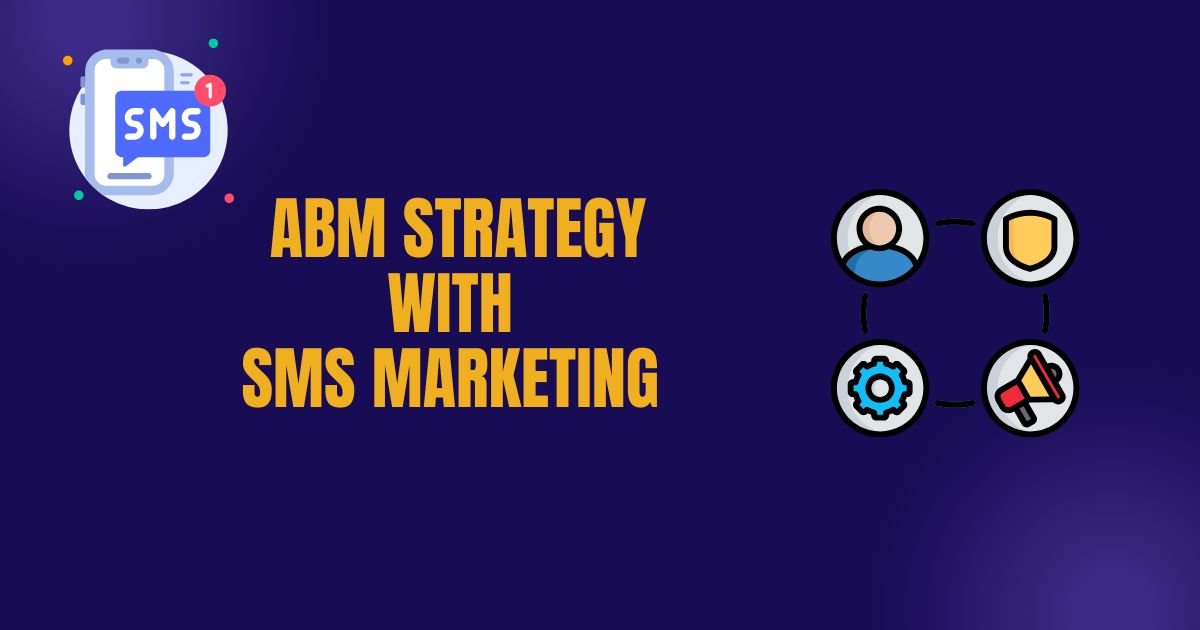
Account-based marketing (ABM) has revolutionized how B2B companies approach their most valuable prospects. By focusing resources on high-value accounts rather than casting a wide net, businesses can achieve better ROI and stronger relationships with key decision-makers. But here’s where many ABM strategies fall short: they rely heavily on email and LinkedIn outreach, channels that are increasingly saturated and competitive.
Understanding the SMS Advantage in ABM
Traditional ABM campaigns often struggle with deliverability and engagement. Email open rates hover around 20-25% for B2B communications, while LinkedIn connection requests get accepted less than 30% of the time. SMS marketing flips these statistics entirely.
Text messages have an average open rate of 98%, with most messages read within three minutes of delivery. This immediacy makes SMS particularly powerful for time-sensitive ABM activities like event invitations, webinar reminders, or following up on warm leads.
The personal nature of SMS also works in ABM’s favor. When someone receives a text message, it feels more direct and urgent than an email buried in their inbox. This psychological advantage can be the difference between a prospect engaging with your content or scrolling past it.
However, SMS marketing in ABM requires a delicate touch. The intimacy of the medium means your messages must be highly relevant, valuable, and respectful of the recipient’s time and privacy.
Building Your SMS-Enabled ABM Foundation
Before sending your first text message, you need a solid foundation that supports both your ABM strategy and SMS compliance requirements.
Account Selection and Contact Discovery
Start by identifying your highest-value target accounts using your existing ABM criteria: company size, industry, technology stack, or revenue potential. Once you’ve defined your account list, the real work begins—finding the right contacts and their mobile numbers.
Professional databases like ZoomInfo, Apollo, or Sales Navigator can provide mobile phone numbers, but always verify these contacts through multiple sources. Social media profiles, company websites, and even direct phone calls to company switchboards can help you confirm you’re reaching the right person.
Focus on gathering contacts for multiple stakeholders within each target account. ABM works best when you can engage various decision-makers and influencers, and SMS can help you maintain touchpoints across this buying committee.
Compliance and Consent Management
SMS marketing operates under strict regulations, particularly in the United States, where the Telephone Consumer Protection Act (TCPA) governs business texting. Before adding any contact to your SMS list, you must obtain explicit consent to send them marketing messages.
For ABM campaigns, this consent often comes through lead magnets, webinar registrations, or contact forms where prospects specifically opt in to receive text updates. Some companies also gather consent during sales calls by asking prospects if they’d like to receive relevant industry updates via text.
Document all consent carefully, including the date, method, and specific language used when obtaining permission. This documentation protects your business and ensures you can demonstrate compliance if questions arise.
Strategic SMS Integration Points in Your ABM Funnel
SMS marketing shouldn’t replace your existing ABM channels—it should enhance them. Here’s how to strategically integrate text messaging at key stages of your account-based journey.
Awareness and Initial Engagement
Use SMS to amplify your content marketing efforts with target accounts. When you publish a research report or industry analysis that’s particularly relevant to a specific account, send a brief text highlighting the key insight that relates to their business challenges.
For example: “Hi [Name], I saw your recent LinkedIn post about supply chain challenges. Our new research found that 73% of manufacturers are addressing this through automation. Worth a quick read: [link]”
This approach works because it references something specific about their business while providing immediate value. The text serves as a notification system for your highest-priority content, ensuring it doesn’t get lost in email filters.
Event and Webinar Promotion
SMS excels at driving attendance to exclusive events or webinars designed for your target accounts. The immediacy of text messaging makes it perfect for last-minute reminders or exclusive invitations.
Send your initial invitation via email with full details, then use SMS for strategic follow-ups: a reminder one week before, a final call to action one day prior, and a “starting in 15 minutes” message for registered attendees.
Sales Process Acceleration
Once prospects enter active conversations with your sales team, SMS can help maintain momentum between formal meetings. Use text messaging for quick check-ins, document sharing, or scheduling coordination.
A simple message like “Hi [Name], following up on our conversation about Q4 implementation. Attached is the case study from [similar company] we discussed: [link]” keeps the conversation moving without the formality of lengthy emails.
Post-Meeting Follow-Up
After important sales meetings or product demonstrations, SMS provides an immediate way to reinforce key points or share additional resources. Send a text within a few hours of the meeting while the conversation is still fresh in everyone’s mind.
This might include links to relevant case studies, pricing information, or next steps that were discussed during the call. The quick turnaround demonstrates responsiveness and keeps your solution top-of-mind.
Crafting Effective ABM SMS Messages
Writing effective SMS messages for ABM requires balancing brevity with personalization. You have roughly 160 characters to make an impact while maintaining the personal, consultative tone that makes ABM successful.
Personalization Beyond First Names
Move beyond simple first-name personalization to reference specific business challenges, recent company news, or mutual connections. This level of detail demonstrates that your outreach is targeted and relevant, not part of a mass campaign.
Reference recent earnings calls, leadership changes, expansion announcements, or industry awards when they’re relevant to your solution. This approach shows you understand their business context and have insights that could be valuable.
Value-First Messaging
Every SMS should lead with value for the recipient. Whether you’re sharing industry insights, relevant case studies, or exclusive invitations, make the benefit clear within the first few words of your message.
Avoid sales-heavy language in favor of consultative phrasing. Instead of “Our solution can help you save money,” try “Companies like yours are reducing costs 30% through this approach: [link to case study].”
Clear Call-to-Action
Each text message should have a specific, achievable call-to-action. Whether you want them to read an article, register for an event, or schedule a call, make the next step obvious and easy to complete.
Use trackable links to measure engagement and understand which messages resonate with different accounts. This data helps you refine your messaging and timing for future campaigns.
Timing and Frequency Best Practices
SMS timing can make or break your ABM campaigns. Unlike email, which recipients can read at their convenience, text messages demand immediate attention. This power requires careful consideration of when and how often you reach out.
Optimal Sending Times
B2B SMS messages generally perform best during business hours, particularly mid-morning (10-11 AM) and mid-afternoon (2-3 PM). Avoid early morning texts before 9 AM or evening messages after 6 PM unless you have specific consent for off-hours communication.
Consider your target accounts’ time zones and industry patterns. Financial services professionals might be most responsive in the early morning, while healthcare administrators might prefer mid-afternoon communications between patient rounds.
Campaign Frequency Guidelines
For ABM campaigns, less is definitely more when it comes to SMS frequency. Most successful programs send no more than 2-3 text messages per month to any individual contact, with messages spaced at least one week apart.
Monitor response rates and opt-out requests closely. If you notice declining engagement or increased unsubscribes, reduce your sending frequency and evaluate your message relevance.
Seasonal Considerations
Align your SMS cadence with your target accounts’ business cycles. Technology companies might be less responsive during quarter-end periods, while retailers might be overwhelmed during peak shopping seasons.
Use these insights to time major campaigns and adjust expectations accordingly. Sometimes the best strategy is to pause SMS outreach during particularly busy periods and resume when your prospects are more likely to engage.
Measuring SMS Success in ABM Campaigns

Traditional SMS metrics like open rates and click-through rates tell only part of the story in ABM campaigns. Since you’re targeting specific, high-value accounts, your measurement approach should reflect the strategic nature of these relationships.
Account-Level Engagement Metrics
Track engagement at the account level rather than focusing solely on individual contact metrics. Look at how SMS touchpoints influence overall account engagement across all channels—email, website visits, content downloads, and sales interactions.
Create account scorecards that show how SMS fits into the broader engagement picture. You might find that accounts receiving strategic SMS messages show higher email open rates or spend more time on your website, indicating that text messaging amplifies your other marketing efforts.
Pipeline Influence and Attribution
Connect SMS activities to pipeline development and revenue outcomes. Track which accounts are receiving SMS outreach progress further in your sales process and close at higher rates than accounts reached through other channels alone.
Use UTM parameters and campaign codes to track how SMS drives website visits, content downloads, and meeting requests. This attribution data helps you understand SMS’s role in the complete buyer journey.
Cost Per Acquisition Analysis
Calculate the cost per acquisition for accounts that include SMS in their marketing mix versus those that don’t. While SMS campaigns require additional investment in platforms and compliance management, they often deliver better ROI due to higher engagement rates and faster sales cycles.
Factor in the time savings for your sales team when prospects are more engaged and responsive due to strategic SMS touchpoints. These efficiency gains often offset the direct costs of text messaging platforms.
Overcoming Common SMS Marketing Challenges in ABM
Even well-planned SMS campaigns face obstacles. Understanding these challenges in advance helps you build more resilient ABM strategies.
Managing Opt-Outs Gracefully
When prospects opt out of SMS communications, use it as an opportunity to strengthen the relationship through other channels. Send a brief email acknowledging their preference and asking about their preferred communication methods.
Sometimes opt-outs indicate timing issues rather than lack of interest. A prospect might unsubscribe during a busy period but still be interested in your solution. Maintaining professional relationships despite communication preference changes can lead to future opportunities.
Scaling Personal Touch
As your ABM program grows, maintaining the personal, consultative tone that makes SMS effective becomes more challenging. Develop message templates and playbooks that your team can customize for different industries, company sizes, and buyer personas.
Invest in tools that help you track account intelligence and interaction history across team members. When multiple people might be texting the same account, coordination becomes essential to avoid overwhelming prospects or sending conflicting messages.
Integration with Existing Systems
Most marketing automation platforms don’t seamlessly integrate SMS capabilities, creating data silos that make it difficult to track cross-channel ABM performance. Evaluate SMS platforms that offer robust API integrations with your existing CRM and marketing automation tools.
Consider working with your IT team to build custom integrations that automatically sync SMS engagement data with your account records. This integration enables more sophisticated scoring and nurturing workflows that incorporate text messaging alongside email and social outreach.
Maximizing Your ABM-SMS Success
SMS marketing represents a powerful but underutilized channel for account-based marketing programs. When implemented thoughtfully—with proper consent management, strategic timing, and value-focused messaging—text messaging can dramatically improve your engagement rates and sales outcomes with target accounts.
Start small with your highest-priority accounts and a limited number of use cases. Test different message types, timing strategies, and frequency patterns to understand what resonates with your specific audience. As you build confidence and see results, gradually expand your SMS activities to support more stages of your ABM funnel.
Remember that SMS works best as part of an integrated approach rather than a standalone tactic. Use text messaging to amplify your content marketing, accelerate your sales process, and maintain touchpoints between formal interactions. The goal isn’t to replace your existing ABM channels but to make them more effective through strategic SMS integration.
Ready to get started? Begin by auditing your current ABM target list and identifying which accounts have mobile phone numbers in your database. Then, create a consent-gathering strategy that aligns with your existing lead generation activities. With proper foundation and strategic implementation, SMS can become one of your most effective ABM tools.
FAQ – SMS in Account-Based Marketing (ABM)
1. Why use SMS in ABM?
SMS offers extremely high open rates of around 98% and delivers fast engagement, making it ideal for time-sensitive messages such as event invitations, webinar reminders, or follow-ups with warm leads. Unlike email or LinkedIn, text messages feel direct and personal, increasing the likelihood that high-value accounts will respond.
2. Can SMS replace email or LinkedIn in ABM?
No, SMS should not replace email or LinkedIn. It works best as a complementary channel that enhances existing ABM efforts. When used strategically alongside email, LinkedIn, and other touchpoints, SMS can amplify engagement and accelerate the sales process.
3. How do I collect mobile numbers legally?
You must obtain explicit consent from recipients before sending marketing SMS. Consent can be collected through lead magnets, downloadable resources, webinar registrations, contact forms, or even during sales calls when prospects are asked if they want to receive text updates. It is important to document the consent carefully, including the date, method, and exact wording used.
4. How often should I send SMS messages?
For B2B ABM campaigns, sending two to three messages per month per contact is ideal, with at least one week between each message. Off-hours messages should be avoided unless you have specific consent from the recipient.
5. When is the best time to send B2B SMS?
The best times are generally mid-morning between 10 and 11 AM and mid-afternoon between 2 and 3 PM. Messages should be avoided early in the morning before 9 AM and in the evening after 6 PM unless you have explicit approval. Time zones and industry-specific schedules should also be considered.