

Account-Based Marketing (ABM) is one of the most impactful strategies in business-to-business (B2B) marketing today. Rather than casting a wide net, ABM focuses on targeting high-value accounts with personalized campaigns that are more likely to convert and drive significant value. But, implementing ABM is only half the battle. Measuring its effectiveness is crucial to ensure your strategy delivers the return on investment (ROI) you’re aiming for.
This guide will walk you through everything you need to know about measuring ABM success. We’ll cover the core metrics, tools, and strategies you need to track performance effectively.
Why Measure Account Based Marketing Success Matters
Every successful marketing strategy relies on data-driven decision-making. ABM is no exception. Measuring its success lets you:
- Identify what’s working: Pinpoint the tactics that resonate with your target accounts so you can amplify them.
- Spot areas for improvement: Understand where your approach is falling short and course-correct quickly.
- Justify your investment: Prove ABM’s value to key stakeholders by clearly demonstrating ROI.
Without measurement, it’s impossible to determine if your ABM efforts are yielding the desired results or wasting resources.
Key Metrics to Measure ABM Success
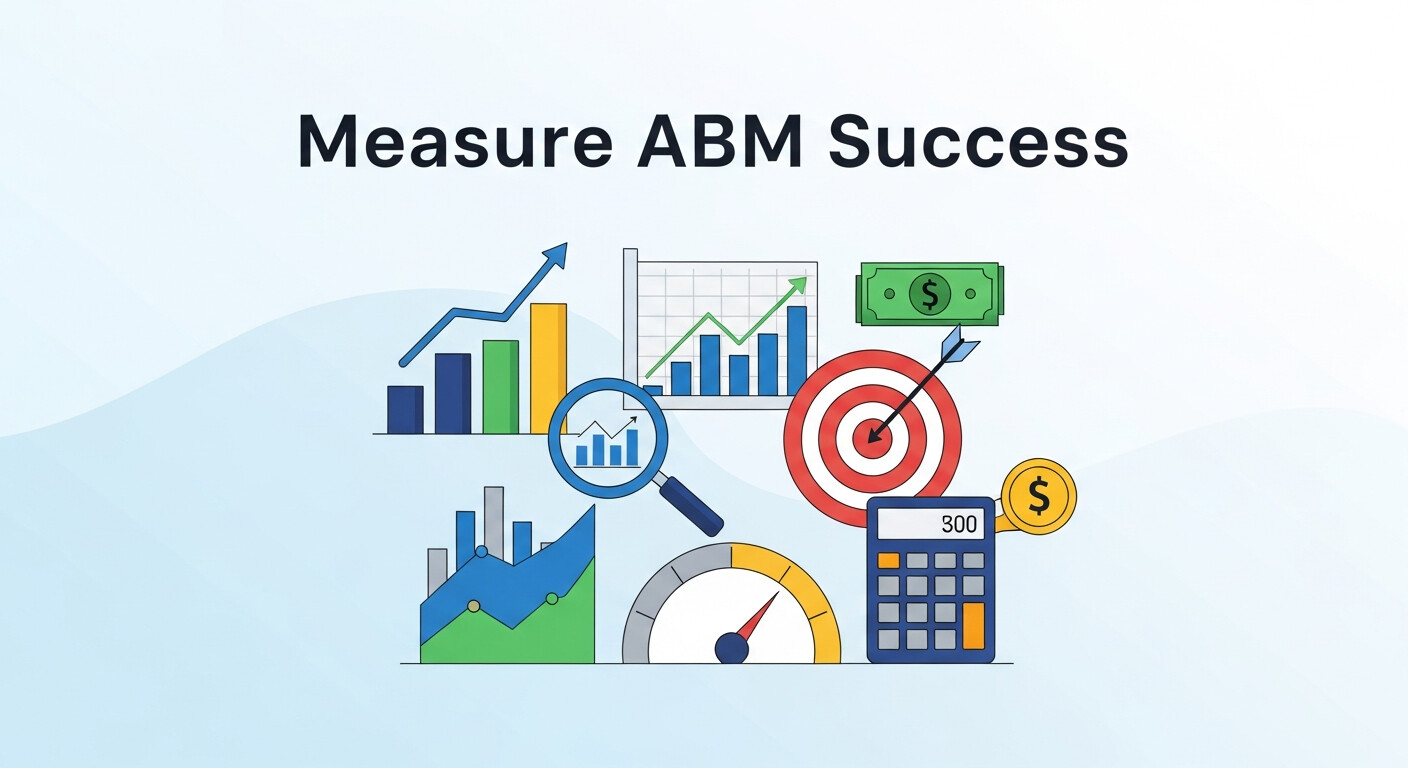
Not sure where to start? Here are the key metrics you should track when evaluating your ABM campaigns.
1. Account Engagement Rate
Account engagement measures how involved your target accounts are with your campaigns. Look at metrics like email open rates, clicks, webinar attendance, and website visits from key accounts to gauge their interest.
- Use tools like HubSpot or Marketo to track leads tied to specific accounts.
- Track repeat interactions, as they often indicate deeper interest and intent.
2. Pipeline Metrics
A critical measure of any ABM strategy is how well it drives revenue.
- Target accounts in pipeline: How many of your targeted accounts have entered your sales pipeline?
- Pipeline velocity: Measure how quickly accounts move through your sales funnel after engaging with your ABM campaigns. This can help uncover friction points.
- Deal size growth: Larger deals stemming from target accounts are a strong indicator of ABM doing its job.
3. Revenue Metrics
Revenue metrics are the ultimate measure of ABM success. Pay attention to metrics like:
- Closed-won deals: How many of your accounts have converted into customers?
- Revenue influenced by ABM: How much of your total revenue comes from the accounts targeted by your ABM efforts?
- Customer Lifetime Value (CLV): Since ABM often targets high-value accounts, tracking CLV can reveal the long-term impact of your efforts.
4. Account Relationship Strength
ABM is about building meaningful relationships with your target accounts. But how do you measure relationship strength?
- Executive connections: Count meetings or interactions with decision-makers in target accounts.
- NPS (Net Promoter Score): Gauge how likely contacts within your accounts would recommend your company.
5. Content Performance
Since personalized content is a pillar of ABM, it’s essential to measure its impact. Ask questions like:
- Which pieces of content are most frequently consumed by target accounts?
- Are your blog posts, whitepapers, or case studies converting visitors?
Use tools like Google Analytics to track visits and HubSpot to assess lead generation from content pieces.
Tools to Help You Measure ABM
To measure ABM success effectively, you need the right tools. Below are some popular options that can simplify tracking and reporting.
1. Marketing Automation Platforms
Tools like Marketo, HubSpot, and Pardot provide features for tracking email campaigns, content downloads, and other engagement metrics tied to specific accounts.
2. CRM Systems
Customer Relationship Management (CRM) software like Salesforce can connect marketing and sales efforts. It allows you to track account activity across the entire buyer’s journey.
3. Analytics Platforms
Google Analytics can help shed light on how targeted accounts behave on your website, from time spent on landing pages to conversion rates. Combine this with heatmap tools like Hotjar to see precisely where your prospects are engaging.
4. ABM-Specific Tools
ABM-specific platforms like Terminus, 6sense, and Demandbase are designed to help you track account-level engagement and performance. They enable personalized campaigns at scale while offering advanced insights into metrics like account penetration and influence.
How to Establish a Baseline for Your ABM Strategy
Before you begin measuring ABM success, it’s crucial to establish benchmarks. Here’s how:
- Define Success: Outline what a successful ABM campaign looks like for your organization. Are you focused on revenue growth, engagement, or another metric?
- Set Realistic Goals: Establish clear KPIs for the metrics discussed earlier. These will serve as benchmarks.
- Collaborate With Sales: Because ABM bridges marketing and sales, aligning goals and expectations between both departments is essential.
Measuring Account Penetration in ABM
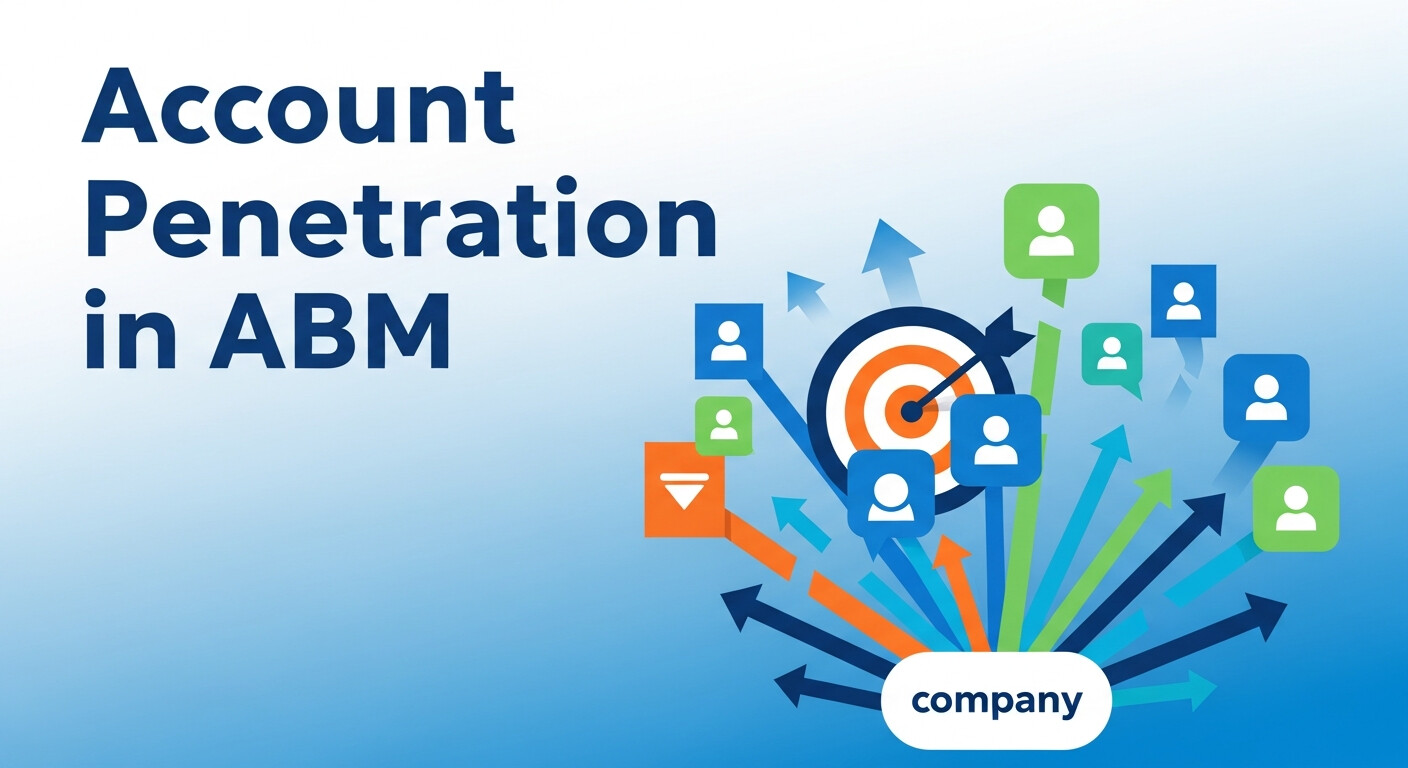
Account penetration measures how deeply your ABM efforts are reaching individuals within a target account. Instead of focusing on a single contact, ABM aims to engage multiple stakeholders across departments and seniority levels. To measure this, track the number of unique contacts engaging with your content, attending meetings, or interacting with sales and marketing campaigns. A higher level of account penetration indicates stronger buying committee awareness and influence. Tools like CRM systems and ABM platforms can help visualize engagement by role or department. Improving penetration reduces deal risk and increases the likelihood of consensus-driven buying decisions, which is critical in complex B2B sales cycles.
Tracking Intent Data for ABM Performance
Intent data plays a crucial role in measuring ABM effectiveness by revealing which accounts are actively researching solutions like yours. This data shows behavioral signals such as keyword searches, content consumption, and competitor comparisons. By monitoring intent surges from target accounts, marketers can identify high-priority opportunities and adjust campaigns accordingly. Measuring how intent signals translate into engagement, pipeline creation, and closed deals helps validate ABM impact. Platforms like 6sense and Demandbase provide intent insights that align marketing and sales actions. When used correctly, intent data improves timing, relevance, and overall ABM ROI.
Sales Alignment Metrics in ABM Measurement
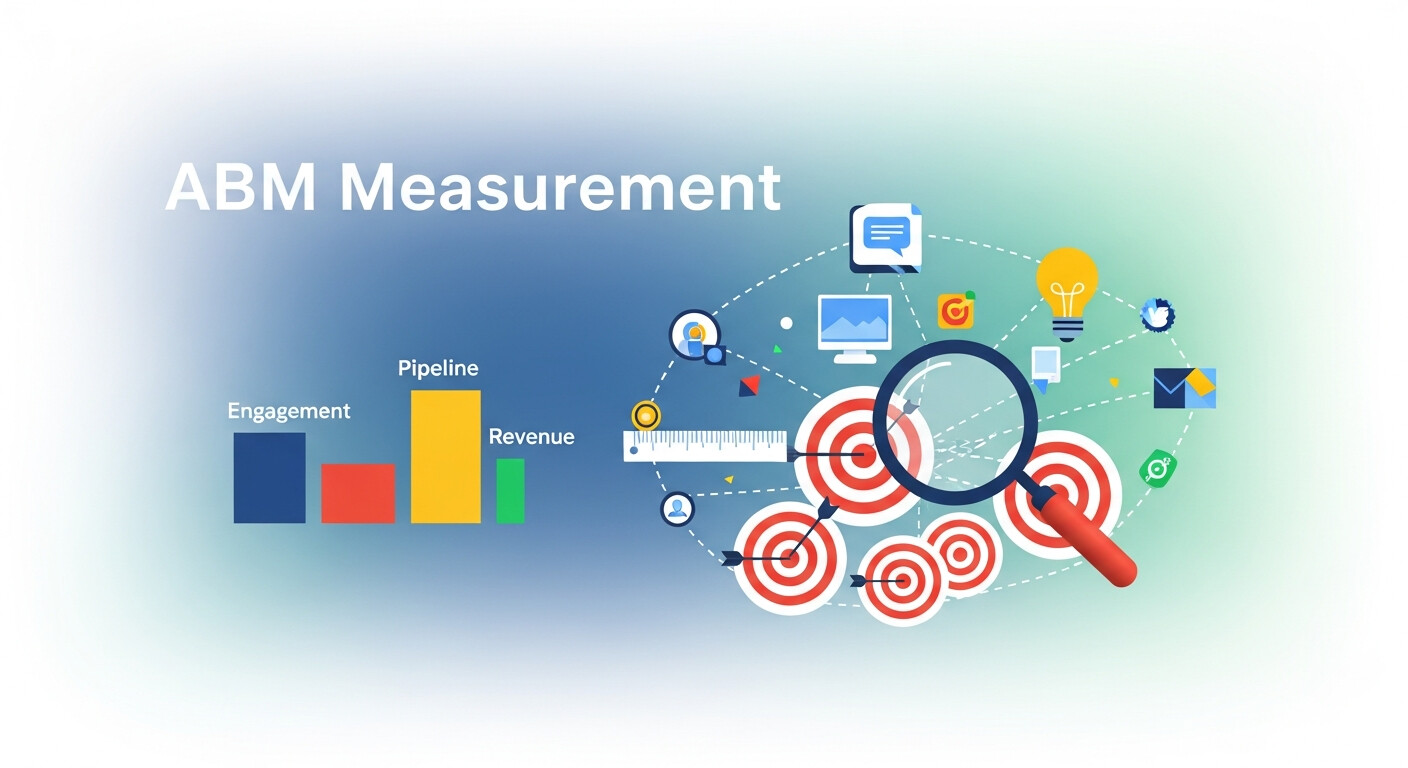
Sales and marketing alignment is foundational to ABM success, and it should be measured consistently. Key alignment metrics include response time to engaged accounts, meeting acceptance rates, and sales follow-up activity. Tracking how quickly sales engages after marketing-driven interactions helps identify operational gaps. Shared dashboards and integrated CRM data ensure both teams evaluate success using the same metrics. Strong alignment often results in faster pipeline movement and higher close rates. Measuring alignment metrics ensures ABM efforts are not siloed and that both teams are working toward shared revenue goals.
Measuring ABM Influence Across the Buyer Journey
ABM rarely relies on a single touchpoint to drive conversions. Instead, it influences buyers across multiple stages of the journey. Measuring ABM influence involves tracking how campaigns contribute to awareness, consideration, and decision-making. Multi-touch attribution models help assign value to each interaction, such as ads, emails, events, and sales outreach. This approach provides a more accurate picture of ABM’s contribution than last-touch attribution. Understanding influence helps marketers optimize content, channels, and timing while clearly demonstrating how ABM supports long-term revenue growth.
Evaluating ABM Campaign Efficiency
Efficiency metrics help determine whether your ABM efforts are delivering results without wasting resources. Key indicators include cost per engaged account, cost per opportunity, and cost per closed deal. These metrics allow teams to compare ABM performance against traditional marketing approaches. Measuring efficiency ensures budget allocation aligns with outcomes, especially when targeting high-value accounts. Over time, efficient ABM campaigns should show lower acquisition costs and higher deal values. Regular efficiency analysis supports better forecasting, smarter scaling, and stronger executive buy-in.
Using Customer Expansion Metrics in ABM
ABM doesn’t stop after a deal closes—it plays a vital role in customer growth and retention. Measuring expansion metrics such as upsell revenue, cross-sell opportunities, and renewal rates helps demonstrate ABM’s long-term value. Targeted campaigns focused on existing accounts strengthen relationships and uncover new revenue opportunities. Tracking engagement from current customers also helps identify expansion-ready accounts. Strong expansion performance indicates successful personalization and account understanding. Including post-sale metrics in ABM measurement provides a more complete view of ROI and customer lifetime value.
Reporting and Dashboards for ABM Measurement
Effective ABM measurement depends on clear, accessible reporting. Dashboards should present account-level insights, including engagement, pipeline impact, revenue, and sales activity. Real-time reporting helps teams quickly identify trends, risks, and opportunities. Executive-friendly dashboards are especially important for demonstrating ABM value to leadership. Tools like Salesforce, HubSpot, and ABM platforms can centralize data into a single view. Consistent reporting improves accountability, alignment, and decision-making. A strong ABM dashboard turns complex data into actionable insights that drive continuous improvement.
Common Challenges in Measuring ABM
Measuring ABM success isn’t without challenges. Here are a few common hurdles and how to overcome them.
- Attributing Success to ABM
Because ABM spans various touchpoints, it can be challenging to prove which initiatives made an impact. Solution? Use multi-touch attribution models to assign credit proportionally.
- Connecting Marketing and Sales Data
Disconnected systems can limit your ability to see the big picture. Ensure your marketing and sales tools are integrated to provide a 360-degree view of customer interactions.
- Measuring Long Sales Cycles
ABM often targets enterprise accounts with lengthy buying cycles. Solutions like setting milestone KPIs (like account engagement) can help you track progress even when deals take months to close.
Putting It All Together
Measuring ABM success can seem complex at first, but armed with the right metrics, tools, and strategies, you can gather actionable insights that refine your campaigns. Whether you’re tracking engagement, revenue, relationship strength, or content performance, knowing where to improve empowers your team to drive better results over time.
Looking to take your ABM insights to the next level? Try incorporating platforms like Marketo, HubSpot, and Salesforce to make tracking seamless and unlock the full potential of your campaigns.
Frequently Asked Questions (FAQ)
1. What is the most important metric for measuring ABM success?
There isn’t a single metric that defines ABM success. The most important metrics depend on your goals, but revenue-related metrics (such as pipeline contribution, closed-won deals, and deal size) are typically the strongest indicators. Engagement metrics are also critical for understanding early-stage progress.
2. How long does it take to see results from an ABM strategy?
ABM often targets enterprise or high-value accounts with longer sales cycles, so results may take several months to materialize. While revenue impact can take time, early indicators like account engagement, meeting volume, and pipeline velocity can help measure progress sooner.
3. How do you calculate ROI for ABM campaigns?
To calculate ABM ROI, compare the revenue generated or influenced by target accounts against the total cost of running your ABM campaigns. This includes technology, content creation, advertising, and labor costs. Multi-touch attribution models can help provide a more accurate picture.
4. What’s the difference between traditional marketing metrics and ABM metrics?
Traditional marketing metrics focus on leads and volume (e.g., MQLs, form fills), while ABM metrics are account-centric. ABM prioritizes engagement at the account level, pipeline impact, deal size, and relationship depth rather than individual lead counts.
5. Do small or mid-sized businesses need ABM measurement tools?
While enterprise-grade ABM platforms offer advanced capabilities, small and mid-sized businesses can still measure ABM success using tools like HubSpot, Salesforce, and Google Analytics. The key is aligning data around accounts rather than individual leads.
6. How do sales and marketing teams align on ABM measurement?
Sales and marketing alignment starts with shared definitions of success and jointly agreed KPIs. Regular reporting, shared dashboards, and integrated CRM and marketing automation platforms ensure both teams evaluate performance using the same data.
7. Can ABM success be measured without revenue data?
Yes, especially early in the buyer journey. Engagement metrics, account penetration, meetings with decision-makers, and content consumption are valuable leading indicators. However, revenue metrics should ultimately be included to demonstrate long-term impact.
8. How often should ABM performance be reviewed?
ABM performance should be reviewed on a regular cadence—monthly for engagement and pipeline metrics, and quarterly for revenue and ROI analysis. Frequent reviews allow teams to optimize campaigns and adjust targeting in real time.