Account-Based Marketing (ABM) and programmatic advertising have been buzzing in the marketing world for years, but what happens when you bridge the two? That’s where things get exciting. These two approaches, while seemingly distinct, can work together to create a highly targeted, data-driven strategy that supercharges your marketing outcomes.
If you’ve been wondering how to marry the precision of ABM with the scalability of programmatic advertising, you’re in the right place. This blog will explore how these strategies work together, the metrics you need to focus on, and actionable tips for unlocking marketing success.
What Is ABM and How Is It Different From Programmatic Advertising?
Before we can discuss bridging these strategies, it’s important to break down what they are individually and how they differ.
What Is Account-Based Marketing (ABM)?
ABM focuses on tailoring marketing efforts to specific accounts rather than casting a wide net. It’s a highly personalized approach designed to deliver targeted content and messaging to decision-makers within your ideal companies.
Key features of ABM:
- Highly personalized campaigns
- Focus on deep customer relationships
- Delivering unique value propositions to each target account
Example Use Case:
A software-as-a-service (SaaS) company identifies five key enterprise-level accounts it wants to land. Instead of creating generic ads aimed at all businesses, they craft specific campaigns for each company, targeting key executives with tailored content.
What Is Programmatic Advertising?
Programmatic advertising uses artificial intelligence and machine learning to purchase digital ad inventory automatically. This method allows marketers to target audiences at scale while eliminating guesswork. It’s efficient, data-driven, and great for top-of-funnel awareness campaigns.
Key features of programmatic advertising:
- Automated ad buying
- Broad audience targeting and scalability
- Focused on efficiency and data optimization
Example Use Case:
A retail company aims to promote its new product line to audiences between 25 and 45 years old. Using programmatic advertising, the company targets potential customers across display and social media channels.
Why Bridge ABM and Programmatic Advertising?
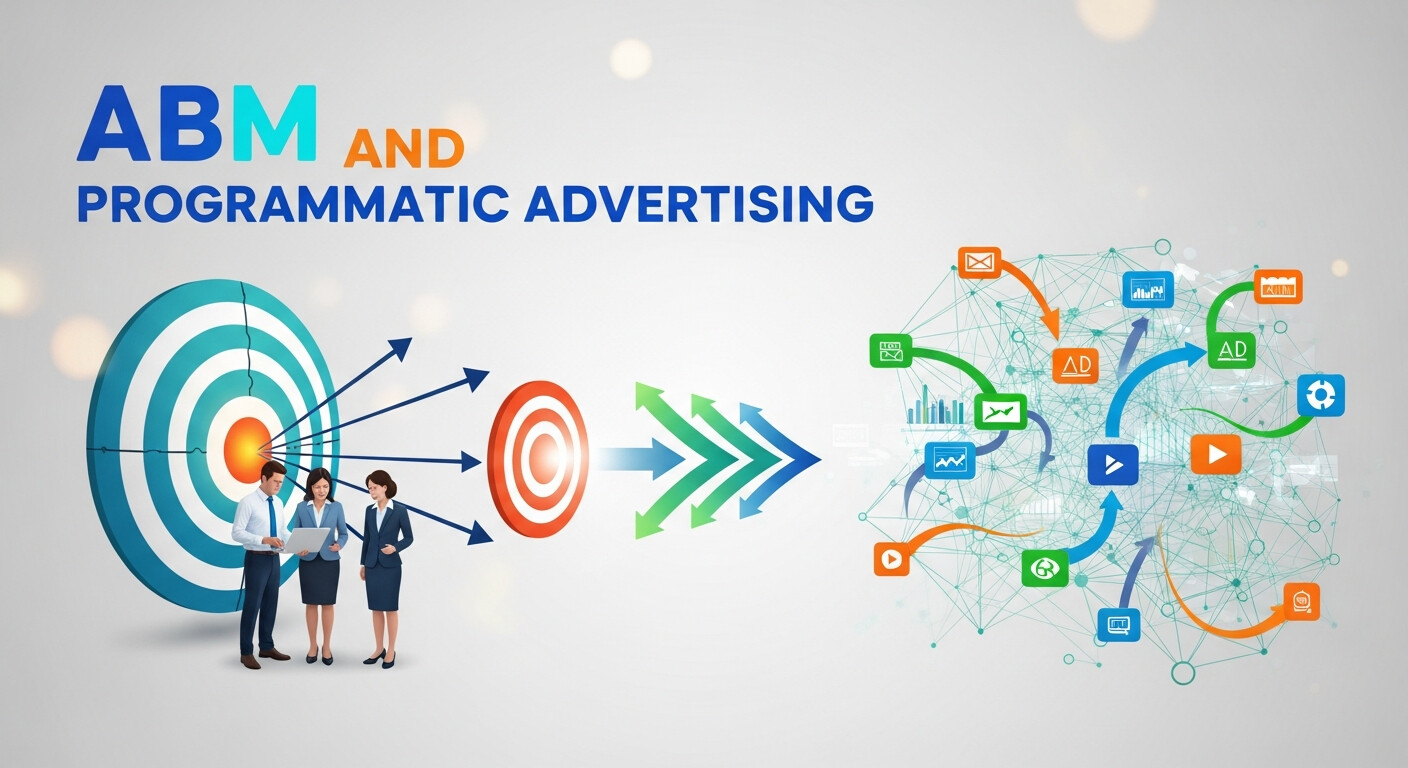
While ABM excels in precision and personalization, it lacks scalability. Conversely, programmatic advertising is unbeatable in terms of reach and efficiency but lacks the focused precision of ABM. By integrating these two strategies, marketers can achieve the best of both worlds.
Benefits of Bridging ABM and Programmatic Advertising:
- Precision at Scale
With programmatic advertising, your ABM strategy can reach target accounts at scale without diluting the personalization.
2. Improved ROI
Combining ABM’s hyper-targeted approach with programmatic’s efficiency means your marketing budget is spent more effectively.
3. Better Alignment With Sales
ABM already ensures strong collaboration between marketing and sales. Adding data insights from programmatic advertising lets both teams prioritize high-value prospects more effectively.
4. Granular Data Insights
Programmatic platforms provide rich data on ad performance, while ABM delivers account-specific engagement insights. Together, they give you a full picture of campaign effectiveness.
Metrics That Matter When Bridging ABM and Programmatic Advertising
The success of your integrated approach depends on tracking the right metrics. Here’s what you need to focus on:
1. Account Engagement Score
Track how often and how deeply your targeted accounts are engaging with your ads, emails, and landing pages.
Example: Calculate engagement by assigning points for specific actions, like ad clicks, content downloads, or webinar registrations.
2. Ad View-Through Rate (VTR)
For programmatic campaigns, VTR indicates how many viewers watched an ad to completion. A higher VTR suggests your audience is interested in your messaging.
Target Benchmarks: Aim for at least 70% VTR for video ads.
3. Pipeline Contribution
Measure how much your integrated campaigns contribute to your sales pipeline. This is essential for proving ROI.
Pro Tip: Use attribution modeling to determine which parts of your ABM and programmatic efforts drive conversions.
4. Account Penetration
Assess how well you’re engaging individuals across multiple divisions or departments within a target account. Success here means deeper influence within organizations.
Metrics to Monitor: Email open rates, ad engagement, and meeting setups from multiple stakeholders.
What Is Predictive Account-Based Marketing?
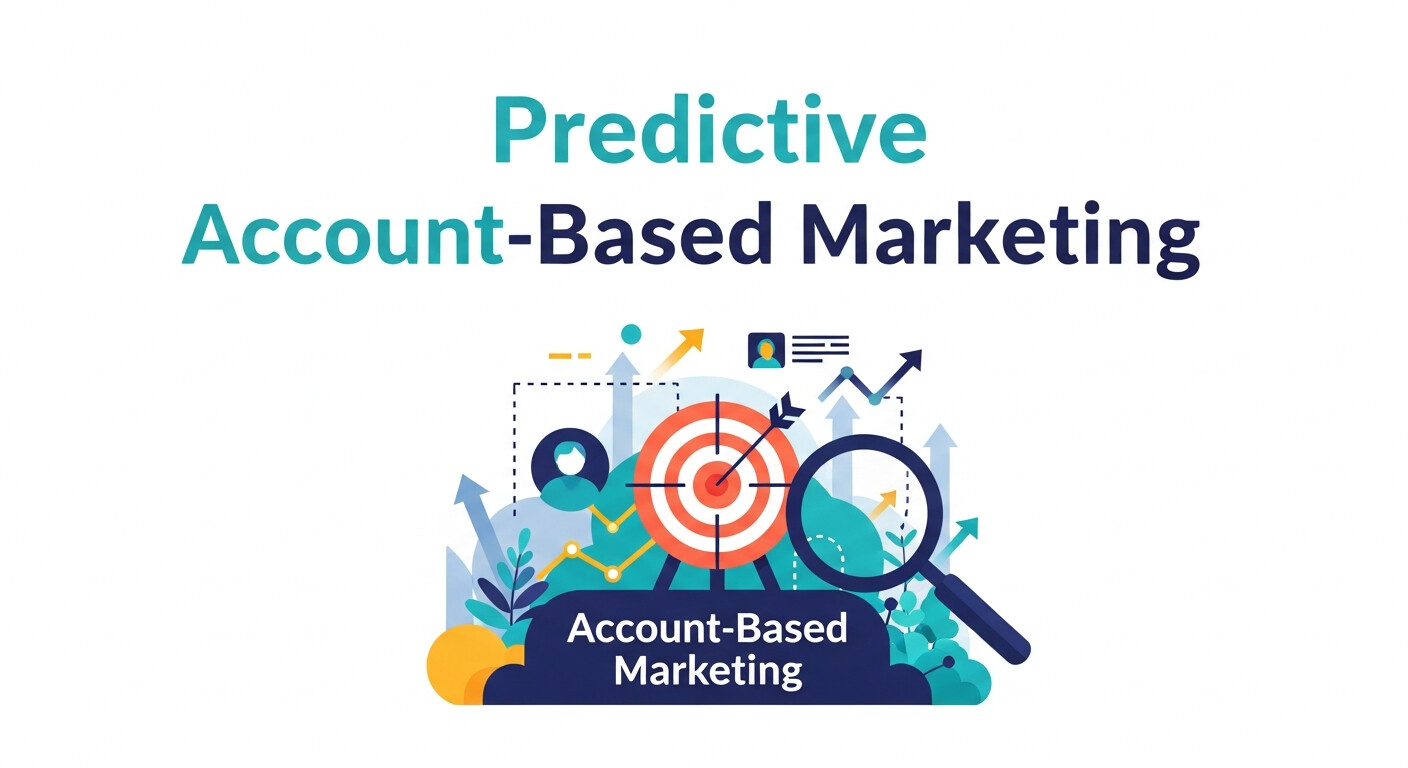
Predictive Account-Based Marketing takes traditional ABM a step further by using data modeling and intent signals to forecast which accounts are most likely to convert. Instead of relying only on historical performance or sales intuition, predictive ABM analyzes behavioral data, firmographics, technographics, and buying intent to prioritize accounts with the highest revenue potential. This approach allows marketers to focus resources on accounts that are actively researching solutions, improving efficiency and win rates. When paired with programmatic advertising, predictive insights ensure ads are delivered at the right time, to the right accounts, with the right message. The result is smarter targeting, shorter sales cycles, and higher ROI across ABM campaigns.
How AI-Powered Account-Based Marketing Enhances Targeting
AI-Powered Account-Based Marketing uses machine learning algorithms to analyze massive data sets and uncover patterns humans might miss. AI helps identify high-intent accounts, predict buying stages, and recommend personalized messaging across channels. In an ABM-programmatic strategy, AI can automatically adjust bids, creatives, and targeting based on real-time engagement signals. This ensures that decision-makers within target accounts receive relevant ads aligned with their needs and behaviors. AI-powered tools also help eliminate wasted spend by deprioritizing low-intent accounts. As a result, marketing teams can scale personalization without sacrificing accuracy, making AI a critical component of modern ABM execution.
Using Predictive Data to Prioritize High-Value Accounts
Predictive data is the foundation of effective Predictive Account-Based Marketing. By analyzing intent signals such as content consumption, keyword searches, and competitor engagement, marketers can identify which accounts are actively in-market. This prioritization allows teams to allocate budget and effort toward accounts that are more likely to enter the sales pipeline. When integrated with programmatic advertising, predictive insights guide ad delivery to decision-makers at the exact moment of interest. This reduces wasted impressions and increases engagement rates. Sales teams also benefit from predictive scoring, as they can focus outreach on accounts that marketing has already warmed up through targeted, data-driven campaigns.
AI-Powered Personalization at Scale for ABM Campaigns
One of the biggest challenges in ABM is scaling personalization, and AI-Powered Account-Based Marketing solves this problem. AI enables dynamic creative optimization (DCO), allowing marketers to personalize ad messaging, visuals, and calls-to-action based on industry, role, or buying stage. For example, a CFO may see cost-efficiency messaging, while a CTO receives technical value propositions—all within the same campaign. AI continuously tests and optimizes creative performance to improve engagement. When combined with programmatic advertising, this level of personalization reaches multiple stakeholders across target accounts, maintaining relevance without requiring manual effort from marketing teams.
LinkedIn Account Based Marketing for B2B Decision-Makers
LinkedIn Account Based Marketing is one of the most effective channels for reaching B2B decision-makers. With its rich professional data, LinkedIn allows marketers to target accounts by company name, job title, seniority, and industry. This makes it ideal for executing highly targeted ABM campaigns. When LinkedIn ABM is paired with programmatic advertising, brands can reinforce messaging across multiple touchpoints beyond social media. Sponsored content, message ads, and display ads work together to build familiarity and trust within target accounts. This multi-channel approach increases engagement and improves conversion rates among high-value B2B audiences.
Combining LinkedIn Account Based Marketing With Programmatic Ads
Integrating LinkedIn Account Based Marketing with programmatic advertising creates a powerful omnichannel ABM strategy. LinkedIn excels at precise professional targeting, while programmatic advertising extends reach across the open web. Together, they ensure consistent messaging across platforms decision-makers use daily. Marketers can retarget LinkedIn-engaged users with programmatic display or video ads, reinforcing brand awareness and accelerating buyer journeys. This approach improves frequency without overexposure and keeps your brand top of mind throughout the sales cycle. By aligning creative and targeting across both channels, businesses achieve stronger account engagement and better pipeline impact.
How to Execute an ABM-Programmatic Advertising Strategy
Now that we’ve covered the why and the metrics, it’s time to focus on the how. Follow these steps to start integrating ABM with programmatic advertising:
1. Define a Clear Target Account List
Your ABM strategy starts with identifying ideal accounts. Work with your sales team to align on a list of high-value accounts. Use firmographic data (such as industry, company size, and revenue) to guide your decision-making.
Tools to help:
- Salesforce (for CRM integration)
- LinkedIn Sales Navigator (to identify key decision-makers)
2. Leverage Programmatic Platforms for Precision Ad Delivery
Programmatic advertising platforms like Google Display Network or The Trade Desk allow you to hyper-target decision-makers within your chosen accounts. Use geo-targeting, retargeting, and contextual advertising to maximize relevance.
3. Craft Personalized, Attention-Grabbing Content
Your content should combine ABM’s personalization with the scalability of programmatic advertising. Use dynamic creative optimization (DCO) to deliver tailored ads to different segments within your accounts.
Example of personalized content:
- Displaying industry-specific solutions in your ads
- Highlighting a recent pain point that aligns with your target’s business challenge
4. Sync Efforts With Marketing and Sales Teams
Once your campaigns are live, ensure ongoing coordination between marketing and sales. Regular check-ins will help identify high-priority accounts and optimize outreach efforts.
5. Analyze, Optimize, Repeat
Use real-time analytics to assess your campaign performance. Adjust targeting, bidding, and creative assets based on what the data tells you.
Driving Marketing Success With ABM and Programmatic Advertising
The future of marketing lies in integration. By bridging Account-Based Marketing with programmatic advertising, businesses can finally achieve the precision of a sniper shot with the scalability of a scattergun.
Whether you’re a B2B marketer looking to secure enterprise accounts or a team aiming to maximize ROI, this hybrid strategy offers a roadmap for success. Start small by targeting 5–10 accounts and scale as you gain confidence in the approach.
At the end of the day, the best results come from experimentation, data-driven decision-making, and a commitment to delivering value to your target audience.
The Future of ABM: Predictive, AI-Powered, and Platform-Led
The future of ABM lies at the intersection of Predictive Account-Based Marketing, AI-powered insights, and platforms like LinkedIn. As buying journeys become more complex, marketers must rely on predictive intelligence to anticipate needs rather than react to them. AI-powered ABM will continue to automate optimization, personalization, and account prioritization at scale. Meanwhile, LinkedIn Account Based Marketing will remain central to reaching and influencing B2B buying committees. When these innovations are combined with programmatic advertising, businesses gain a future-ready strategy that delivers precision, scalability, and measurable revenue impact. Companies that adopt this integrated approach will stay ahead in an increasingly competitive B2B landscape.
Frequently Asked Questions (FAQ)
1. Can small or mid-sized businesses use ABM with programmatic advertising?
Yes. While ABM is often associated with enterprise marketing, SMBs can successfully use this approach by targeting a smaller list of high-value accounts. Programmatic advertising helps SMBs scale efficiently without needing massive budgets—especially when campaigns focus on a tightly defined audience.
2. Do I need special tools to combine ABM and programmatic advertising?
You don’t need entirely new tools, but integration is key. Commonly used platforms include CRM systems like Salesforce, ABM platforms like Demandbase or 6sense, and programmatic platforms such as Google Display Network or The Trade Desk. The goal is seamless data sharing between systems.
3. How long does it take to see results from an ABM-programmatic strategy?
Results vary, but most teams begin seeing meaningful engagement within 30–90 days. Early indicators include increased account engagement, higher ad interaction rates, and improved sales conversations. Pipeline and revenue impact typically take longer to materialize.
4. How do you personalize ads at scale for ABM?
Personalization at scale is achieved through dynamic creative optimization (DCO). This allows you to automatically adjust ad messaging, visuals, or CTAs based on firmographics, industry, or buyer intent signals—without creating individual ads for each account.
5. What’s the biggest mistake marketers make when bridging ABM and programmatic advertising?
The most common mistake is treating programmatic as a purely top-of-funnel tactic. When programmatic ads aren’t aligned with ABM goals, messaging becomes too generic. Success depends on tight alignment between account strategy, creative personalization, and sales follow-up.
6. How do you measure ROI for ABM and programmatic advertising together?
ROI is best measured through pipeline contribution, account engagement scores, and multi-touch attribution. Rather than focusing solely on clicks or impressions, evaluate how campaigns influence meetings booked, opportunities created, and revenue from target accounts.
7. Is programmatic advertising effective for reaching decision-makers in B2B?
Yes. When combined with ABM data, programmatic advertising can target decision-makers using firmographic data, job titles, IP targeting, and intent signals. This makes it highly effective for reaching buying committees within specific organizations.
8. Should ABM-programmatic campaigns replace traditional demand generation?
Not necessarily. This hybrid strategy works best as a complement to traditional demand generation. While demand gen fills the funnel broadly, ABM and programmatic together help accelerate and convert high-value accounts more efficiently.