Account based marketing and lead generation are two core B2B strategies with different strengths. ABM focuses on personalized outreach for high-value accounts, while lead generation emphasizes scalable campaigns to attract and nurture large volumes of prospects efficiently.
Two powerful strategies dominate the B2B marketing landscape: account based marketing (ABM) and lead generation. Both promise revenue growth, but they take fundamentally different approaches to attracting and converting prospects.
Account based marketing targets specific high-value accounts with personalized campaigns, while lead generation casts a wider net to capture as many potential customers as possible. Each strategy has distinct advantages, challenges, and ideal use cases.
Understanding the differences between these approaches—and knowing when to use each—can transform your marketing results. This guide breaks down both strategies, compares their effectiveness, and helps you determine which approach aligns best with your business goals.
What is Account Based Marketing?
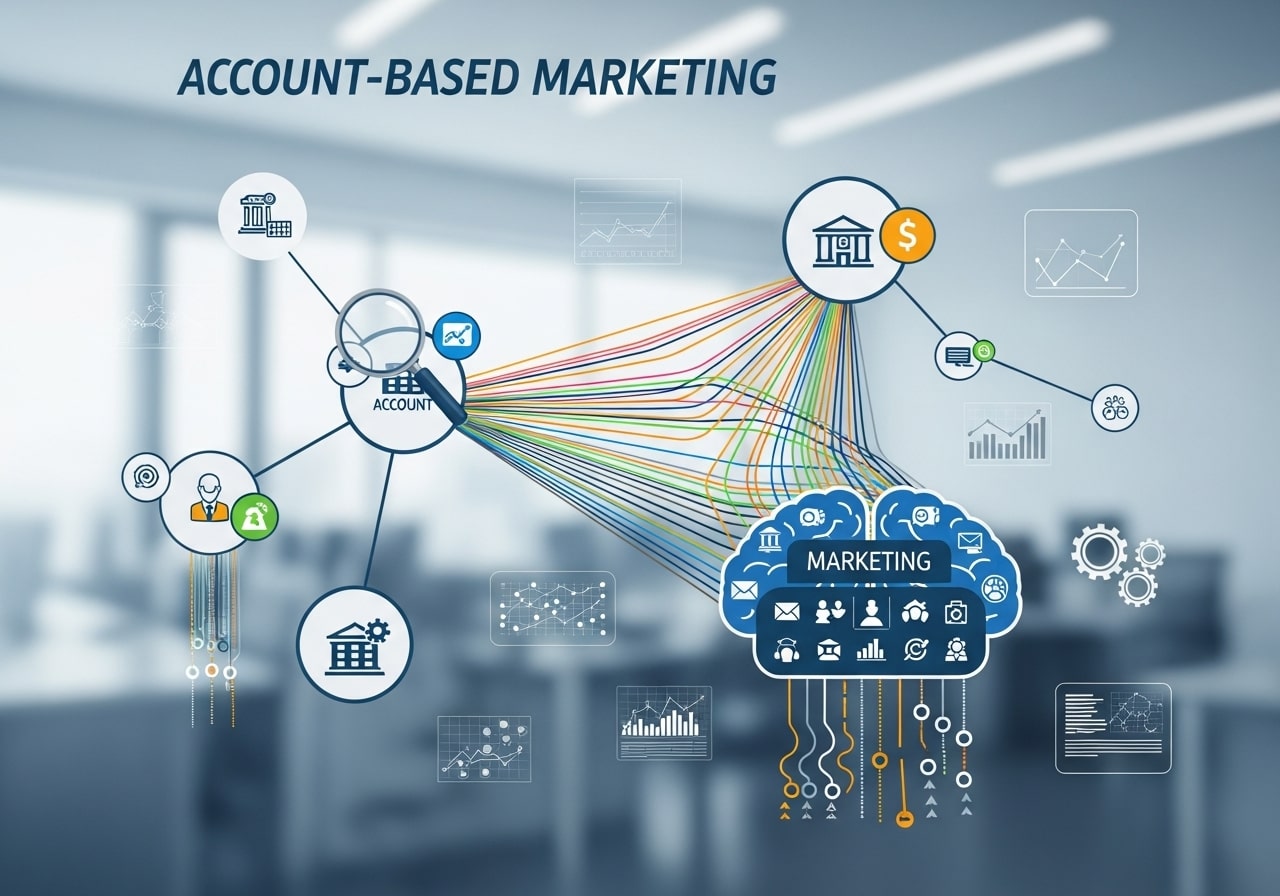
Account based marketing flips traditional marketing on its head. Instead of creating broad campaigns to attract unknown prospects, ABM identifies specific target accounts and builds highly personalized marketing campaigns around them.
This strategy treats individual accounts as markets of one. Your sales and marketing teams work together to research each target company, understand their specific challenges, and craft customized content and outreach that speaks directly to their needs.
ABM typically focuses on fewer accounts but invests significantly more resources in each one. The approach recognizes that not all prospects are created equal—some accounts represent significantly more revenue potential than others.
Key characteristics of account based marketing:
- Highly targeted approach: Focus on 10-100 specific accounts rather than thousands of leads
- Personalized content: Create custom content, emails, and campaigns for each target account
- Sales and marketing alignment: Both teams collaborate closely throughout the entire process
- Quality over quantity: Prioritize fewer, higher-value prospects
- Longer sales cycles: More time investment upfront, but potentially higher close rates
Account based marketing tactics include:
- Personalized email sequences tailored to specific companies
- Custom landing pages featuring the prospect’s company name and industry
- Targeted LinkedIn campaigns aimed at decision-makers within target accounts
- Direct mail campaigns with personalized gifts or materials
- Customized webinars or demos addressing specific company challenges
- Account-specific content like case studies or whitepapers
What is Lead Generation?
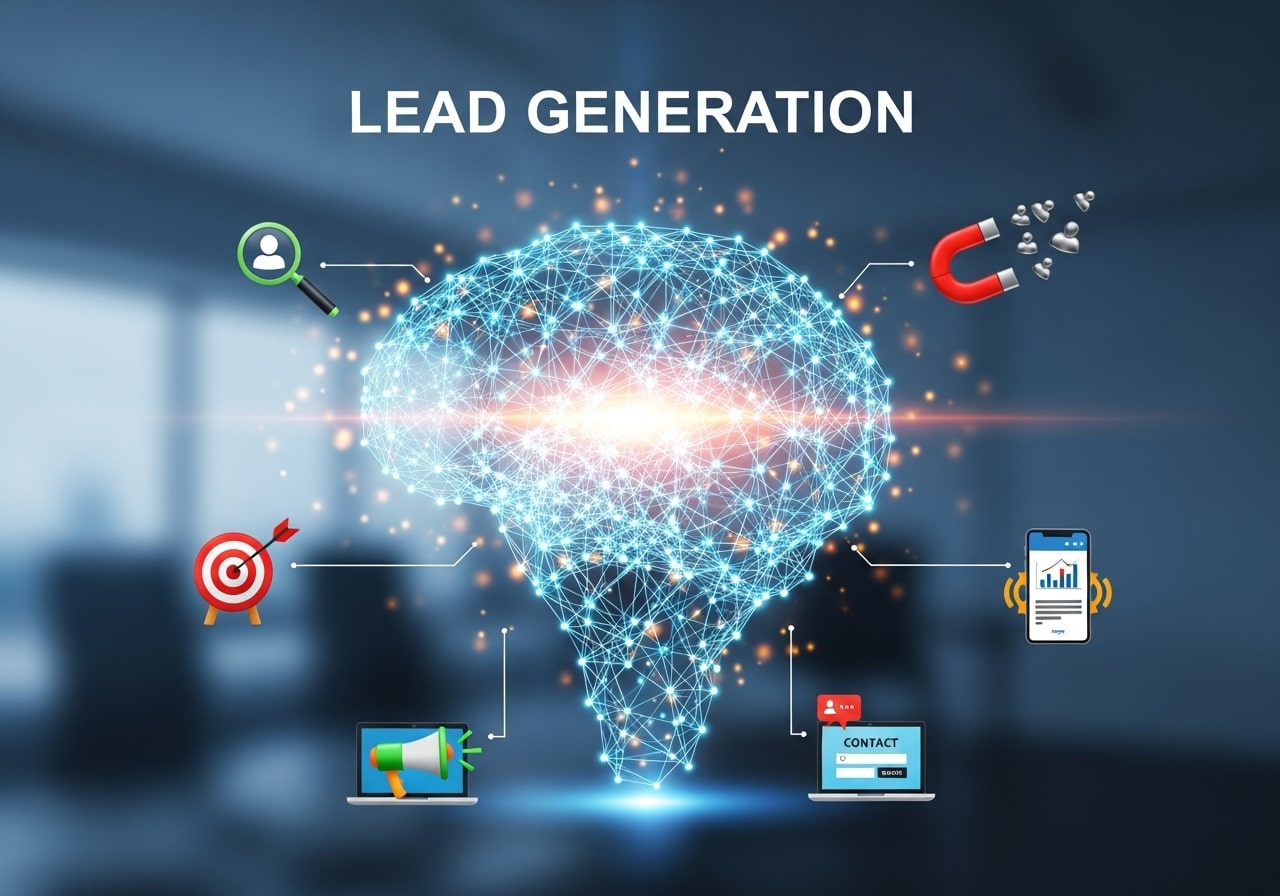
Lead generation takes a volume-based approach to attracting potential customers. This strategy creates compelling content, offers, and campaigns designed to capture contact information from a large number of prospects who show interest in your product or service.
The goal is to cast a wide net and gather as many qualified leads as possible, then nurture them through your sales funnel until they’re ready to make a purchase decision.
Lead generation relies on creating valuable content that attracts prospects to your brand. Once someone expresses interest by downloading content, signing up for a webinar, or requesting information, they enter your sales funnel for further nurturing.
Key characteristics of lead generation:
- Broad reach: Target large audiences across multiple channels
- Scalable processes: Create systems that can handle hundreds or thousands of leads
- Content-driven: Focus on valuable content that attracts prospects organically
- Quantity focus: Generate high volumes of leads to feed the sales pipeline
- Shorter initial engagement: Quick capture methods with longer nurturing sequences
Lead generation tactics include:
- Content marketing through blog posts, ebooks, and guides
- Search engine optimization to attract organic traffic
- Pay-per-click advertising on Google and social media platforms
- Social media marketing and organic content sharing
- Email marketing campaigns and newsletters
- Webinars and online events
- Landing pages with lead magnets and free resources
Account Based Marketing vs Lead Generation: Head-to-Head
Target audience approach
Account based marketing zeroes in on specific companies that match your ideal customer profile. You might target 50 enterprise software companies with 500+ employees in the healthcare industry. Every campaign element is customized for these specific accounts.
Lead generation takes a broader approach, targeting anyone who fits your general buyer persona. You might target all marketing managers at companies with 100+ employees, regardless of industry or specific company.
Resource allocation
ABM requires significant upfront investment per account. You might spend $10,000 creating personalized campaigns for 20 target accounts, investing heavily in research, custom content creation, and personalized outreach.
Lead generation spreads resources across many prospects. You might spend that same $10,000 creating content and campaigns that reach 10,000 potential leads, focusing on scalable systems rather than personalization.
Sales cycle length
Account based marketing typically involves longer sales cycles. The personalized approach takes time to research, create, and execute. However, the close rates are often higher because prospects receive highly relevant, tailored messaging.
Lead generation can produce faster initial results by capturing leads quickly through valuable content offers. However, converting these leads into customers may take longer due to less personalized nurturing.
Measurement and ROI
ABM success is measured primarily by account engagement, pipeline influence, and revenue from target accounts. You track metrics like account penetration, engagement across multiple stakeholders, and deal velocity within target accounts.
Lead generation focuses on volume metrics like cost per lead, lead quality scores, and conversion rates through the funnel. Success is measured by the quantity and quality of leads generated relative to marketing spend.
Team alignment requirements
Account based marketing demands tight alignment between sales and marketing teams. Both teams must collaborate on account selection, messaging, and execution. Regular communication and shared goals are essential.
Lead generation can function with less direct collaboration, though alignment still matters. Marketing generates leads and passes qualified prospects to sales, with clear handoff processes and lead scoring systems.
Challenges of Account Based Marketing
While account based marketing delivers strong results for high-value deals, it also comes with notable challenges. ABM requires significant upfront investment in research, personalization, and coordination between teams. Creating customized content for each account can strain marketing resources, especially for smaller teams. Additionally, ABM success depends heavily on tight sales and marketing alignment—without it, campaigns can fail to gain traction. Measuring ROI can also be more complex, as ABM focuses on long-term account engagement rather than immediate lead volume. Without proper tools, data accuracy, and executive buy-in, ABM initiatives may struggle to scale effectively.
Challenges of Lead Generation
Lead generation may seem simpler to execute, but it has its own limitations. One major challenge is lead quality—high volumes of leads do not always translate into sales-ready prospects. Marketing teams often generate leads that sales teams consider unqualified, leading to misalignment and wasted effort. Increased competition in digital channels has also driven up advertising costs, making it harder to maintain a low cost per lead. Additionally, generic messaging can result in lower engagement rates. Without strong nurturing, scoring, and segmentation strategies, lead generation efforts can produce pipeline noise instead of revenue impact.
When to Choose Account Based Marketing

Account based marketing works best for businesses with specific characteristics and goals. Consider ABM when your situation aligns with these factors:
High-value, complex sales
If your average deal size is $50,000 or more and involves multiple decision-makers, ABM’s personalized approach justifies the investment. Complex B2B sales benefit from the relationship-building and customization that ABM provides.
Limited ideal customer base
When your total addressable market consists of a finite number of high-value prospects, ABM makes sense. If there are only 200 companies worldwide that could truly benefit from your enterprise solution, personalizing outreach to each becomes worthwhile.
Long sales cycles already exist
If your sales cycles already span 6-18 months, ABM can actually accelerate the process by providing highly relevant content that moves prospects through their buying journey more efficiently.
Strong sales and marketing alignment
ABM requires close collaboration between teams. If your sales and marketing organizations already work well together and share common goals, implementing ABM becomes much easier.
Enterprise or strategic accounts focus
When targeting Fortune 500 companies or other strategic accounts where relationships matter significantly, ABM’s personalized approach helps break through the noise and build meaningful connections.
When to Choose Lead Generation

Lead generation serves businesses with different characteristics and objectives. Choose lead generation when these factors apply to your situation:
Lower average deal values
If your average sale is under $10,000, the economics of highly personalized ABM campaigns often don’t make sense. Lead generation’s scalable approach provides better ROI for lower-value transactions.
Broader target market
When your ideal customers span multiple industries, company sizes, and use cases, lead generation’s broad reach helps you capture opportunities you might miss with ABM’s narrow focus.
Need for sales volume
If your business model requires high volumes of transactions to reach revenue goals, lead generation’s ability to fill the pipeline with numerous prospects becomes essential.
Limited personalization resources
Not every organization has the resources to create highly personalized campaigns. Lead generation allows you to create valuable content once and use it to attract many prospects.
Shorter sales cycles
For products or services with sales cycles under three months, lead generation’s quick capture and nurturing approach often produces faster results than ABM’s longer relationship-building process.
Combining Both Strategies
Many successful B2B organizations don’t choose between account based marketing and lead generation—they use both strategically.
A hybrid approach might involve using ABM for your top 50 dream accounts while running lead generation campaigns to identify and nurture prospects who don’t make your target account list. This allows you to maximize opportunities across your entire addressable market.
Consider implementing tiered approaches based on account value. Use ABM tactics for enterprise prospects worth $100,000+ annually, while nurturing mid-market prospects through lead generation campaigns until they show strong buying signals.
Some companies start with lead generation to build marketing capabilities and data, then layer on ABM as they identify their highest-value prospects and develop more sophisticated targeting capabilities.
Making Your Strategic Choice
The decision between account based marketing and lead generation ultimately depends on your business model, resources, and growth objectives. Both strategies can drive significant results when executed well and aligned with your company’s unique situation.
Start by evaluating your average deal size, target market characteristics, and available resources. Consider running small pilot programs with both approaches to gather data on what works best for your specific industry and customer base.
Remember that marketing strategy isn’t static. As your business grows and evolves, your optimal approach may change. The key is choosing a strategy that aligns with your current reality while building capabilities for future growth.
Frequently Asked Questions (FAQ)
1. What is the main difference between account-based marketing and lead generation?
The main difference lies in focus and scale. Account based marketing targets a small number of high-value accounts with highly personalized campaigns, while lead generation targets a broad audience to capture a large volume of potential customers and nurture them through a funnel.
2. Is account based marketing better than lead generation?
Neither strategy is inherently better. Account based marketing works best for high-value, complex B2B sales, while lead generation is more effective for businesses that need volume and scalability. The best choice depends on your deal size, sales cycle, and target market.
3. Can small businesses use account based marketing?
Yes, but selectively. Small businesses can use ABM on a limited scale by targeting a small number of high-impact accounts. However, if resources are limited and deal sizes are low, lead generation is often a more practical starting point.
4. Which strategy delivers faster results?
Lead generation usually delivers faster initial results because it captures interest quickly through content and ads. Account based marketing often takes longer to show results but can lead to higher close rates and larger deals over time.
5. Does account based marketing replace lead generation?
No. ABM does not replace lead generation—it complements it. Many companies use lead generation to discover new opportunities and ABM to focus on their most valuable accounts.
6. How do you measure success in account based marketing?
Success in ABM is measured by account engagement, number of stakeholders reached, pipeline influence, deal velocity, and revenue generated from target accounts rather than traditional lead volume metrics.
7. How do you measure success in lead generation?
Lead generation success is measured using metrics such as cost per lead, lead quality, conversion rates, pipeline volume, and revenue attributed to generated leads.
8. Which strategy requires more alignment between sales and marketing?
Account based marketing requires much tighter alignment. Sales and marketing must collaborate on account selection, messaging, and execution. Lead generation can operate with looser alignment, though coordination still improves results.
9. Can ABM work for mid-market companies?
Yes. ABM is not limited to enterprise businesses. Mid-market companies can use ABM for high-potential accounts while continuing lead generation for the rest of their audience.
10. Should I start with lead generation or account-based marketing?
Most companies start with lead generation to build awareness, data, and pipeline. As they gain insight into their highest-value customers, they often add or transition to account based marketing for strategic growth.