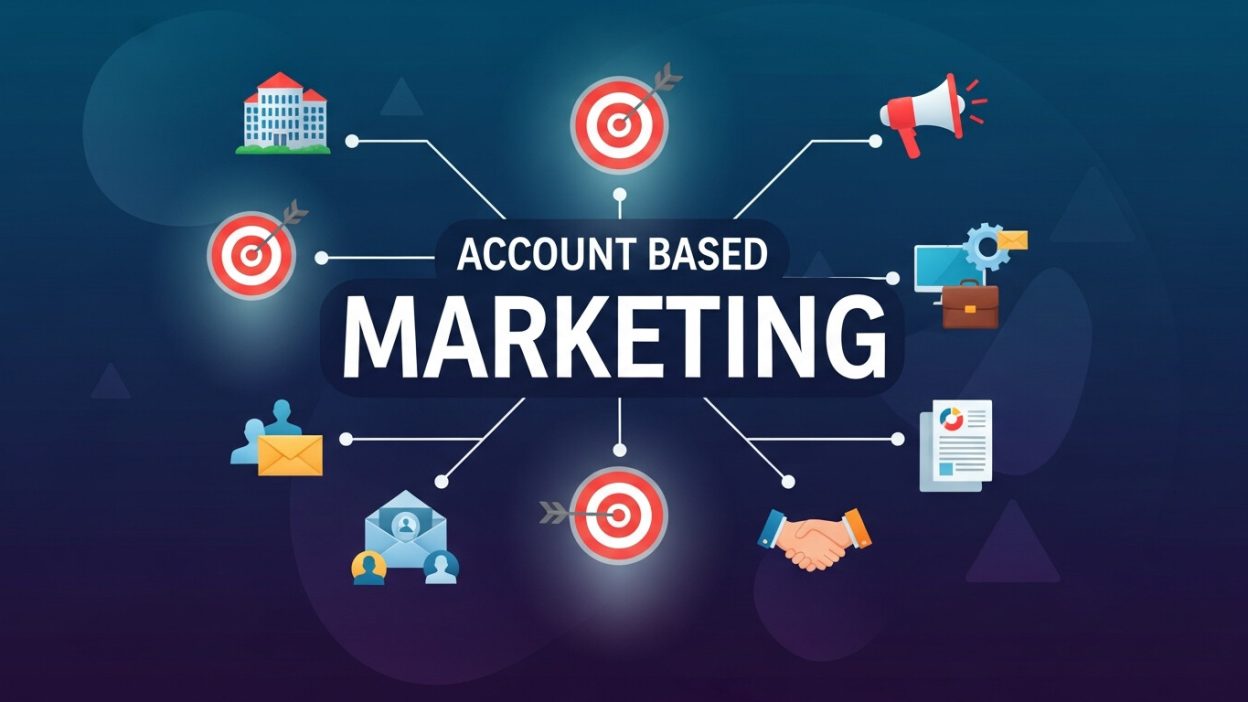
Gone are the days where Account-Based Marketing (ABM) was solely considered a buzzword in the world of marketing. It’s increasingly popular and valuable among B2B companies who are looking to target highly valuable accounts with personalized marketing campaigns. Whereas traditional marketing is casting a wide net, ABM is about catering to interactions with a few specific key decision makers.
If you’re wondering how ABM is actually faring in the wild, these stats pretty much speak for themselves! Higher ROI and revenue growth, increased customer engagement and marketing-sales alignment all contribute to the success of ABM. In this article, it dives into critical account based marketing stats that highlight the ability that this strategy can have, and what ABM can have in store for the future.
Account-Based Marketing is Becoming a Must-Have
B2B companies have flocked to ABM; it’s has become a staple in their marketing diets. This trend is largely driven by how successful it is in focusing on the best customer accounts and delivering outstanding returns. But just how common is ABM, on a practical level? Let’s look at the numbers:
- A report from SiriusDecisions found that 92% of B2B companies called ABM very important or extremely important to their marketing efforts.
- 88% of marketers believe ABM generates a higher ROI than other marketing methods (ITSMA).
- 70 percent of businesses even claim to have an ABM initiative already in place (HubSpot).
These statistics illustrate why ABM has emerged as a powerhouse in the world of B2B marketing. A more targeted approach, it means businesses are able to concentrate on quality over quantity when it comes to generating leads and customers.
ABM Stats on ROI and Revenue Increase
One of the top ABM benefits is the fact that this marketing approach has the potential to bring an outstanding return on investment and lead to revenue growth. The following ABM stats will underscore exactly why ABM is so effective for the bottom line:
- ABM provides a 97% better ROI than traditional marketing (SiriusDecisions).
- Firms with a solid ABM strategy see 200% more revenue compared to those without (Forrester).
- Nearly 85% of those who measure ROI say that ABM outperforms other marketing investments (ITSMA).
The numbers back up what marketers know anecdotally—ABM is all about revenue. Investing in the highly strategic, targeted approach, companies can influence key accounts and transform them into productive customers, increasing the profitability.
Better Customer Relationships and Engagement With ABM
ABM’s success is all about customer relationships. Using super personalised and focused techniques to reach key accounts, companies are able to build stronger engagement and relationship with their prospects.
Here are key stats that show the effectiveness of ABM in doing so:
- 80% of business buyers expect companies to personalize interactions according to history of engagements (Salesforce). ABM makes it easy to do this by personalizing on every touchpoint.
- ABM campaigns facilitate deeper customer relationships, with 84% of businesses reporting it leads to higher retention rates (SiriusDecisions).
- ABM users generate stronger response from their target accounts (3x more) compared to companies working with take-it-or-leave-it marketing models (Demandbase).
These statistics illustrate why ABM has caught the eye of business professionals who don’t just want to land customers, but share meaningful and lasting relationships with them.
Building a Strong ABM Foundation
A successful ABM program starts with a solid foundation built on clear goals, ideal customer profiles, and precise account selection. Companies must first identify which accounts offer the highest long-term value and align these choices with overall revenue objectives. This phase requires collaboration between marketing, sales, and leadership to ensure everyone agrees on priorities. Data quality also plays a critical role—accurate firmographic, technographic, and intent data help teams make smarter targeting decisions. Without this groundwork, even the most creative ABM campaigns can fall short. A strong foundation ensures resources are invested wisely, messaging resonates with the right stakeholders, and campaigns are measurable from the outset, setting the stage for scalable and sustainable ABM success.
Personalization at Every Stage of the Buyer Journey
ABM thrives on personalization, but true impact comes from tailoring experiences across the entire buyer journey. From early awareness to post-sale engagement, messaging should reflect each account’s industry challenges, business goals, and decision-maker roles. Personalized content such as customized landing pages, account-specific case studies, and tailored demos helps build trust and relevance. Consistency across channels—email, paid media, website, and sales outreach—ensures accounts experience a cohesive narrative. When executed well, personalization reduces friction in the buying process and accelerates decision-making. Advanced approaches like Account-Based Retargeting Strategies further reinforce messaging by re-engaging key stakeholders with relevant content based on prior interactions, increasing recall and conversion likelihood.
Data-Driven Targeting and Insights
Data is the engine that powers effective ABM. By leveraging firmographic, behavioral, and intent data, companies gain a deeper understanding of which accounts are actively in-market and why. This insight allows teams to prioritize outreach and customize messaging with greater precision. Predictive analytics also help uncover hidden opportunities within existing account lists. Instead of relying on assumptions, marketers can use Predictive Account-Based Marketing to anticipate buying readiness, identify upsell potential, and forecast pipeline impact. When data is centralized and shared across teams, it improves decision-making and reduces wasted effort. Ultimately, a data-driven approach ensures ABM programs remain agile, relevant, and aligned with real account behavior.
Aligning Content Strategy with ABM Goals
Content plays a strategic role in ABM, but it must be designed with specific accounts in mind. Rather than producing generic assets, ABM-focused content addresses real business problems faced by target accounts. This can include industry-specific whitepapers, executive briefings, or personalized video messages. The goal is not volume, but relevance and impact. Content should support sales conversations and help move accounts through the funnel. When marketing and sales collaborate on content creation, assets become more practical and persuasive. Well-aligned content strategy strengthens credibility, positions the brand as a trusted advisor, and ensures every interaction delivers value to high-priority accounts.
Leveraging Technology to Scale ABM
Technology enables ABM programs to scale without sacrificing personalization. Modern martech stacks integrate CRM systems, marketing automation platforms, analytics tools, and intent data providers to create a unified view of target accounts. These integrations allow teams to automate workflows, track engagement, and measure performance at the account level. AI-Powered Account-Based Marketing further enhances scalability by analyzing large data sets, optimizing targeting, and delivering personalized experiences in real time. As technology continues to evolve, ABM teams can expand from one-to-one strategies to one-to-few or one-to-many models while maintaining relevance, efficiency, and measurable ROI.
Measuring Performance Beyond Traditional Metrics
Traditional marketing metrics like clicks and impressions don’t fully capture ABM success. Instead, ABM measurement focuses on account-level engagement, pipeline progression, deal velocity, and revenue influence. Tracking how target accounts interact across channels provides deeper insight into campaign effectiveness. Metrics such as account penetration, buying committee engagement, and customer lifetime value help teams understand long-term impact. Regular performance reviews also allow teams to refine targeting and messaging. By shifting measurement from individual leads to account outcomes, organizations gain a clearer picture of what drives growth and can continuously optimize their ABM efforts for better business results.
ABM’s Role in Customer Retention and Expansion
ABM doesn’t stop once a deal is closed—it plays a vital role in retention and account expansion. Post-sale ABM strategies focus on nurturing relationships, increasing product adoption, and identifying cross-sell or upsell opportunities. Personalized onboarding experiences, account-specific success plans, and tailored communications help strengthen customer loyalty. By maintaining close alignment between sales, marketing, and customer success teams, businesses can proactively address challenges and uncover new growth opportunities. This ongoing, account-centric approach transforms customers into long-term partners and advocates, maximizing lifetime value while reducing churn in competitive B2B markets.
Preparing for the Next Evolution of ABM
As buyer expectations continue to rise, ABM will keep evolving to meet new demands. Future strategies will emphasize real-time personalization, deeper insights, and seamless experiences across touchpoints. Companies that remain flexible and open to innovation will gain a competitive edge. Investing in skills, technology, and cross-functional collaboration will be essential to adapt to changing market dynamics. ABM’s core principle—focusing on the right accounts with the right message—will remain unchanged, but execution will become more sophisticated. Organizations that prepare now will be well-positioned to lead in the next phase of B2B marketing.
The Effect of ABM on Marketing and Sales Alignment
ABM is uniquely capable for enabling marketing and sales to work more closely together. Because ABM involves close collaboration between these two groups – and in the process brings their goals into alignment and a shared focus on high-value accounts – it addresses that gap between sales and marketing that always seems to exist.
-
76% of companies see better marketing and sales alignment thanks to ABM, enabling both teams to focus on common goals (TOPO).
-
Businesses who use ABM gain a 67% increase in conversion rates due to aligned sales and marketing (LeanData).
-
With ABM, combined sales and marketing teams close deals 38% faster (Marketo).
When there’s significant alignment between sales and marketing, business is not just good; its accelerated.
These stats illustrate how ABM focuses on the big picture of business success and helps companies align everything they do to drive better results.
The Future Of Account Based Marketing: Trends And Predictions
Though current ABM stats point to these benefits, the future is even more promissory for ABM, with the emergence of new technologies and trends will redefine the strategy.
Here are what you can expect in the years ahead:
-
AI-Powered ABM – AI will emerge as a driving force behind personalized campaigns at scale, better account targeting and process automation.
-
Further Integration with Martech – More closely integrated with other marketing technologies (e.g., CRM, marketing automation tools).
-
Increased Emphasis on ABM-E – Account-based experiences (ABM-E), which focuses even more heavily on delivering personalized interactions throughout each phase of the customer lifecycle, will become more prominent.
Given these trends, ABM will be able to keep developing as companies perfect their strategies and find even greater levels of success.
Unlock the Potential of ABM for Your Company
Account-based marketing (ABM) is not a passing fad or a fly-by-night trend; it’s a meticulously developed, results-driven strategy that offers a host of unique advantages to B2B businesses looking to attract the best-fit clients. The numbers tell a clear story of ABM’s effectiveness at delivering ROI, creating stronger customer relationships, and unifying marketing and sales.
In the future, we will continue to see the nascent of transformational technologies such as AI and advanced analytics that will take ABM to the next level, providing organizations with new ways to win.
Is it about time you transformed your marketing strategy and started seeing some results from it? Then it may be time to embrace an ABM approach today. For those with a work in, or those looking to optimize a current plan, the data suggests the investment is worthwhile.
Frequently Asked Questions (FAQ)
What is Account-Based Marketing (ABM)?
Account-Based Marketing (ABM) is a strategic B2B marketing approach that focuses on targeting a select group of high-value accounts rather than a broad audience. It aligns marketing and sales efforts to deliver highly personalized campaigns tailored to specific decision-makers within those accounts.
How is ABM different from traditional marketing?
Traditional marketing casts a wide net to generate as many leads as possible, while ABM prioritizes quality over quantity. ABM concentrates resources on accounts that are most likely to convert and generate long-term revenue, using personalized messaging and coordinated sales and marketing efforts.
What types of companies benefit most from ABM?
ABM is especially effective for B2B organizations with long sales cycles, high-value deals, and multiple decision-makers—such as SaaS companies, enterprise service providers, and technology firms. However, any business targeting specific high-value clients can benefit from ABM.
Is ABM expensive to implement?
ABM can require a higher upfront investment compared to traditional marketing, particularly in tools and personalization efforts. However, the higher ROI, increased deal size, and faster sales cycles often outweigh the costs, making it a cost-effective strategy in the long run.
How do marketing and sales teams work together in ABM?
In ABM, marketing and sales collaborate closely to identify target accounts, define buyer personas, develop personalized messaging, and measure success. This shared ownership improves alignment, reduces friction, and accelerates deal closures.
What metrics should be used to measure ABM success?
Key ABM metrics include account engagement, pipeline velocity, deal size, conversion rates, customer retention, and ROI. Unlike traditional marketing, ABM success is measured at the account level rather than by individual leads.
Can ABM be scaled effectively?
Yes. With the help of AI, automation, and integrated martech platforms, companies can now scale ABM programs while maintaining personalization. This allows businesses to expand from one-to-one ABM to one-to-few or one-to-many strategies.
Is ABM still relevant in the future?
Absolutely. As personalization, AI-driven insights, and data-driven decision-making continue to evolve, ABM is expected to become even more effective. Future trends like AI-powered targeting and account-based experiences (ABM-E) will further strengthen its impact.