

Marketing has always been an essential part of business growth, from running billboard advertisements to launching highly personalized email campaigns. However, as customer expectations rise and marketing technologies continue to evolve, the discussion today increasingly centers on ABM vs. Traditional Marketing.
Businesses are no longer relying solely on broad, one-size-fits-all strategies; instead, they are rethinking how they attract, engage, and convert customers. This shift has sparked growing interest in understanding how traditional marketing compares with account-based marketing (ABM), and why organizations across industries are reevaluating their approaches to achieve better ROI, stronger personalization, and more meaningful customer relationships.
If you work in marketing, sales, or business leadership, you’ve probably heard the hype about ABM. But how is it different from traditional marketing, and why are so many organizations making the jump? This detailed guide explains what you need to know. The guide will cover some principles of the two methods, point out their differences, and highlight why ABM is an increasingly popular strategy around if a company to stimulate a higher ROI and improve customer relationships.
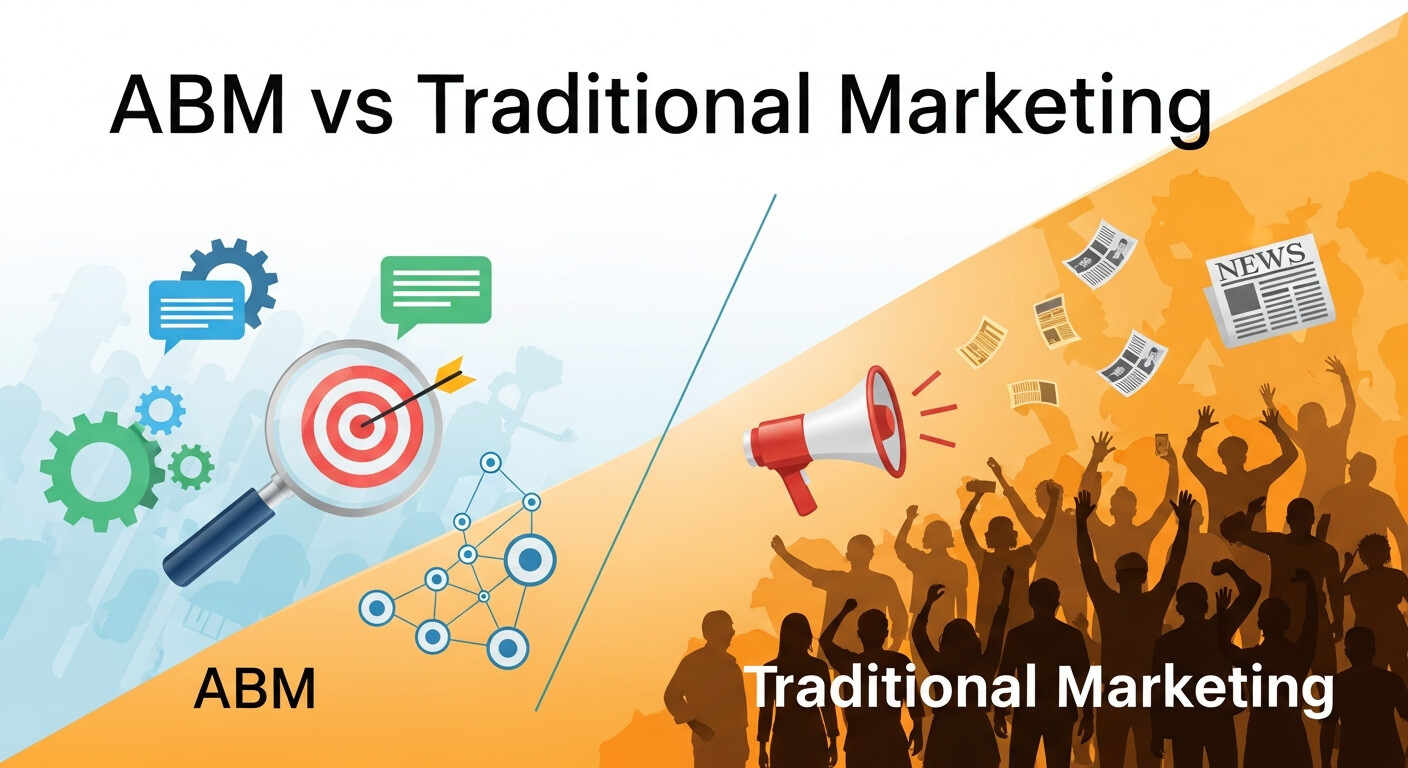
What is Traditional Marketing?
Traditional marketing has been the backbone of customer acquisition for decades. It focuses on broadcasting your brand’s message to a broad audience, with the goal of reaching as many people as possible. The idea is simple yet effective: the larger the audience, the more likely you’ll connect with potential customers.
Core Principles of Traditional Marketing
The foundation of traditional marketing lies in wide visibility. Think about it as casting a wide net to attract attention. Core principles include:
- Mass Outreach: Reaching as many people as possible, often with the same message.
- Consistency: Maintaining a consistent brand voice across television ads, radio jingles, print materials, and digital campaigns.
- Lead Generation Focus: The goal is to generate a large pool of leads, even if only a fraction convert into paying customers.
Methods Used in Traditional Marketing
Traditional marketing employs a range of methods that remain relevant even today:
- Mass Advertising: Television, radio, and print ads that aim to reach a broad market.
- Cold Outreach: Bulk emailing and cold calling potential customers.
- Event Marketing: Large-scale trade shows or industry events to attract a general audience.
Pros and Cons of Traditional Marketing
Pros:
- Broad reach ensures visibility among diverse audiences.
- Familiarity: Established methods and metrics make it easy for teams to implement.
- Scalability for B2C businesses (e.g., retail or FMCG).
Cons:
- High costs for mass media campaigns.
- Low personalization, leading to less relevance for individual customers.
- Harder to measure effectiveness, as not all outreach directly ties back to results.
Traditional marketing has its merits, but its one-size-fits-all approach poses challenges in an era where personalization drives results.
What is Account-Based Marketing (ABM)?
On the other end of the spectrum lies account-based marketing (ABM). Instead of “spraying and praying,” ABM flips the script by focusing on a targeted group of high-value accounts. It’s a personalized, precise, and collaborative approach where marketing and sales work closely to identify, engage, and nurture key accounts.
Core Principles of ABM
The ABM methodology revolves around precision and personalization. Here are its key principles:
- Targeted Outreach: Focus on accounts that closely match your ideal customer profile (ICP).
- Personalization at Scale: Tailor messaging and campaigns for specific accounts or stakeholders.
- Collaboration: Sales and marketing teams align closely to create seamless, customer-focused journeys.
Methods Used in ABM
ABM relies heavily on leveraging technology and data:
- Highly Targeted Advertising: Social media ads and personalized campaigns that resonate with specific accounts.
- Custom Content: Case studies, whitepapers, or videos tailored to address account-specific pain points.
- Hyper-Personalized Outreach: Direct emails and interactions catering to individual decision-makers within accounts.
Pros and Cons of ABM
Pros:
- High ROI due to focused investment in high-value accounts.
- Builds stronger relationships through personalized attention.
- Clear alignment between sales and marketing ensures consistency.
Cons:
- Long sales cycles for enterprise deals.
- Requires significant collaboration and planning.
- Resource-intensive, especially for small marketing teams.
ABM offers less “volume” than traditional marketing but delivers incredible value where it matters the most.
Key Differences Between ABM and Traditional Marketing
Now that we’ve defined both approaches, it’s time to compare them side by side.
1. Targeting Approach
- Traditional Marketing casts a wide net. It targets a large audience, even if many people will never convert.
- ABM, on the other hand, is like fishing with a spear. It identifies specific accounts or clients most likely to deliver value and targets them with precision.
2. Personalization
- Traditional Marketing uses generic messaging aimed at a broad audience. Campaigns aren’t tailored to individual needs or preferences.
- ABM thrives on ultra-personalization. Every piece of content speaks directly to the pain points, goals, and interests of a particular account or stakeholder.
3. Measurement of Success
- Traditional Marketing often measures success through volume metrics like impressions, reach, and the number of leads generated.
- ABM measures success based on account engagement, pipeline velocity, and revenue impact from targeted accounts.
4. Sales and Marketing Alignment
- Traditional Marketing often sees sales and marketing working independently. Leads are passed from one team to another without much collaboration.
- ABM thrives on sales-marketing alignment. Both teams work in tandem to identify and move high-value accounts through the funnel.
Why ABM Wins the Marketing Battle
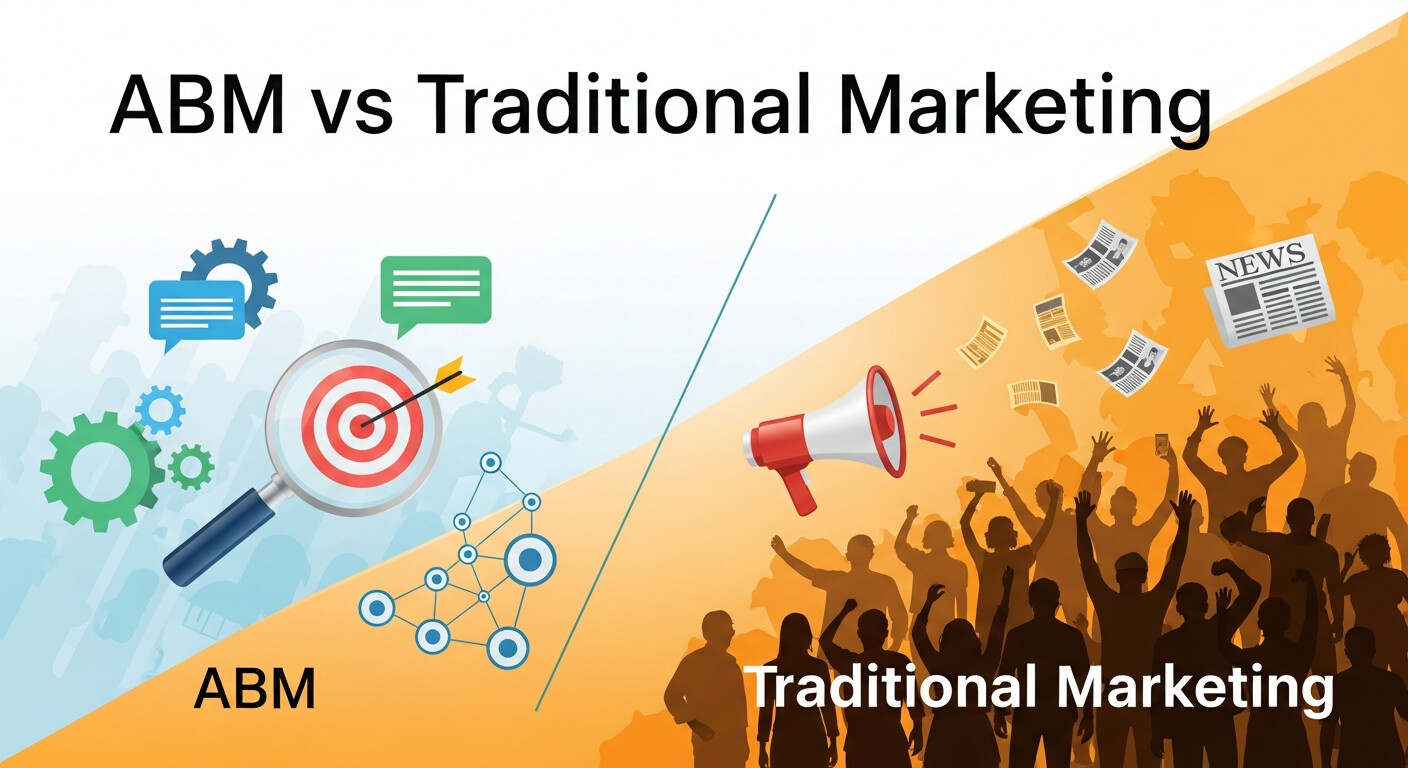
There’s a reason why ABM has been gaining traction in B2B marketing, and why companies that implement it report higher levels of success.
1. Higher ROI
A focused effort on high-value accounts leads to significantly higher ROI. When you tailor your campaigns to meet the exact needs of a few accounts rather than wasting time on weak leads, the results speak for themselves.
2. Improved Customer Experience
Personalized campaigns resonate far more with customers. ABM creates meaningful experiences that build trust and loyalty, which leads to longer-term relationships.
3. Better Alignment Between Sales and Marketing
ABM is built on tight collaboration between sales and marketing teams, creating a more seamless and efficient process that maximizes results.
4. More Efficient Use of Resources
Rather than dedicating resources to reach everyone, ABM focuses on the most promising accounts. This efficiency reduces wasted efforts and increases ROI.
Examples of Successful ABM Campaigns
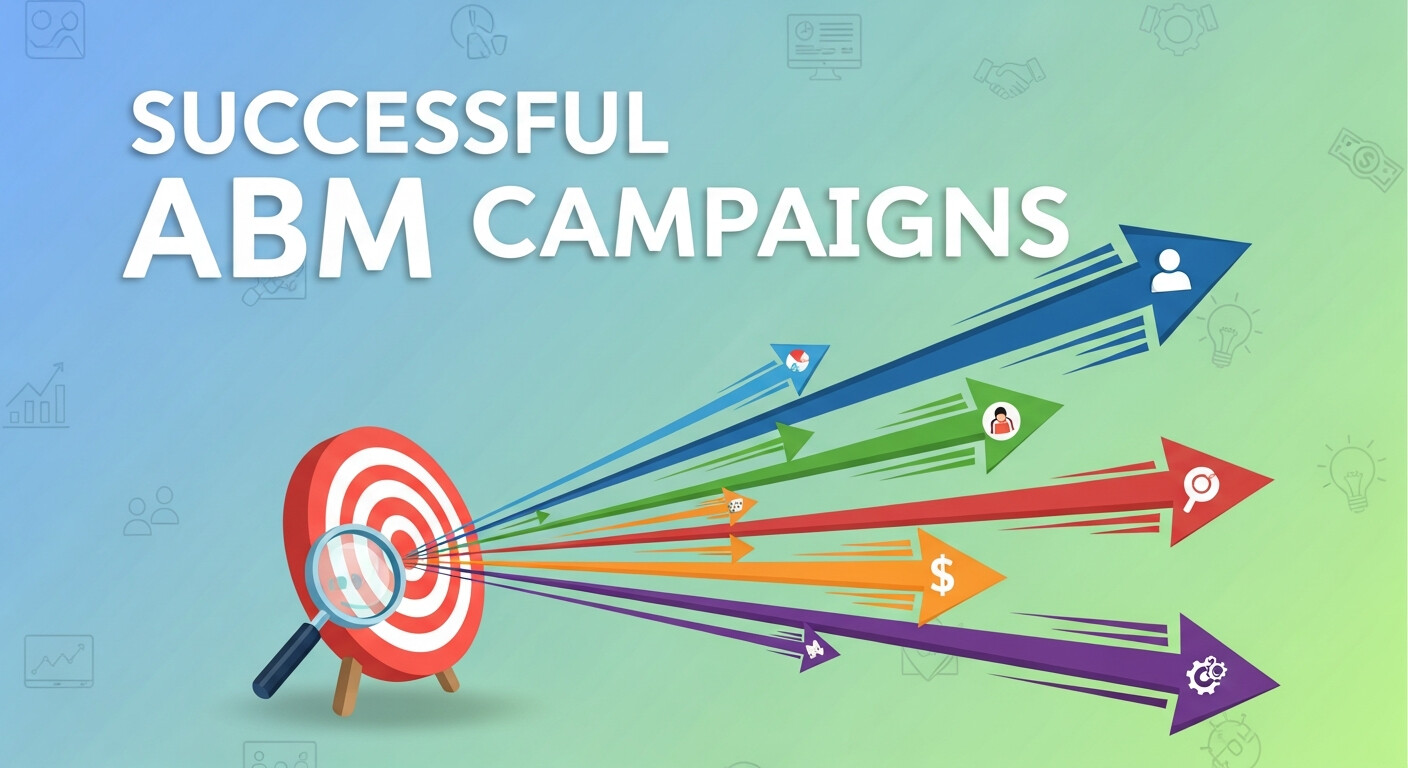
To illustrate the power of ABM, here are a few real-world success stories:
- Sirius Decisions employed ABM to target 15 key accounts and generated a 24% increase in deal size, compared to traditional methods.
- Demand base, a renowned B2B ABM company, used personalized ads to target specific accounts and saw a 285% increase in pipeline velocity.
- Snowflake, a cloud-based data platform, used ABM strategies like tailored content and exclusive VIP events for its top accounts, driving a significant increase in customer acquisition.
These examples demonstrate just how impactful ABM can be when done right.
Conclusion
Both traditional marketing and account-based marketing play important roles in modern business growth. While traditional marketing remains effective for building brand awareness and reaching large audiences, it often lacks the personalization today’s buyers expect. Account-based marketing addresses this gap by focusing on high-value accounts, delivering tailored experiences, and aligning sales and marketing teams around shared goals. By prioritizing quality over quantity, ABM enables businesses to achieve higher ROI, stronger customer relationships, and more predictable revenue. As buyer expectations continue to evolve, adopting ABM—either alone or alongside traditional marketing—can help organizations stay competitive and drive long-term success.
Frequently Asked Questions (FAQ)
Why has Account-Based Marketing become so popular in recent years?
Account-Based Marketing has gained popularity due to rising customer expectations and increased competition in B2B markets. As discussions around ABM vs. Traditional Marketing continue to grow, it is clear that buyers today expect personalized experiences rather than generic sales pitches. ABM addresses this shift by focusing on high-value accounts and delivering tailored messaging that speaks directly to their needs. Advances in marketing technology, data analytics, and automation tools have made it easier to execute ABM at scale. Companies are also under increasing pressure to prove marketing ROI, and ABM offers clearer revenue attribution compared to traditional marketing. As a result, businesses are increasingly adopting ABM to build stronger relationships, achieve higher conversion rates, and drive more predictable revenue growth.
It’s Time to Put ABM on Your Marketing Map
Traditional marketing certainly still has a place in the world, especially for B2C-oriented campaigns. However, for businesses that want to maximize ROI, establish solid customer relationships, and integrate sales with marketing, the future is ABM. It is no surprise that experts all in agreement that ABM is not only the future of marketing but also the present.
There’s no better time than now if you’re looking to start taking advantage of the power that ABM can be. Discover how ABM can revolutionize your campaign efforts and produce tangible outcomes. Make the switch to unprecedented account based targeting today and witness the change for yourself.
How does ABM improve customer relationships compared to traditional marketing?
ABM improves customer relationships by prioritizing relevance and personalization at every stage of the buyer journey. Instead of sending the same message to everyone, ABM allows companies to understand an account’s challenges, goals, and decision-makers. This insight enables brands to deliver customized content, targeted outreach, and meaningful interactions. Customers feel understood rather than sold to, which builds trust and credibility over time. Traditional marketing often focuses on volume, which can feel impersonal. ABM, by contrast, treats each account as a long-term partner, resulting in deeper engagement, stronger loyalty, and increased customer lifetime value.
Can ABM and traditional marketing be used together?
Yes, ABM and traditional marketing can work very effectively together when used strategically. In the discussion of ABM vs. Traditional Marketing, traditional marketing plays a crucial role in building brand awareness, reaching new audiences, and filling the top of the funnel. ABM, on the other hand, is better suited for engaging, converting, and expanding high-value accounts. Many organizations use traditional marketing to attract initial interest and then apply ABM tactics to nurture and close their most promising opportunities. This balanced approach highlights how ABM vs. Traditional Marketing can complement each other, ensuring broad visibility while still delivering personalized experiences where it matters most. Combining both strategies allows businesses to maximize reach without sacrificing relevance or ROI.
How long does it take to see results from an ABM strategy?
ABM is a long-term strategy rather than a quick win. Results typically take longer to appear compared to traditional marketing because ABM often targets enterprise accounts with longer sales cycles. While early indicators such as account engagement and meeting bookings may show progress within a few months, revenue impact can take six months or more. However, the deals generated through ABM are usually larger and more sustainable. Patience, consistency, and continuous optimization are key to achieving meaningful results from an ABM program.
What role does data play in a successful ABM strategy?
Data is the backbone of any successful ABM initiative, especially when comparing ABM vs. Traditional Marketing approaches. It helps organizations identify ideal customer profiles, select high-value target accounts, and better understand buyer behavior. Data also enables personalization by revealing account-specific challenges, intent signals, and engagement patterns—areas where ABM vs. Traditional Marketing differs significantly. Without accurate data, ABM efforts can turn into guesswork. By leveraging CRM systems, intent data, and analytics tools, marketers can make informed decisions and continuously refine campaigns. Strong data insights ensure ABM efforts remain focused, relevant, and closely aligned with long-term revenue goals.
Is ABM only suitable for large enterprises?
While ABM is often associated with large enterprises, it is not exclusive to them. Small and mid-sized B2B companies can also benefit from ABM by targeting a limited number of high-potential accounts. In fact, ABM can be more efficient for smaller teams because it reduces wasted effort on low-quality leads. The key is to scale ABM efforts according to available resources. Starting small, using the right tools, and focusing on high-impact accounts allows businesses of all sizes to successfully adopt ABM.
How does ABM help maximize marketing ROI?
ABM maximizes marketing ROI by concentrating efforts on accounts that are most likely to generate significant revenue. Instead of spreading budgets thin across broad audiences, ABM ensures that every campaign, piece of content, and interaction is aligned with high-value opportunities. This focused investment leads to higher engagement, better conversion rates, and larger deal sizes. Because success is measured by revenue impact rather than vanity metrics, ABM provides clearer visibility into performance. Over time, this efficiency translates into stronger returns and more sustainable growth.