
ABM Intent Monitoring: Understanding Buyer Signals to Improve Account-Based Marketing
 15 min read
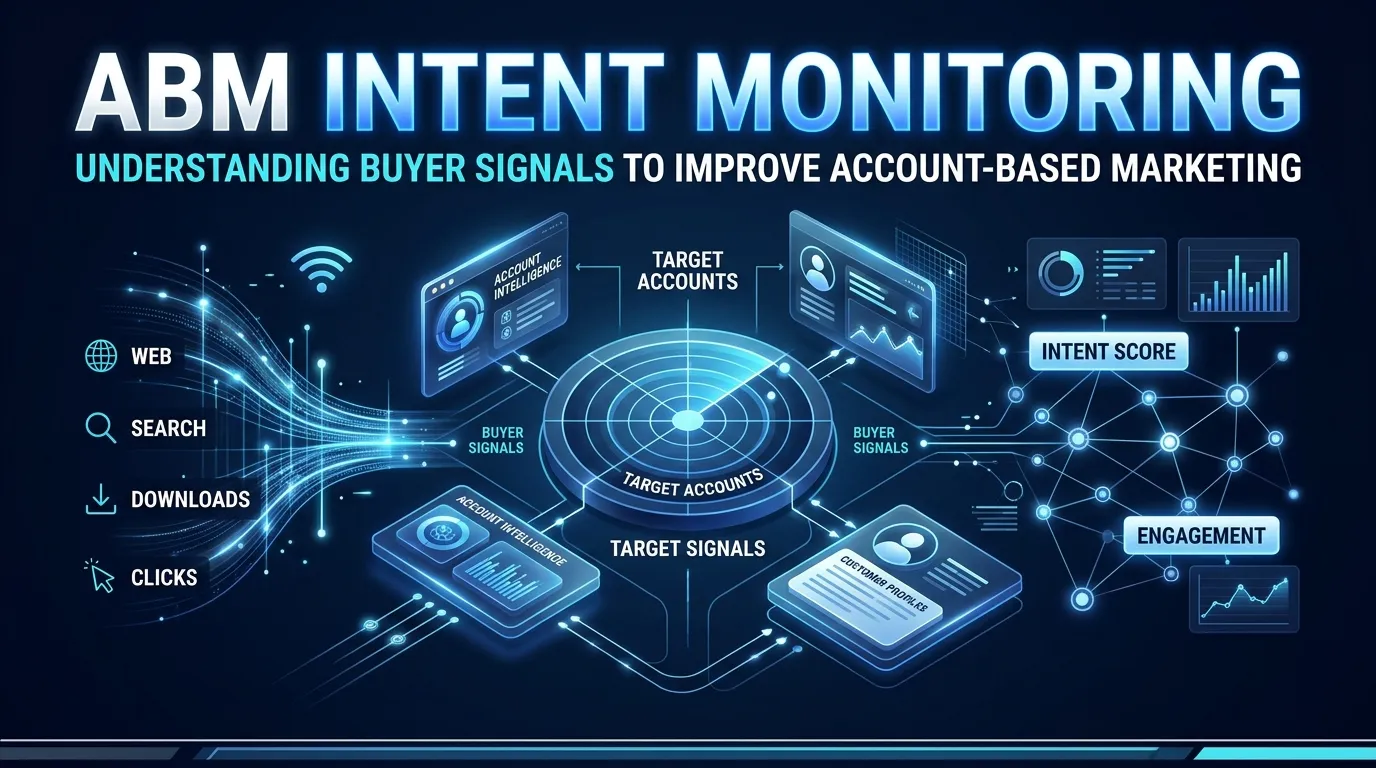
ABM Intent Monitoring helps B2B businesses identify and analyze behavioral signals that indicate potential buying interest among target accounts. By combining intent data, account analytics, engagement tracking, and sales alignment, organizations can improve account prioritization, personalize campaigns, and recognize opportunities earlier in the buyer journey. When used responsibly, intent monitoring supports more relevant communication and stronger account-based marketing performance.
In account-based marketing, success rarely comes from reaching the largest possible audience. It comes from identifying the right businesses, understanding their needs, and engaging decision-makers when they are most likely to consider a solution. However, even carefully selected target accounts may not be ready to purchase immediately. Their interests, priorities, and buying intentions can change over time.
This is where ABM Intent Monitoring becomes valuable. It helps marketing and sales teams recognize meaningful account-level signals, understand changing buyer behavior, and identify opportunities to engage prospects at the right moment. Instead of relying only on demographic information or historical engagement, businesses can use intent insights to understand what potential customers are actively researching.
As B2B purchasing decisions become more complex, monitoring buyer intent is becoming an important part of modern account-based marketing. It provides a clearer picture of account activity and helps organizations develop more relevant campaigns, improve sales coordination, and prioritize their marketing resources.
What Is ABM Intent Monitoring?
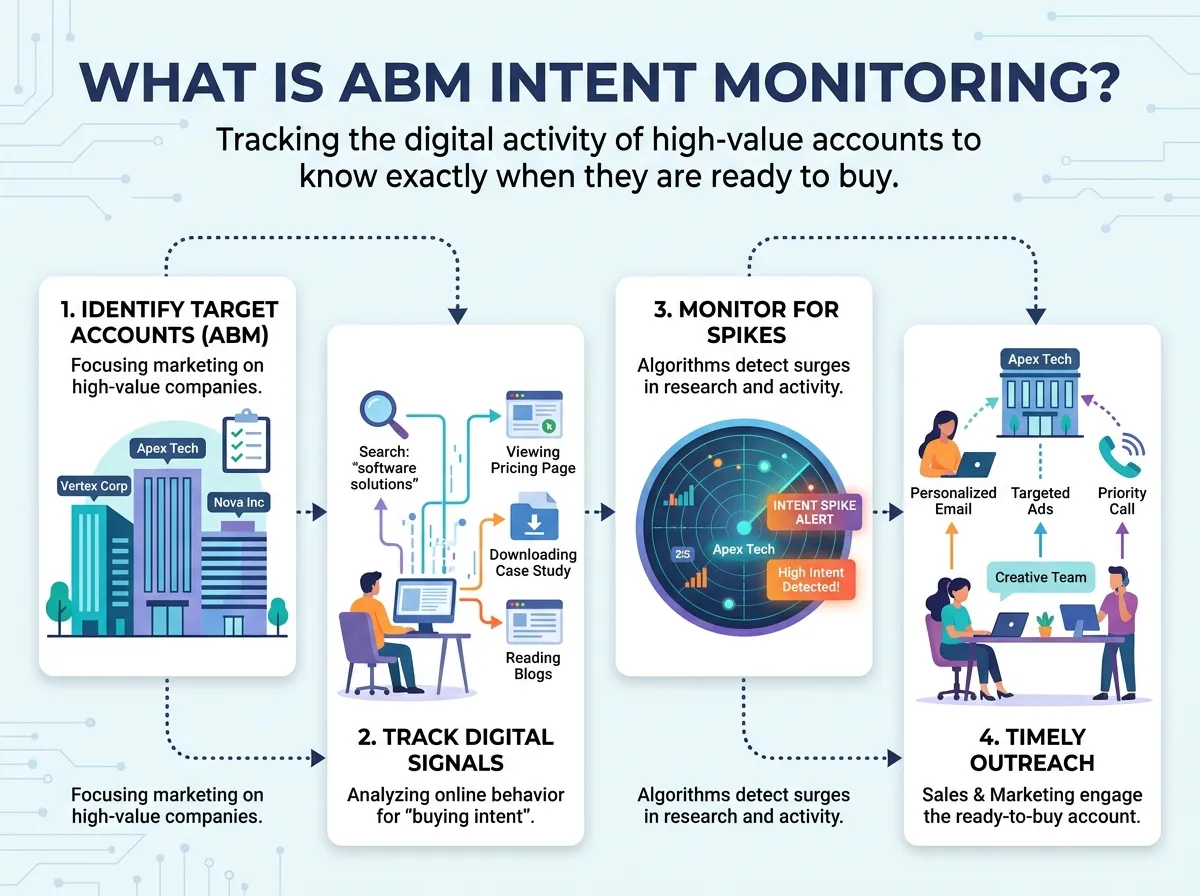
ABM Intent Monitoring is the process of observing and analyzing online and offline behavioral signals that indicate a target account may be interested in a particular product, service, or business solution.
These signals can include website visits, content consumption, product comparisons, search activity, webinar participation, and interactions with marketing campaigns. When multiple signals are connected to the same organization, marketers can develop a more complete understanding of its potential buying interest.
Traditional account-based marketing often begins with identifying companies that match an ideal customer profile. Intent monitoring adds another layer by helping teams understand which of those companies are actively exploring relevant solutions.
For example, a software company may identify 500 businesses that match its target market. However, only a smaller group may currently be researching automation tools, comparing providers, or evaluating solutions to a specific operational problem.
With Account-Based Marketing Intent Monitoring, the marketing team can focus its attention on these active accounts instead of treating every company with equal priority.
The objective is not simply to collect more data. It is to recognize meaningful patterns that support better marketing and sales decisions.
Why Buyer Intent Matters in Account-Based Marketing
Account-based marketing depends on relevance. A campaign designed for a specific organization should reflect its business challenges, industry conditions, and purchasing priorities.
Without intent information, marketing teams may struggle to determine when an account is ready for engagement. They might continue sending introductory content to companies that are already comparing vendors or deliver sales messages to organizations that have not yet identified a problem.
Intent monitoring helps reduce this disconnect.
When businesses understand what their target accounts are researching, they can adjust campaign messaging, select more suitable content, and coordinate outreach with sales representatives.
This also improves the way teams interpret engagement. A single website visit may not indicate strong buying interest, but repeated visits to pricing pages, product documentation, and comparison resources can suggest a more serious evaluation process.
The value of intent becomes even greater when combined with broader account intelligence. As explained in Predictive Account-Based Marketing, data-driven insights can help organizations anticipate account needs and identify potential opportunities before they become obvious through direct sales conversations.
Intent monitoring supports this approach by providing timely information about changing buyer behavior.
Understanding ABM Buyer Intent Signals
ABM Buyer Intent Signals are behavioral indicators that suggest an organization may be interested in a particular solution or category of products.
These signals do not always mean that a company is ready to purchase. Instead, they provide evidence that its employees or decision-makers are exploring relevant topics.
Some signals are relatively simple to identify, while others require more advanced analysis.
For example, an account repeatedly visiting a company’s website may demonstrate growing interest. A group of employees from the same organization downloading technical resources, attending webinars, and reviewing product comparisons may indicate a more developed buying process.
The strength of an intent signal depends on its context.
A company researching general industry trends may be in an early discovery stage. Another company researching implementation requirements, pricing structures, and competitor alternatives may be closer to making a purchasing decision.
Marketing teams should therefore evaluate intent signals based on their relevance, frequency, recency, and relationship to the account’s business objectives.
This approach prevents organizations from treating every interaction as an equally valuable opportunity.
How Account Intent Data Analysis Reveals Buying Opportunities
Raw behavioral information becomes useful only when it is interpreted correctly. Account Intent Data Analysis involves examining collected signals to identify patterns that reveal potential interest, buying readiness, and account priorities.
Intent data generally comes from several sources.
First-party data includes information collected through a company’s own digital properties. Website activity, email engagement, content downloads, and product demonstrations provide direct insights into how prospects interact with the business.
Third-party intent data comes from external sources that observe research activity across other websites, publishing platforms, and business information networks.
Combining these sources can provide a broader view of account behavior. However, marketers must consider data accuracy, privacy requirements, and the limitations of available tracking methods.
A practical analysis may involve comparing current account activity with historical engagement. If a previously inactive organization begins consuming relevant content, its interest may be increasing.
Similarly, when several contacts from one company engage with related resources, the account may be moving toward a coordinated buying process.
This is particularly useful in complex B2B environments, where purchasing decisions often involve multiple departments and stakeholders.
B2B Buyer Intent Tracking Across the Customer Journey
B2B Buyer Intent Tracking allows marketing teams to observe how account interest develops from initial research to product evaluation.
The buyer journey is rarely a straight line. Prospects may investigate a problem, pause their research, return with new questions, and compare several possible solutions before making a decision.
Intent tracking helps marketers understand these changing stages.
During early research, buyers may explore educational articles, industry reports, and general solution categories. At this stage, helpful informational content can establish credibility without creating unnecessary sales pressure.
As interest develops, prospects may begin reviewing case studies, implementation resources, product features, and competitor comparisons. These interactions provide stronger evidence of active evaluation.
Near the decision stage, activity may include pricing inquiries, demo requests, consultation bookings, or repeated visits to product-specific pages.
By connecting these interactions, marketing teams can develop a more realistic view of account progression.
This understanding also supports better communication. Early-stage accounts may benefit from educational resources, while highly engaged accounts may require personalized sales conversations.
Choosing ABM Intent Data Platforms for Better Visibility
Many organizations use specialized technology to collect, organize, and interpret intent information. ABM Intent Data Platforms help businesses identify relevant account activity and connect it with their existing marketing and sales systems.
These platforms may offer account identification, intent topic tracking, engagement scoring, audience segmentation, and integration with customer relationship management tools.
However, selecting a platform should involve more than comparing feature lists.
A useful solution needs to support the organization’s target market, data requirements, and existing workflow. Teams should consider whether the platform provides reliable account matching, meaningful topic coverage, understandable reporting, and practical integration options.
The quality of the underlying data is especially important. A platform that produces large volumes of signals without clear relevance may create more confusion than value.
Organizations should also evaluate how intent information can be used by sales representatives. If insights remain inside a separate dashboard and never influence account prioritization or outreach, the investment may deliver limited results.
The strongest platform is not necessarily the one with the most data. It is the one that helps teams make better decisions with the information available.
Target Account Behavior Monitoring and the Importance of Context
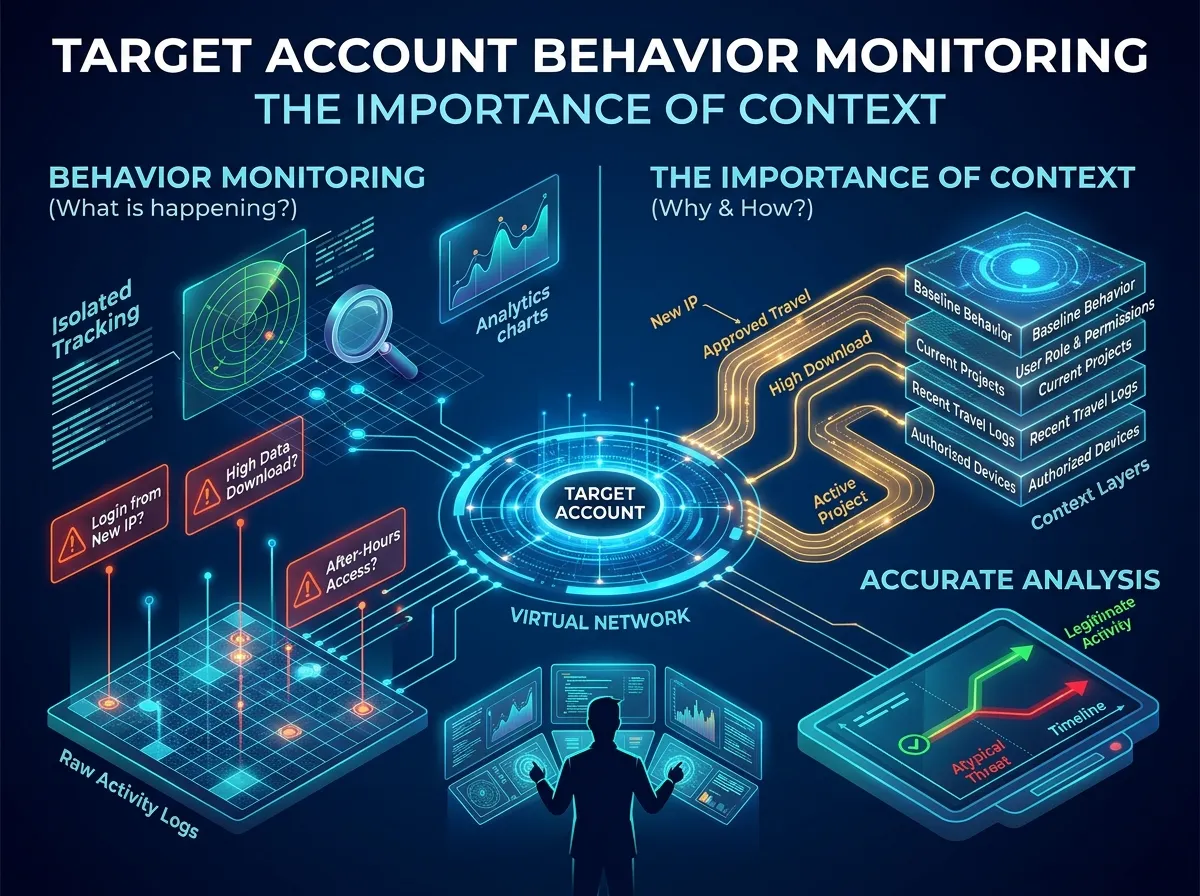
Target Account Behavior Monitoring focuses on observing how selected companies interact with content, products, and marketing activities over time.
Account behavior becomes more meaningful when it is evaluated against a company’s business context.
For instance, a technology firm researching cybersecurity solutions may have different priorities from a manufacturing company investigating supply chain automation. Even if both demonstrate similar levels of engagement, their intent signals should be interpreted differently.
Industry, company size, business model, existing technology, and organizational challenges can all influence the meaning of an observed behavior.
Monitoring should also consider changes in account activity.
A sudden increase in research may indicate a new business initiative, an upcoming technology replacement, or a response to changing market conditions. On the other hand, declining engagement may suggest that an account has lost interest or moved into a different stage of its decision-making process.
When teams understand these patterns, they can avoid generic outreach and develop communication that reflects the account’s actual situation.
Connecting Account-Based Marketing Analytics With Intent Insights
Intent monitoring becomes more effective when it is integrated into broader Account-Based Marketing Analytics.
ABM analytics helps organizations evaluate how marketing activities influence target accounts, engagement quality, pipeline development, and revenue opportunities.
Intent data adds behavioral context to these measurements.
For example, a campaign may generate a high number of clicks but attract limited interest from priority accounts. Another campaign may produce fewer interactions while encouraging meaningful engagement from companies with strong buying potential.
Looking only at surface-level metrics can make the first campaign appear more successful. However, combining engagement information with account intent may reveal that the second campaign creates greater business value.
This connection is important when measuring the effectiveness of account-based marketing programs.
Teams can examine whether accounts showing strong intent are progressing through the sales pipeline, whether personalized campaigns are increasing engagement, and whether sales outreach is occurring at appropriate moments.
Organizations can also compare these results with their ABM Performance Benchmarks to understand how their account-based marketing performance compares with established measurement practices.
The result is a more complete view of marketing effectiveness.
Buyer Journey Intent Signals and Personalized Engagement
Buyer Journey Intent Signals help marketers understand what information a prospect may need at different stages of the purchasing process.
Personalization becomes more effective when it responds to actual behavior rather than assumptions.
An account researching industry challenges may appreciate educational content that explains possible solutions. A company comparing vendors may benefit from product demonstrations, customer success stories, or detailed feature information.
Intent signals can also guide the timing of communication.
When an account begins showing consistent interest, marketing teams can increase the relevance of their outreach. However, personalization should remain helpful and professional rather than overly intrusive.
A prospect does not necessarily want to know that every digital interaction has been monitored. Instead, businesses should use behavioral insights to improve the usefulness of their communication.
For example, a sales representative might discuss a relevant industry challenge or share a resource connected to the prospect’s research area.
This creates a more natural conversation and helps establish trust.
ABM Engagement Tracking and Sales Alignment
ABM Engagement Tracking measures how target accounts interact with marketing campaigns, sales communications, and other business touchpoints.
When combined with intent monitoring, engagement tracking can help teams distinguish between passive interest and meaningful buying activity.
A single email open may provide limited insight. Repeated interactions with product resources, participation in a relevant webinar, and engagement from multiple stakeholders may indicate a stronger account opportunity.
Sales and marketing teams should agree on how these signals influence account prioritization.
For example, marketing may identify an account with increasing intent activity and share the insight with its assigned sales representative. The sales team can then review the account’s current relationship, recent conversations, and potential business requirements before deciding how to proceed.
This coordination reduces the risk of sending conflicting messages or contacting prospects at unsuitable times.
Event participation can also contribute valuable engagement information. When accounts attend relevant sessions or interact with event resources, marketers can connect those activities with their broader intent signals. Strong communication before, during, and after an event supports this process, as discussed in Event Messaging.
Intent-Based Account Targeting: Turning Signals Into Action
Intent-Based Account Targeting uses behavioral insights to prioritize companies that demonstrate relevant interest in a product or service.
Rather than relying exclusively on static account lists, marketers can adjust their targeting as account activity changes.
This does not mean removing every low-intent company from a campaign. Some organizations may still be valuable long-term prospects even if they are not actively researching a solution today.
A more balanced approach combines account fit with intent strength.
Account fit determines whether a company matches the ideal customer profile. Intent strength helps indicate whether the organization may have an active need.
Together, these factors support more intelligent prioritization.
A high-fit account with strong intent may deserve immediate sales attention. A high-fit account with moderate intent may benefit from ongoing educational campaigns. A low-fit account with strong research activity may require further qualification before significant resources are invested.
This approach helps organizations maintain a healthy balance between immediate opportunities and long-term account development.
The Role of AI in Modern ABM Intent Monitoring
Artificial intelligence is changing how businesses interpret account-level behavioral information.
AI-powered systems can identify patterns across large datasets, detect unusual changes in engagement, and help marketers organize accounts according to potential buying interest.
They may also support predictive scoring by combining intent signals with firmographic information, historical interactions, and previous conversion patterns.
However, automated insights should not replace human judgment.
Intent models can produce misleading results when data is incomplete, outdated, or poorly matched to the target account. A sudden increase in activity may be caused by general research rather than a genuine purchasing opportunity.
The most effective approach combines automation with practical business understanding.
As explored in AI-Powered Account-Based Marketing, artificial intelligence can strengthen account-based marketing by improving data interpretation and campaign relevance.
Within intent monitoring, AI is most valuable when it helps teams recognize useful signals faster and respond with more informed decisions.
Building a More Responsive Account-Based Marketing Strategy

ABM Intent Monitoring is not simply a technology feature or a method of collecting behavioral data. It is a way to make account-based marketing more responsive to the needs and interests of potential customers.
When businesses combine intent information with account intelligence, engagement tracking, and sales collaboration, they can develop a clearer understanding of their target market.
The real advantage comes from using these insights responsibly and consistently.
Marketing teams should focus on relevant signals, maintain reliable data practices, and create communication that reflects genuine buyer needs. Sales representatives should receive actionable insights rather than overwhelming reports filled with disconnected activity.
Over time, this creates a more coordinated account-based marketing process.
Instead of waiting for prospects to submit a form or request a meeting, organizations can recognize developing interest and prepare meaningful engagement.
That is the central value of ABM Intent Monitoring: helping businesses understand not only which accounts matter, but also when those accounts may be ready for a relevant conversation.
10 Frequently Asked Questions About ABM Intent Monitoring
1. What is ABM Intent Monitoring?
ABM Intent Monitoring is the process of tracking and analyzing behavioral signals from target accounts to understand their interest in specific products, services, or business solutions.
2. Why is intent monitoring important for account-based marketing?
It helps marketing and sales teams identify active buying interest, prioritize valuable accounts, personalize communication, and engage prospects at more appropriate stages of the buyer journey.
3. What are common ABM buyer intent signals?
Common signals include website visits, content downloads, product comparisons, webinar participation, pricing page activity, and repeated research into relevant business topics.
4. How does account intent data analysis work?
Account intent data analysis examines behavioral information from different sources to identify patterns, evaluate interest levels, and understand whether a target company may be exploring a purchasing opportunity.
5. What are ABM intent data platforms?
ABM intent data platforms are technology solutions that collect, organize, and analyze account-level behavioral signals to help businesses identify potential buying opportunities.
6. How is B2B buyer intent tracking different from traditional lead tracking?
Traditional lead tracking often focuses on individual contacts and their interactions. B2B buyer intent tracking examines broader account activity, including signals from multiple stakeholders within the same organization.
7. Can intent monitoring improve account targeting?
Yes. Intent monitoring helps businesses prioritize accounts based on both their suitability for the ideal customer profile and their current level of buying interest.
8. How does ABM engagement tracking support intent monitoring?
Engagement tracking measures account interactions with marketing and sales activities. When combined with intent data, it helps teams distinguish meaningful engagement from occasional or unrelated activity.
9. Does AI improve ABM Intent Monitoring?
AI can help analyze large datasets, identify behavioral patterns, and support predictive account scoring. Human review remains important to ensure that insights are accurate and relevant.
10. How can businesses measure the success of ABM Intent Monitoring?
Businesses can evaluate success through account engagement, qualified opportunities, sales pipeline progression, conversion rates, account prioritization accuracy, and revenue contribution.


ABM Performance Benchmarks: Measuring Account-Based Marketing Success

Account-Based Advertising: Reaching High-Value Business Audiences With Precision

Account Penetration Strategy: Driving Growth Within Existing Accounts