


Account Based Marketing (ABM) has transformed how B2B companies approach their most valuable prospects. Rather than casting a wide net and hoping to catch the right fish, ABM lets you target specific high-value accounts with personalized campaigns that speak directly to their needs.
What is Account Based Marketing Software?

Account based marketing software is a specialized platform designed to help B2B companies identify, target, and engage specific high-value accounts. Unlike traditional marketing automation tools that focus on individual leads, ABM software treats entire accounts as markets of one.
These platforms typically combine several key capabilities:
- Account identification and scoring to help you prioritize your target list
- Contact discovery to map decision-makers within target accounts
- Personalization engines that customize content and messaging
- Multi-channel orchestration across email, social media, advertising, and direct mail
- Intent data integration to identify accounts showing buying signals
- Analytics and attribution to measure account engagement and pipeline impact
The goal is simple: help your sales and marketing teams work together to land bigger deals from your most important prospects.
Benefits of Using Account Based Marketing Software
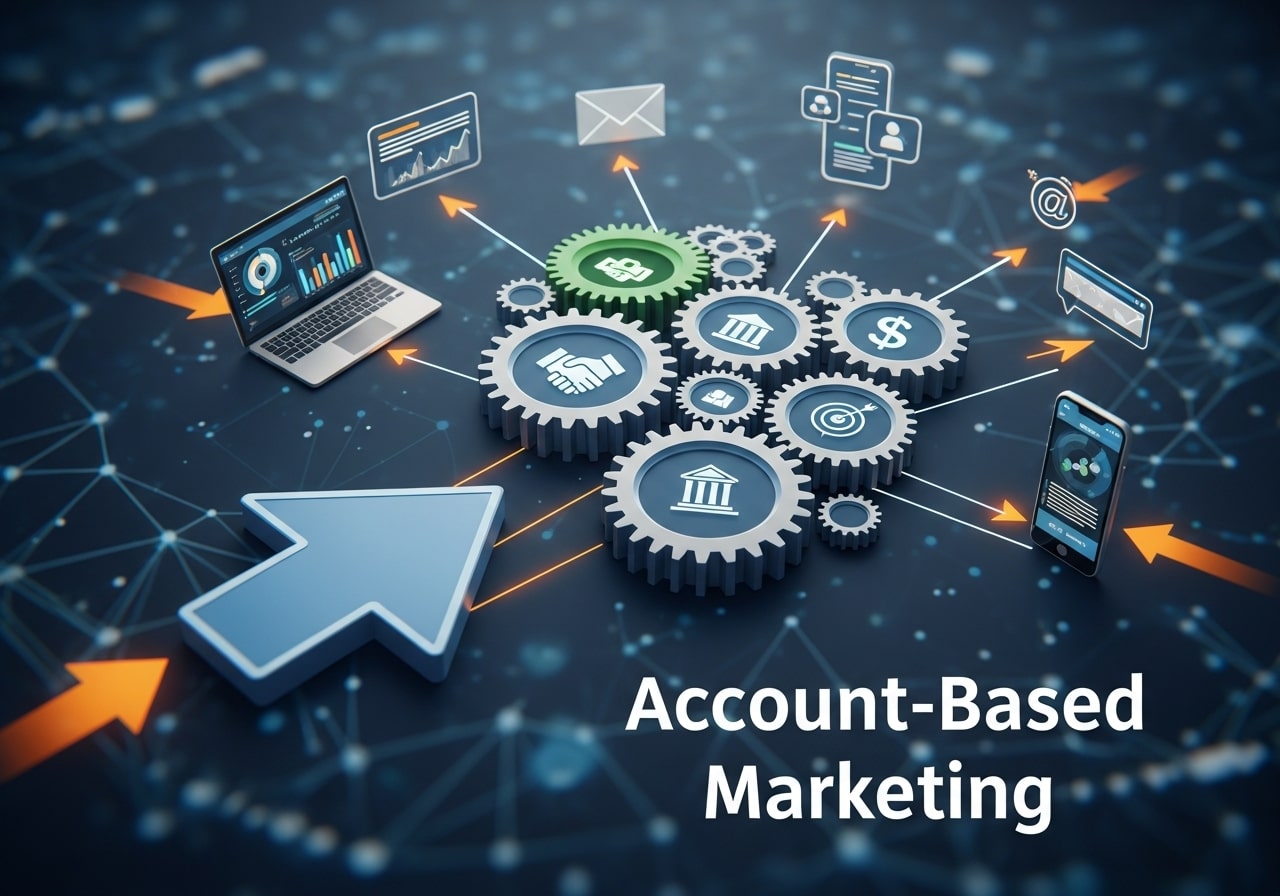
Account Based Marketing software helps B2B companies focus their time and budget on accounts that are most likely to generate revenue. By aligning sales and marketing around shared target accounts, teams can deliver more relevant messaging and improve engagement across the buying committee. ABM software also increases deal sizes by nurturing multiple stakeholders within the same organization. In addition, it shortens sales cycles by identifying intent signals early and prioritizing accounts that are actively researching solutions. Overall, ABM software drives higher ROI by reducing wasted spend on low-quality leads and concentrating efforts on high-value opportunities.
Common Challenges When Adopting ABM Software

While ABM software delivers strong results, companies may face challenges during adoption. One common issue is poor data quality, which can limit account targeting and personalization effectiveness. Lack of alignment between sales and marketing teams can also reduce program success if roles and expectations are unclear. Additionally, ABM platforms may require time to configure integrations with existing CRM and marketing systems. Content scalability can be another hurdle, as personalized campaigns require tailored messaging. Addressing these challenges early with clear processes, training, and data governance helps ensure long-term ABM success.
ABM Software vs Traditional Marketing Automation

ABM software differs significantly from traditional marketing automation platforms. Marketing automation focuses on capturing and nurturing individual leads through standardized workflows, while ABM software prioritizes specific accounts and multiple decision-makers within them. ABM tools provide account-level analytics, intent data, and personalized experiences across channels. Traditional platforms excel at volume-driven campaigns, but they often lack deep account intelligence. Many B2B companies use both systems together—marketing automation to manage lead workflows and ABM software to drive strategic engagement with high-value accounts and enterprise prospects.
Core Features to Look for in ABM Software
Account Intelligence and Identification
The foundation of any successful ABM program is knowing which accounts to target. Look for software that offers:
Predictive account scoring that uses machine learning to identify accounts most likely to buy based on firmographic data, technographic signals, and behavioral patterns.
Intent data integration that monitors third-party signals to identify accounts actively researching solutions in your category.
Account mapping capabilities that help you understand organizational structures and identify all the stakeholders involved in buying decisions.
Personalization at Scale
ABM is all about treating each account as a market of one, but doing this manually doesn’t scale. Effective ABM software should provide:
Dynamic content personalization that automatically customizes website experiences, email content, and advertising creative based on account attributes.
Account-specific landing pages that can be generated automatically with relevant messaging, case studies, and calls-to-action.
Sales enablement tools that help account executives personalize their outreach with relevant talking points and content recommendations.
Multi-Channel Orchestration
Modern buyers interact with brands across multiple touchpoints. Your ABM software should coordinate campaigns across:
- Email marketing with account-specific messaging
- Paid advertising on LinkedIn, Google, and other platforms
- Direct mail and gifting programs
- Social media engagement
- Website personalization
- Sales outreach sequences
Analytics and Attribution
Measuring ABM success requires different metrics than traditional demand generation. Look for platforms that track:
Account-level engagement scores that aggregate activity across all contacts within target accounts.
Pipeline influence and attribution to understand which ABM activities contribute to closed deals.
Account progression tracking to monitor how accounts move through your sales funnel.
ROI measurement that ties ABM investments to revenue outcomes.
Types of ABM Software Solutions
The ABM software landscape includes several different types of platforms, each with their own strengths:
All-in-One ABM Platforms
These comprehensive solutions attempt to handle every aspect of your ABM program from account identification through deal closure. They’re ideal for companies that want a single platform to manage their entire ABM strategy.
Pros: Unified data and reporting, fewer integrations to manage, often more cost-effective than buying multiple point solutions.
Cons: May not excel in every area, can be complex to implement, might include features you don’t need.
Account Intelligence Platforms
These tools focus specifically on account identification, contact discovery, and buyer intent signals. They excel at helping you build and prioritize your target account list.
Pros: Deep data capabilities, sophisticated predictive modeling, excellent for account research and prospecting.
Cons: Require additional tools for campaign execution, may have limited personalization features.
Advertising-Focused ABM Tools
These platforms specialize in account-based advertising across channels like LinkedIn, Google, and display networks.
Pros: Advanced targeting capabilities, strong integration with ad platforms, detailed campaign analytics.
Cons: Limited to advertising channels, may require additional tools for email and direct mail.
Sales Enablement ABM Solutions
These tools focus on empowering sales teams with account intelligence, personalized content, and outreach automation.
Pros: Strong sales workflow integration, excellent for account-based selling, often high user adoption.
Cons: Limited marketing automation features, may not include advertising capabilities.
How to Choose the Right ABM Software
Selecting the right account based marketing software depends on several factors specific to your business:
Assess Your Current ABM Maturity
Getting started with ABM? Look for platforms with strong onboarding support, pre-built templates, and clear best practice guidance. All-in-one solutions often work well for ABM beginners.
Already running ABM programs? You might benefit from specialized tools that excel in specific areas where your current approach is falling short.
Consider Your Team Structure
Dedicated ABM team? Comprehensive platforms with advanced features and customization options make sense.
Sales and marketing wearing multiple hats? Prioritize ease of use and automation to maximize efficiency with limited resources.
Evaluate Integration Requirements
Your ABM software needs to play nicely with your existing tech stack. Key integrations to consider:
- CRM systems (Salesforce, HubSpot, Pipedrive)
- Marketing automation platforms
- Sales engagement tools
- Data enrichment services
- Business intelligence and analytics tools
Budget and ROI Considerations
ABM software pricing varies widely based on features, data access, and account volume. Consider both upfront costs and potential ROI:
Enterprise platforms typically cost $50,000+ annually but offer comprehensive capabilities and dedicated support.
Mid-market solutions range from $10,000-$50,000 and balance features with affordability.
Starter platforms may cost less than $10,000 but often have limited functionality or data access.
Remember that effective ABM typically generates higher deal values and faster sales cycles, so focus on potential return rather than just upfront investment.
Implementation Best Practices
Successfully deploying account based marketing software requires more than just purchasing a platform. Here are key steps to ensure success:
Start with Clear Goals and Metrics
Define what success looks like before you begin implementation. Common ABM metrics include:
- Account engagement scores
- Pipeline velocity within target accounts
- Average deal size from ABM accounts
- Cost per acquisition for target accounts
Ensure Sales and Marketing Alignment
ABM only works when sales and marketing teams collaborate closely. Establish:
- Shared definitions of target accounts and buying stages
- Clear handoff processes between marketing and sales
- Regular review meetings to assess account progress
- Unified reporting dashboards both teams can access
Plan Your Data Strategy
Clean, comprehensive data is the fuel that powers ABM software. Audit your current data quality and establish processes for:
- Account data enrichment and maintenance
- Contact database hygiene
- Integration between your CRM and ABM platform
- Privacy compliance for data collection and usage
Pilot Before Full Rollout
Start with a small subset of target accounts to test your processes and refine your approach. This allows you to:
- Identify integration issues before they impact your entire program
- Train your team on new workflows with lower stakes
- Prove ROI before expanding investment
- Optimize messaging and content based on early results
Measuring ABM Software Success
Traditional marketing metrics like leads generated and cost per lead don’t tell the full story for ABM programs. Focus on account-level metrics that align with business outcomes:
Engagement Metrics
- Account engagement scores across all touchpoints
- Content consumption within target accounts
- Website behavior and page views by target accounts
- Social media engagement from key stakeholders
Pipeline Metrics
- Number of target accounts entering your sales pipeline
- Time from first engagement to opportunity creation
- Average deal size for ABM-influenced opportunities
- Win rates for accounts in your ABM program
Revenue Impact
- Revenue attributed to ABM activities
- Customer acquisition cost for ABM accounts
- Customer lifetime value from ABM-acquired accounts
- Overall program ROI
Getting Started with Account Based Marketing Software
Ready to explore ABM software for your business? Here’s your action plan:
Step 1: Audit your current ABM capabilities and identify gaps where software could help.
Step 2: Define your ideal customer profile and estimate your total addressable market of target accounts.
Step 3: Research platforms that align with your needs, budget, and technical requirements.
Step 4: Request demos from your top 3-5 vendors and ask to see examples relevant to your industry and use case.
Step 5: Run a pilot program with your chosen platform before committing to a full rollout.
The right account based marketing software can transform your B2B sales and marketing efforts, helping you close bigger deals faster while providing a better experience for your most valuable prospects. Take the time to choose thoughtfully, and you’ll build a foundation for ABM success that scales with your business.
Future Trends in Account Based Marketing Software
The future of ABM software is driven by automation, artificial intelligence, and deeper personalization. AI-powered account scoring and predictive analytics will continue to improve targeting accuracy. Real-time intent data and behavioral insights will allow teams to engage accounts at the perfect moment. Personalization will expand beyond messaging to include dynamic experiences across websites, ads, and sales outreach. Additionally, tighter integration between ABM platforms, CRMs, and revenue intelligence tools will provide clearer attribution and forecasting. As competition increases, ABM software will become essential for sustainable B2B growth.
Frequently Asked Questions (FAQ)
1. What types of companies benefit most from ABM software?
ABM software works best for B2B companies with long sales cycles, high deal values, and multiple decision-makers—such as SaaS, enterprise technology, manufacturing, and professional services firms.
2. Is ABM software only for large enterprises?
No. While enterprise companies were early adopters, many mid-market and even small B2B teams now use ABM software thanks to more affordable and scalable solutions.
3. How is ABM different from traditional lead-based marketing?
Traditional marketing focuses on generating individual leads, while ABM targets specific high-value accounts and engages multiple stakeholders within those accounts in a coordinated way.
4. Do I need a CRM to use ABM software?
Most ABM platforms work best when integrated with a CRM like Salesforce or HubSpot, but some tools can still provide value independently for account research and advertising.
5. How long does it take to see results from ABM software?
Many companies see early engagement signals within a few weeks, but meaningful pipeline and revenue impact typically appears within 3–6 months.
6. Can ABM software replace marketing automation tools?
Not always. Some all-in-one ABM platforms include marketing automation features, but many teams use ABM software alongside existing marketing automation tools.
7. How many accounts should I target in an ABM program?
This depends on your strategy. One-to-one ABM may focus on 10–50 accounts, while one-to-many ABM programs can target hundreds or even thousands of accounts.
8. What data is required to run ABM software effectively?
Key data includes firmographic information, contact details, intent signals, engagement data, and accurate CRM records for accounts and opportunities.
9. Is ABM software difficult to implement?
Implementation complexity varies by platform. All-in-one tools may take longer to set up, while point solutions can be deployed more quickly with fewer integrations.
10. How do I prove ROI from ABM software?
ROI is measured by tracking account engagement, pipeline influence, deal size, win rates, and revenue generated from target accounts compared to non-ABM efforts.


