

This guide explains how dynamic content personalization powers successful Account-Based Marketing websites. It covers account-level tracking, AI-driven personalization, intent data integration, multi-channel continuity, and scalable ABM web strategies that improve engagement, align sales and marketing, accelerate buying journeys, and drive higher-value B2B revenue growth.
Implement Dynamic Content Personalization
Dynamic content personalization forms the backbone of effective Account-Based Marketing. Your website should adapt in real-time based on the visitor’s company, industry, role, and stage in the buying journey.
Company-Based Content Customization
Start by implementing company-based content customization using IP detection and reverse DNS lookup technologies. When a visitor from a target account arrives on your site, automatically display relevant case studies, industry-specific messaging, and tailored value propositions.
For example, if someone from a financial services company visits your homepage, showcase banking-specific use cases rather than generic examples. This level of personalization requires robust database integration and content management systems that can serve different content variations seamlessly.
Role-Specific Landing Pages
Create dynamic landing pages that adapt based on the visitor’s job title and department. C-suite executives need different information from technical implementers. Your web development team should build flexible page templates that can swap out headlines, case studies, and calls-to-action based on visitor attributes.
Consider implementing progressive profiling forms that gradually collect more information about visitors over multiple sessions. This data feeds back into your personalization engine, making each subsequent visit more relevant.
Optimize Account-Level Tracking and Analytics

Traditional web analytics focuses on individual users, but Account-Based Marketing requires account-level insights. Your web development strategy must accommodate this shift in measurement and attribution.
Implement Account Identification Technology
Deploy account identification tools that can recognize when multiple users from the same target company visit your website. This requires integrating with platforms like Demandbase, 6sense, or building custom solutions using company databases and IP intelligence.
Your tracking implementation should group individual sessions under company accounts, providing a holistic view of account engagement across all touchpoints. This means restructuring your analytics setup to prioritize account-level metrics over individual user behavior.
Advanced Event Tracking for ABM
Set up sophisticated event tracking that captures account-level engagement signals. Beyond standard page views, track content downloads, video engagement, pricing page visits, and demo requests at the account level.
Create custom events for ABM-specific actions like viewing multiple product pages in one session, spending significant time on solution pages, or downloading multiple resources. These engagement signals help sales teams prioritize outreach and tailor their approach.
Create Seamless Multi-Channel Integration

Your website shouldn’t exist in isolation from your other ABM channels. Web development strategies must support seamless integration across email, social media, advertising, and sales outreach.
Unified Customer Data Platform
Implement a customer data platform (CDP) that consolidates account information from all touchpoints. When a prospect clicks through from a personalized email campaign, your website should continue that personalized experience without missing a beat.
This requires building APIs that can quickly access and update account profiles in real-time. Your web development team needs to architect systems that can handle high-volume data synchronization without impacting site performance.
Cross-Channel Campaign Continuity
Develop the technical infrastructure to maintain campaign continuity across channels. If a target account engages with your LinkedIn ads about a specific solution, ensure your website reflects that interest through personalized content and relevant calls-to-action.
This involves implementing UTM parameter tracking, campaign attribution models, and automated content rules that respond to external campaign data.
AI-Driven Personalization Engines

Artificial intelligence takes dynamic content personalization to the next level by removing manual rule dependencies. AI-driven personalization engines analyze historical account behavior, industry patterns, engagement velocity, and conversion outcomes to automatically decide which content variations should be served. Instead of relying only on predefined segments, these systems continuously learn which messaging resonates most with specific account types. Over time, AI can optimize headlines, CTAs, and content sequencing for each account. This reduces human bias, increases relevance, and allows ABM teams to scale personalization efforts across hundreds or thousands of accounts without sacrificing accuracy or performance.
Content Governance and Personalization Control
As personalization scales, content governance becomes critical. Without proper control, ABM websites can become fragmented and inconsistent. Establish governance frameworks that define who can create, approve, modify, and retire personalized content variations. Use centralized content management systems with version control, approval workflows, and audit logs. This ensures that personalized experiences remain on-brand, compliant, and up to date. Strong governance also prevents outdated case studies or messaging from appearing to high-value accounts, protecting brand credibility while maintaining personalization velocity.
Privacy, Compliance, and Ethical Personalization
Advanced ABM personalization must be built with privacy and compliance at its core. Regulations like GDPR, CCPA, and evolving global privacy laws require transparency in data collection and usage. Implement consent management platforms (CMPs) and ensure personalization logic respects user preferences and opt-in status. Ethical personalization focuses on relevance without appearing intrusive. Clear disclosures, accessible privacy policies, and secure data handling build trust with enterprise buyers. When done correctly, compliant personalization enhances user confidence while still delivering meaningful, data-driven experiences across account touchpoints.
ABM Content Lifecycle Optimization
Effective ABM web development doesn’t stop at content creation—it requires ongoing lifecycle optimization. Monitor which personalized assets drive engagement, influence pipeline, and accelerate deal velocity. Retire underperforming content and refresh high-performing assets with updated insights, visuals, or messaging. Map content performance back to account stages to identify gaps in the buyer journey. This continuous optimization ensures your website remains aligned with evolving account needs and market conditions, turning personalization into a long-term growth engine rather than a one-time implementation.
Aligning ABM Web Strategy with Revenue Operations
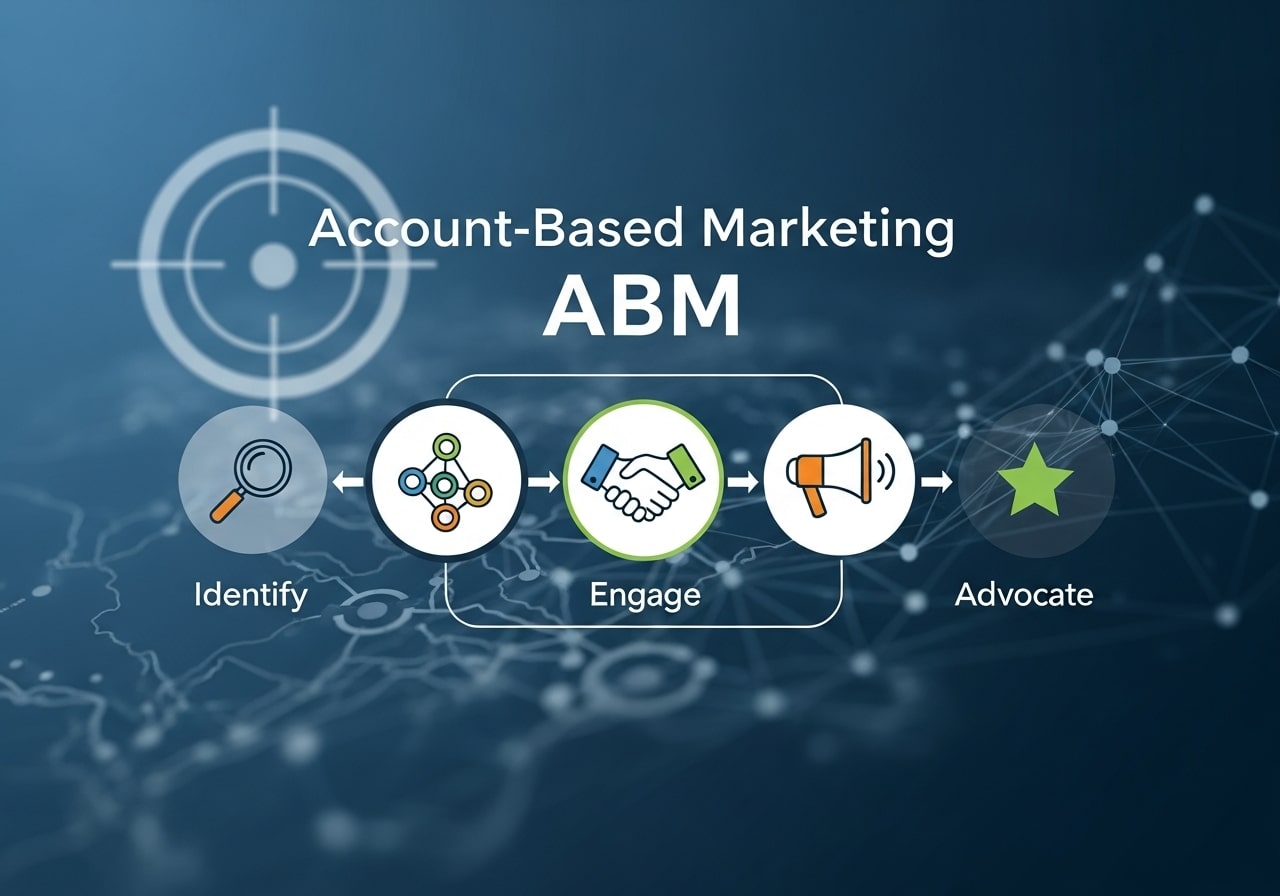
To maximize impact, ABM web development must align closely with revenue operations (RevOps). Integrate website personalization, CRM data, marketing automation, and sales workflows into a unified revenue framework. This alignment ensures that insights from website engagement directly inform pipeline forecasting, deal prioritization, and sales enablement. When marketing, sales, and customer success share a single view of account activity, personalization becomes revenue-focused rather than engagement-only. The result is tighter alignment, shorter sales cycles, and more predictable revenue growth driven by the website.
Build Progressive Web Experiences
Modern Account-Based Marketing requires web experiences that adapt and evolve based on account behavior and engagement history.
Account Journey Mapping Technology
Implement technology that maps and responds to account journeys across multiple visits and users. Your website should “remember” previous interactions from the same company and build upon them.
For instance, if someone from a target account downloaded a whitepaper about security last month, and a different person from the same company visits your pricing page today, your website should recognize this progression and adjust messaging accordingly.
Predictive Content Recommendations
Use machine learning algorithms to predict what content will be most valuable for each account based on similar account behaviors, industry trends, and journey stage. This requires robust data collection, analysis capabilities, and content tagging systems.
Enhance Site Performance for Enterprise Users
Target accounts in ABM often include enterprise users with specific technical requirements and expectations. Your web development strategy must accommodate these needs.
Enterprise-Grade Security Implementation
Implement enhanced security measures that enterprise visitors expect. This includes SSL certificates, SOC 2 compliance indicators, security badges, and clear privacy policy implementation.
Consider adding features like single sign-on (SSO) compatibility for prospects who want to share resources internally, and ensure your forms and data collection methods meet enterprise security standards.
Mobile-First Design for Executive Users
Many ABM targets include busy executives who primarily browse on mobile devices. Optimize your entire site experience for mobile users, with particular attention to loading speeds, simplified navigation, and thumb-friendly interface elements.
Implement accelerated mobile pages (AMP) for key landing pages and ensure that personalized content renders quickly across all devices.
Leverage Intent Data Integration
Web development strategies for Account-Based Marketing must incorporate intent data to identify and respond to buying signals in real-time.
Real-Time Intent Scoring
Build systems that can process intent data from multiple sources and adjust website experiences accordingly. When intent signals suggest an account is actively researching solutions like yours, automatically prioritize them for enhanced personalization and sales alerts.
This requires integrating with intent data providers and building algorithms that can interpret and act on this information within milliseconds of a site visit.
Behavioral Trigger Implementation
Set up automated triggers based on account behavior patterns. If multiple users from a target account visit your pricing page within a short timeframe, automatically notify sales teams and trigger personalized follow-up sequences.
Optimize Conversion Paths for Account-Based Sales
Traditional conversion optimization focuses on individual conversions, but ABM requires optimization for account-level sales processes.
Multi-Stakeholder Journey Design
Design conversion paths that accommodate the complex, multi-stakeholder nature of B2B buying. Create shared spaces where account teams can collaborate, access tailored resources, and move through the evaluation process together.
This might include building account-specific resource centers, implementing collaborative features like shared wishlists or comparison tools, and creating easy ways for prospects to share relevant content with internal teams.
Sales Enablement Integration
Integrate your website directly with sales enablement tools so that website behavior informs sales conversations. When a prospect books a demo, sales teams should have immediate access to that account’s website engagement history, content preferences, and demonstrated interests.
Scale Your ABM Web Development Strategy
Successful Account-Based Marketing web development requires scalable systems that can grow with your program.
Start by prioritizing your highest-value accounts for full personalization, then gradually expand to tier-two and tier-three accounts. Build modular systems that allow you to add new personalization rules, tracking capabilities, and integration points without rebuilding your entire infrastructure.
Regular testing and optimization ensure your web development strategies continue delivering results as your ABM program matures. Monitor account-level metrics, gather feedback from sales teams, and continuously refine your approach based on what drives the most qualified pipeline and revenue.
Your website can become your most powerful ABM asset when built with the right development strategies. The investment in personalization, tracking, and integration capabilities pays dividends through improved account engagement, shorter sales cycles, and higher deal values.
Frequently Asked Questions (FAQ)
1. What is dynamic content personalization in Account-Based Marketing?
Dynamic content personalization in ABM is the practice of adapting website content in real time based on an account’s company, industry, role, intent signals, and buying stage. It ensures that each target account sees messaging, use cases, and calls-to-action that are directly relevant to their needs.
2. How does company-based content customization work?
Company-based customization uses IP detection, reverse DNS lookup, and account identification platforms to recognize visitors from target companies. Once identified, the website dynamically displays industry-specific case studies, personalized headlines, and tailored value propositions for that account.
3. Why is account-level tracking important for ABM?
ABM focuses on entire buying committees rather than individual users. Account-level tracking allows marketers and sales teams to see engagement across multiple users from the same company, providing a clearer picture of account intent, readiness, and sales opportunity.
4. What tools are commonly used for account identification?
Popular account identification tools include Demandbase, 6sense, Clearbit, and custom IP intelligence solutions. These platforms help group individual sessions under a single company profile and support advanced personalization and analytics.
5. How does intent data improve ABM website performance?
Intent data reveals which accounts are actively researching relevant solutions. By integrating intent signals into your website, you can trigger personalized content, prioritize high-intent accounts, and alert sales teams when buying activity increases.
6. Can ABM websites support multi-stakeholder buying journeys?
Yes. ABM-focused web development designs experiences for multiple decision-makers within the same account. This includes role-based landing pages, shared resource hubs, and collaborative tools that support complex B2B buying processes.
7. How do personalization and site performance work together?
Advanced personalization must be balanced with performance optimization. Techniques like lazy loading, API-based data retrieval, and modular content delivery ensure personalized experiences load quickly without negatively impacting page speed or mobile usability.
8. What metrics should be used to measure ABM website success?
Key ABM metrics include account engagement score, number of engaged users per account, content consumption depth, intent signals, sales-qualified account progression, and pipeline or revenue influenced by website activity.
9. Is mobile optimization important for ABM?
Absolutely. Many ABM decision-makers are executives who browse on mobile devices. Mobile-first design, fast loading times, responsive personalization, and simplified navigation are critical for engaging high-value accounts.
10. How can ABM web development scale as programs grow?
Scalable ABM web development uses modular personalization rules, tiered account targeting, flexible analytics frameworks, and API-driven integrations. This allows teams to expand personalization efforts without rebuilding core systems.