
Account-Based Marketing (ABM) and Search Engine Marketing (SEM) are both effective for driving results, however, together the two strategies can elevate your marketing efforts to the next level. The thought of using a precision approach of ABM (targeting individuals and accounts most likely to convert) alongside the broad reach and measurement-driven insights of SEM. When done properly this combination can serve to mitigate your ROI and resources.
What is Account Based Marketing (ABM)?
ABM is a highly targeted marketing strategy that focuses on identifying and nurturing specific accounts that are most valuable to your business. Instead of casting a wide net, ABM lets you personalize your efforts for high-value prospects, ensuring a more efficient use of time and resources.
Key Features of ABM:
- Focus on individual accounts rather than a broad audience
- Personalized marketing efforts tailored to specific business needs
- Close collaboration between marketing and sales teams
- High ROI potential due to concentrated efforts
Imagine curating personalized email campaigns, custom landing pages, and content tailored to decision-makers at key accounts. That’s the crux of ABM.
What is Search Engine Marketing (SEM)?
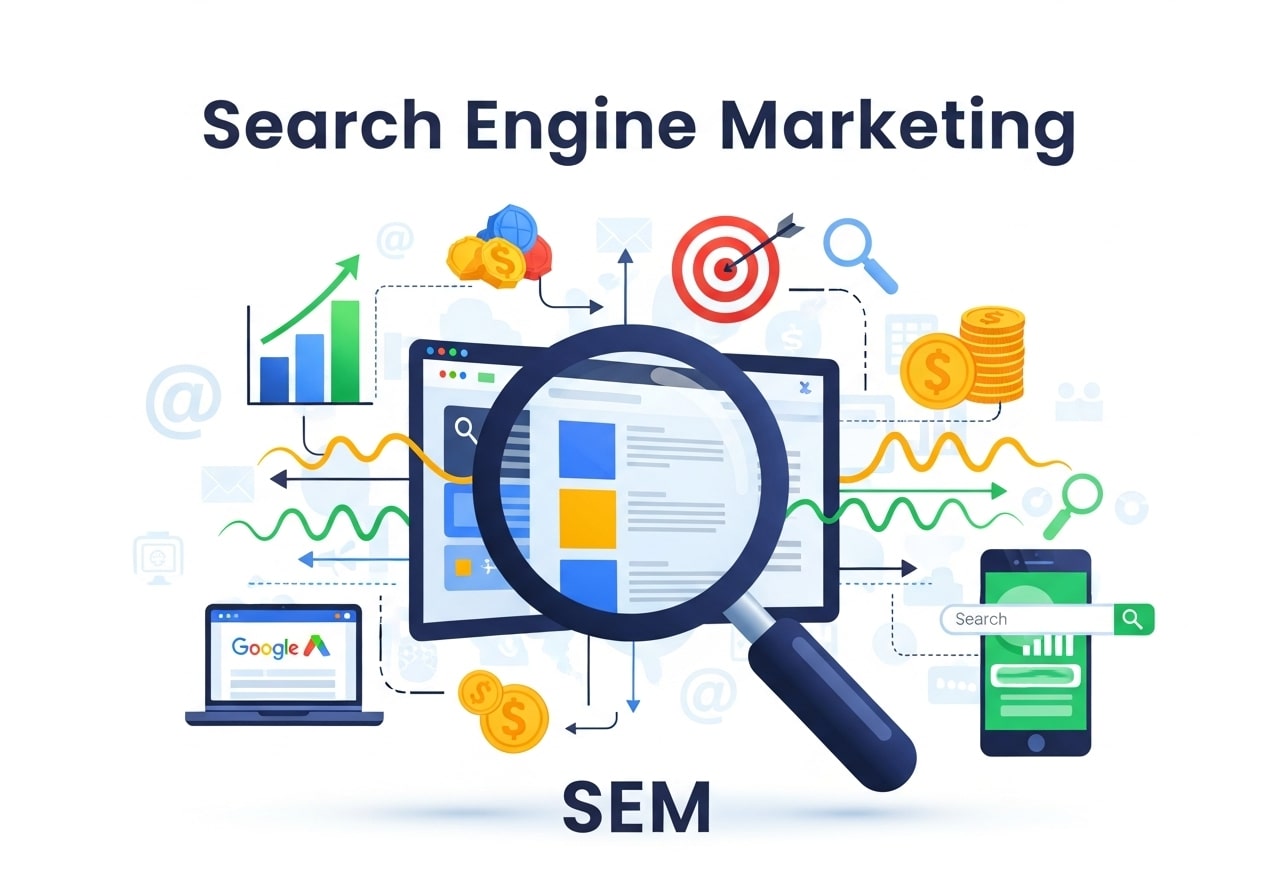
SEM is a form of digital advertising that allows you to promote your business on search engine results pages (SERPs). Combined with tools like Google Ads, SEM helps you target users with high intent by bidding on keywords relevant to your business.
Benefits of SEM:
- Real-time results with measurable data
- Advanced audience targeting options
- Opportunities to reach users actively searching for solutions at various stages of the buyer’s journey
Together, paid search campaigns and search engine optimization (SEO) tactics can drive high-quality traffic straight to your site.
Why Combine ABM and SEM?
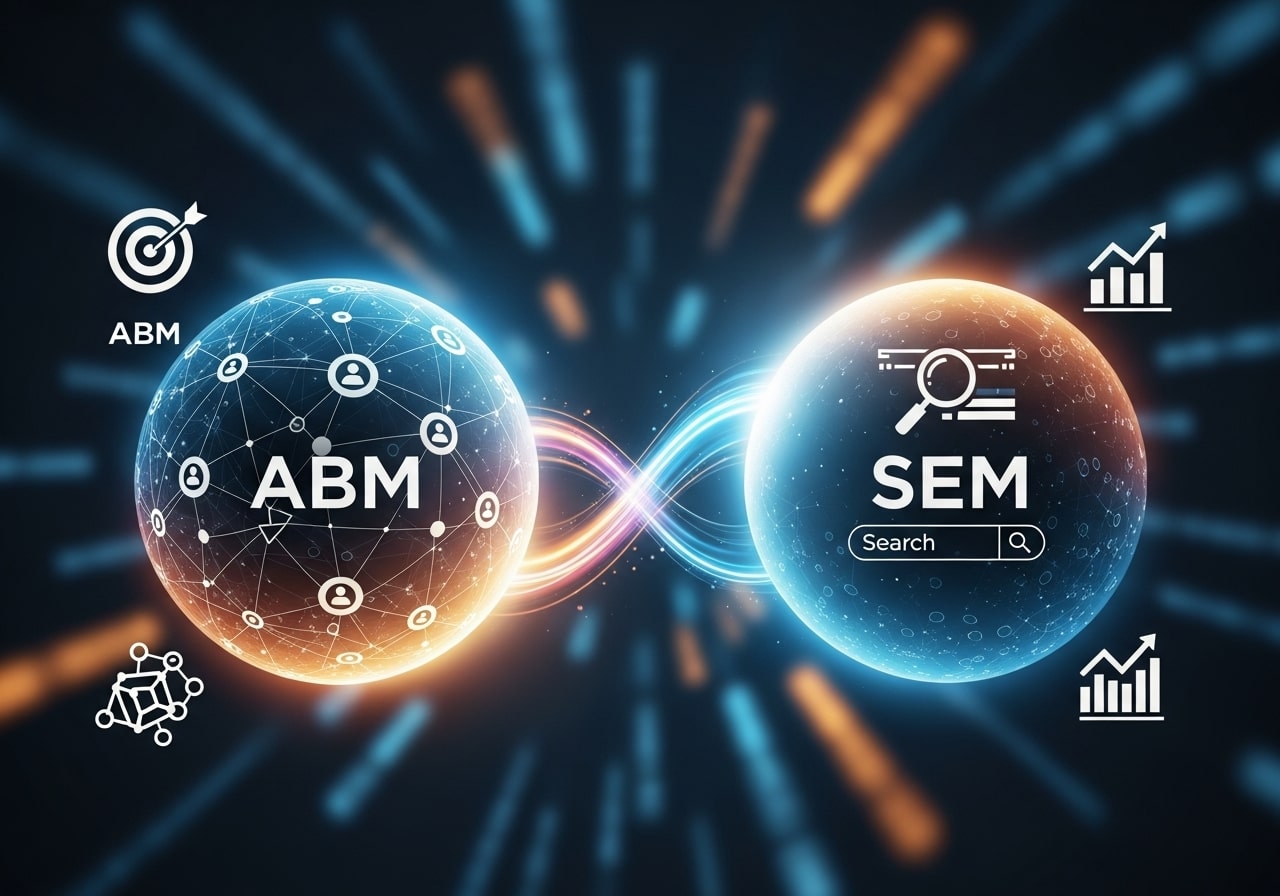
When combined, ABM and SEM drive laser-focused results that neither strategy could achieve as effectively on its own. Here’s how they complement each other:
ABM Personalization Supercharges SEM Efficiency
SEM often targets users based on search intent, employing keywords. While effective, it can sometimes lack the level of personalization ABM brings. By integrating account-level insights into your SEM strategy, ad copy and landing pages can be tailored specifically to the needs of high-value accounts.
SEM Data Improves ABM Targeting
The data gathered from your SEM campaigns can feed your ABM strategy by uncovering:
- Which accounts are actively engaging with paid ads
- Behavioral trends and search keywords they’re using
- Which products or solutions resonate with specific verticals or buyer personas
This data builds a more detailed target audience profile for ABM campaigns.
Both Create a Full Picture of the Buyer’s Journey
ABM focuses on direct relationship building, while SEM efficiently identifies high-intent prospects at scale. Together, they map out the buyer’s entire decision-making process—from awareness to purchase.
Aligning ABM and SEM with Sales Enablement
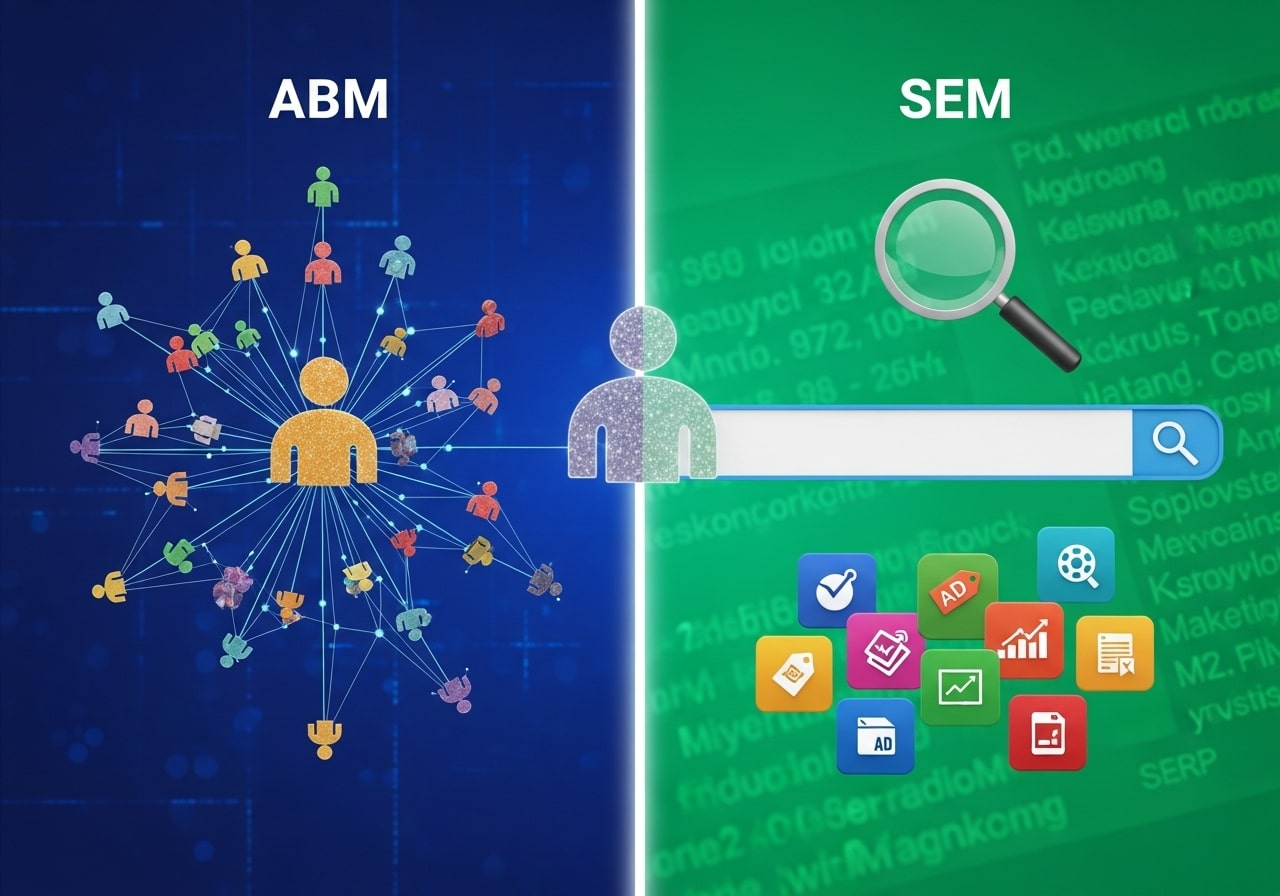
For ABM and SEM to deliver maximum impact, alignment with sales enablement is essential. Marketing teams may generate demand, but sales teams convert that demand into revenue. By integrating ABM and SEM insights into sales workflows, sales representatives gain visibility into which accounts are actively searching, engaging with ads, or visiting key pages. This allows them to prioritize outreach and tailor conversations based on real buyer intent. Shared dashboards, CRM integrations, and regular alignment meetings ensure that both teams work toward the same revenue goals. When sales understands SEM-driven intent signals and ABM personalization strategies, follow-ups become more timely, relevant, and effective—shortening sales cycles and improving close rates.
Creating Personalized Landing Pages for Target Accounts
Personalized landing pages play a critical role in ABM-driven SEM campaigns. Instead of sending all traffic to a generic page, marketers can design landing pages tailored to specific industries, company sizes, or even named accounts. These pages can highlight relevant pain points, use industry-specific language, and showcase case studies that resonate with the target audience. When SEM ads drive high-intent traffic to these personalized experiences, engagement and conversion rates increase significantly. Custom landing pages also reinforce brand credibility by showing prospects that your company understands their unique challenges. This seamless experience between ad copy and landing page messaging strengthens trust and encourages deeper interaction.
Using Intent Data to Prioritize ABM Accounts

Intent data bridges the gap between ABM strategy and SEM execution. By analyzing search behavior, keyword trends, and on-site engagement, marketers can identify which accounts are actively researching solutions. SEM platforms provide valuable intent signals, such as repeated keyword searches or high engagement with specific ads. These insights allow ABM teams to prioritize accounts that are closer to making purchasing decisions. Instead of treating all target accounts equally, resources can be allocated to those demonstrating real buying intent. This data-driven prioritization improves efficiency, reduces wasted spend, and ensures marketing and sales efforts focus on accounts most likely to convert.
Optimizing Budget Allocation Across ABM and SEM
Budget optimization is a major advantage of combining ABM and SEM. Rather than spreading ad spend thin across broad audiences, marketers can allocate budgets toward high-value accounts and high-intent keywords. SEM performance data reveals which campaigns, keywords, and audiences generate the strongest engagement, allowing marketers to reinvest in what works. ABM further refines this process by focusing spend on accounts with the highest revenue potential. Over time, this approach reduces cost per acquisition and increases return on ad spend. Regular performance reviews and budget adjustments ensure that resources are continuously aligned with business priorities and revenue goals.
Enhancing Brand Visibility Among Target Accounts
ABM and SEM together significantly improve brand visibility among key decision-makers. SEM ensures your brand appears consistently when target accounts search for relevant solutions, while ABM reinforces recognition through personalized messaging across multiple touchpoints. Even if prospects are not ready to convert immediately, repeated exposure builds familiarity and trust. Over time, this presence positions your brand as a credible and reliable option within the buyer’s consideration set. This strategy is especially effective in competitive B2B markets, where multiple stakeholders influence decisions. Consistent visibility across search, ads, and personalized content ensures your brand stays top of mind throughout the buying journey.
Leveraging A/B Testing for Continuous Improvement
A/B testing is essential for refining ABM and SEM integration. Marketers can test variations of ad copy, landing pages, calls-to-action, and personalization elements to determine what resonates most with target accounts. SEM platforms provide fast feedback through measurable metrics like click-through rate and conversion rate, while ABM insights reveal account-level engagement. By continuously testing and optimizing, teams can improve relevance and performance over time. Small adjustments—such as changing messaging for a specific industry or modifying a headline—can lead to significant gains. A culture of experimentation ensures that ABM and SEM strategies remain agile, data-driven, and effective.
Scaling ABM and SEM for Long-Term Growth
Once a successful ABM and SEM framework is established, scaling becomes the next priority. Scaling does not mean losing personalization; instead, it involves expanding proven strategies to additional accounts, industries, or regions. Automation tools, AI-driven bidding, and dynamic ad customization make it possible to scale while maintaining relevance. As more data is collected, targeting becomes more precise, and messaging becomes more refined. Long-term growth depends on continuous learning, cross-team collaboration, and smart use of technology. By scaling strategically, businesses can build a sustainable demand engine that consistently drives high-quality leads and revenue.
6 Steps to Successfully Combine ABM and SEM
1. Identify Target Accounts
Begin by creating a list of high-value accounts for your ABM strategy. These are the companies or individuals most likely to bring significant ROI. Use SEM tools like Google Analytics or LinkedIn Ads to identify current high-performing audiences and potential prospects.
Pro Tip:
Align with your sales team to understand key account goals. Collaboration ensures your SEM and ABM strategies are aligned with revenue objectives.
2. Segment Your SEM Campaigns by Account
Instead of generic SEM campaigns targeting wide search audiences, customize them per account or industry segment. Each target account or segment should have:
- Custom ad creative
- Tailored bid strategies
- Relevant landing page experiences
This granular level of segmentation ensures maximum relevance.
3. Leverage SEM Retargeting for ABM
Retarget website visitors and ad clickers from SEM campaigns with personalized ABM efforts. If a target account visits your website after clicking your ad, use that signal to follow up with specific email campaigns, direct-mail gifts, or even LinkedIn engagement.
Retargeting tools like Google Ads’ Remarketing Lists for Search Ads (RLSA) make it easy to keep your brand top of mind for these users.
4. Use SEM Data to Refine ABM Messaging
Paid search campaigns can uncover user intent through search terms, click behavior, and engagement metrics. For example:
- What keywords do potential customers use?
- Which ad copies drive the most clicks and conversions?
- What geographic regions show the highest engagement?
Plug this data into your ABM strategy to craft hyper-relevant messaging.
5. Align KPIs Across Both Strategies
For seamless integration, establish shared metrics to evaluate performance across ABM and SEM campaigns. Common KPIs include:
- Cost-per-acquisition (CPA) per target account
- Number of accounts engaged through SEM touchpoints
- Click-through rate (CTR) on ABM-specific ads
- Average deal size for accounts influenced by both strategies
Measuring these metrics helps you identify how well SEM supports ABM efforts and refine your approach.
6. Test, Optimize, and Scale
Start small by running a pilot campaign targeting a handful of accounts. Test different combinations of SEM ads, ABM content, and retargeting methods to see what works best. Continuously analyze performance data and iterate for better results.
Once you identify a winning strategy, scale it to additional accounts.
Unlock Maximum ROI with ABM and SEM
Combining ABM with SEM is more than simply merging strategies — it’s about maximizing what each does well for the best results. Together, they provide the accuracy of account-specific personalization and the reach of search advertising. There is so much you can do, from targeting top-value accounts to retargeting them with personalized messages, and this power couple can seriously amplify your marketing efforts and increase your ROI.
When you take this holistic approach, you foster better inroads into the hearts and minds of stakeholders, develop better understanding of your customer’s habits, avoid slipping into a monolithic bubble, and gain an edge over your competitors.
If you’re ready to play the ABM-SEM game, start small and with experimentation, fine-tune your courtship. Authentic progress is achieved through partnership, repetition, and persistence.
Frequently Asked Questions (FAQ)
1. What is the main difference between ABM and SEM?
ABM focuses on targeting specific high-value accounts with personalized messaging, while SEM targets users based on search intent using paid ads. ABM is precision-driven, whereas SEM provides broader reach and immediate visibility.
2. Why should businesses combine ABM and SEM?
Combining ABM and SEM allows businesses to reach high-intent prospects through search while delivering personalized, account-specific experiences. This integration improves relevance, engagement, and overall ROI compared to using either strategy alone.
3. How does SEM support an ABM strategy?
SEM helps identify which target accounts are actively searching for solutions by providing data on keywords, engagement, and intent. This data can be used to refine ABM targeting and messaging for better alignment with buyer needs.
4. Can small or mid-sized businesses use ABM and SEM together?
Yes. While ABM is often associated with enterprise marketing, smaller businesses can start with a focused list of high-value accounts and run tightly targeted SEM campaigns to maximize limited budgets.
5. What types of keywords work best for ABM-driven SEM campaigns?
High-intent, solution-focused, and branded keywords work best. Long-tail keywords related to specific industries, pain points, or use cases are especially effective when targeting named accounts or verticals.
6. How do you measure success when combining ABM and SEM?
Success is measured using shared KPIs such as account engagement, cost per acquisition per account, conversion rates, deal size, and revenue influenced by both SEM and ABM touchpoints.
7. What role does retargeting play in ABM and SEM integration?
Retargeting connects SEM and ABM by re-engaging users from target accounts who clicked ads or visited landing pages. These users can then receive personalized ABM messages through email, LinkedIn ads, or other channels.
8. Do ABM and SEM require alignment between sales and marketing teams?
Absolutely. Strong collaboration ensures target accounts, messaging, and goals are aligned. Sales insights help refine ABM targets, while SEM performance data supports sales conversations with intent signals.
9. How long does it take to see results from ABM and SEM together?
SEM can deliver quick visibility and engagement, while ABM typically shows results over a longer sales cycle. When combined, businesses often see faster account engagement and improved pipeline quality within a few months.
10. What tools are commonly used for ABM and SEM integration?
Common tools include Google Ads, Google Analytics, LinkedIn Ads, CRM platforms like Salesforce or HubSpot, and ABM platforms such as Demandbase, Terminus, or 6sense.